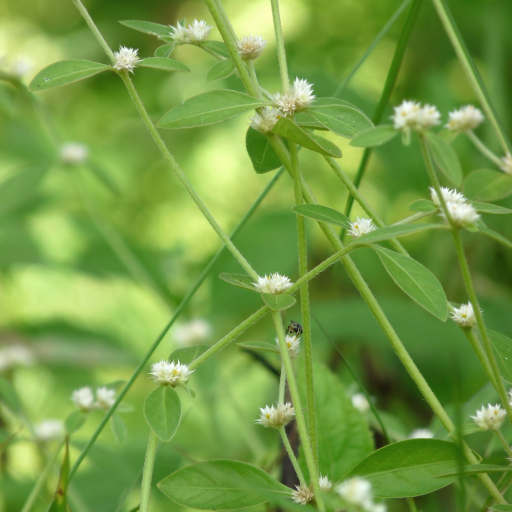
Plant Overview
Often called the "Sessile Joyweed" or "Mukunuwenna," this resilient traveler is a staple in both tropical kitchens and backyard ponds. Originating from the tropics of Africa and Asia, it has earned its name "Joyweed" for its rapid, cheerful growth. Whether it is being tossed into a stir-fry or used to carpet a damp garden bed, this plant is a master of adaptation that thrives where other plants might struggle with "wet feet."
🔍 How to Identify
- 🤍 The "Sessile" Flowers: Its name comes from the tiny, papery white flower clusters that sit directly on the stem without a stalk (sessile). They look like small, dry tufts of cotton.
- 🌿 Opposite Leaves: The leaves grow in pairs directly across from each other. They are typically lance-shaped and can vary from bright green to a deep, earthy red depending on the amount of sunlight they receive.
- 🌱 Creeping Stems: It has a prostrate growth habit, meaning it crawls along the ground and can strike new roots at every "node" (joint) that touches the soil.
🏡 In Your Garden
- 💧 Moisture Lover: This is not a plant for the desert. It thrives in boggy soil, near the edges of ponds, or in areas with poor drainage. If you have a "problem spot" in the garden that stays muddy, Joyweed will likely love it.
- ✂️ Vigorous Spreader: Because it roots so easily from cuttings, it can quickly become a dense groundcover. While this is great for suppressing weeds, be mindful that it can escape into the wild and become invasive in warm, wetland ecosystems.
⚠️ Safety & Toxicity
- ✅ Safe for Humans: This plant is widely consumed as a leafy vegetable in Southeast Asia and is rich in iron and vitamins.
- 🚜 Environmental Note: While non-toxic, it is a "hyperaccumulator," meaning it can soak up nitrates and heavy metals from the soil. Only consume plants grown in clean, organic garden soil—avoid picking it from the side of busy roads or industrial ditches.
- 🐾 Pet Safety: It is generally considered non-toxic to household pets, though any sudden change in a pet's diet can cause minor stomach upset.
✨ Fun Fact
In Sri Lankan culture, there is a common saying that eating Mukunuwenna regularly can help "cool the body" and improve eyesight. It is so popular there that it is grown commercially in massive quantities just to keep up with the demand for breakfast salads!

Detailed Care Instructions
To grow Alternanthera Sessilis, also known as Sessile Joyweed or Dwarf Copperleaf, follow these steps:
- Choose a suitable location: These plants prefer full to partial sun. Ensure the area has well-draining soil.
- Prepare the soil: Before planting, enrich the soil with organic matter, such as compost or well-rotted manure, to improve nutrient content and drainage.
- Propagate from cuttings: Take cuttings from an existing healthy plant. Cut a stem about 6 inches long just below a leaf node. Remove leaves from the bottom half of the stem. Place the cutting in a glass of water or directly into a pot filled with pre-moistened soil. Keep the soil moist until roots form.
- Transplant the rooted cuttings: Once the cuttings have developed roots (usually within two to three weeks), transplant them into individual pots or directly into the ground. Space the plants about 12 inches apart to allow for their spreading growth habit.
- Watering: Water the plants regularly, keeping the soil consistently moist but not waterlogged. Avoid allowing the soil to dry out completely between waterings.
- Fertilization: Apply a balanced, slow-release fertilizer according to the package instructions every four to six weeks throughout the growing season to provide necessary nutrients.
- Pruning: Trim the plants occasionally to maintain their shape and encourage bushier growth. Pruning also helps to prevent the plant from becoming leggy.
- Pest and disease control: Monitor the plants for signs of pests such as aphids, mealybugs, or spider mites. Use organic insecticidal soap or neem oil to control these pests. Additionally, ensure good air circulation to prevent diseases such as powdery mildew.
- Harvesting: Harvest the leaves as needed once the plant is established. Trim the stems just above a node to encourage new growth.
By following these steps, you can successfully grow Alternanthera Sessilis plants.

Place in a window with dappled sun or a spot in the middle of a room. Or directly in a window facing west or east.

To water this plant, you should ensure that its soil is evenly moist at all times. The amount of water required may vary depending on environmental factors such as humidity, temperature, and the amount of sunlight the plant receives. Typically, you should water when the top one to two inches of soil feel dry to the touch. When watering, water the plant slowly and thoroughly, making sure to saturate the entire root ball. Avoid overwatering and allowing soil to become waterlogged, as this can lead to root rot and other issues. Additionally, it is important to ensure that the plant is not sitting in standing water, as this can also be detrimental to its health.
For optimal growth of this plant, apply a balanced fertilizer with equal amounts of nitrogen, phosphorus, and potassium every two weeks during the growing season. Be sure to dilute the fertilizer to half-strength before applying. Water the plants deeply before and after fertilizing to prevent nutrient burn. Additionally, avoid fertilizing during the dormant period, which is generally during the winter months.
Alternanthera Sessilis is a plant that prefers soil that is well-draining and moist, but not waterlogged. It requires soil that is rich in nutrients and organic matter, with a somewhat acidic to neutral pH level. The plant benefits greatly from soil that has been fertilized with a balanced slow-release fertilizer before planting. Additionally, it is important to ensure that the soil is not compacted and has good aeration to allow the roots to breathe. Overall, a fertile, well-draining soil that has been supplemented with appropriate nutrients and organic matter should provide an ideal growing environment for Alternanthera Sessilis.
Alternanthera sessilis can be propagated through vegetative cuttings. To do so, select a healthy stem from the parent plant and cut it just below a node with a sharp, sterilized blade. Remove any lower leaves, leaving a few at the top to continue photosynthesis. Plant the cutting in well-draining soil and water regularly. The cutting should root within a few weeks and begin to grow new leaves. Alternatively, the plant can also be propagated through division, separating the roots and stems of the parent plant and replanting them individually.
Common pests of the sessile joyweed include Aphids, thrips, larvae. Make a habit of checking your sessile joyweed frequently for pests so that any infestations can be caught and managed early.








