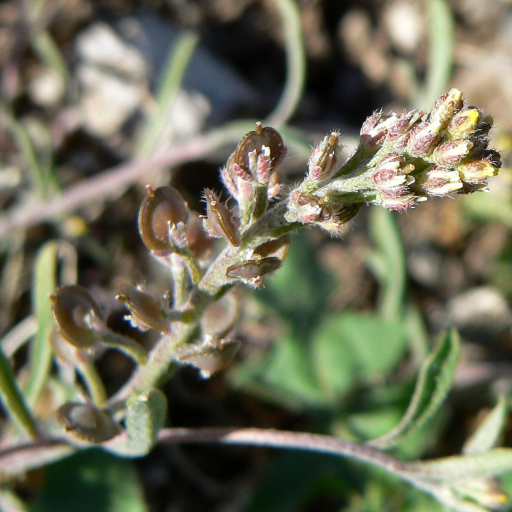
Plant Overview
The Desert Alyssum, often called the Desert Madwort, is a master of minimalism. Native to the arid landscapes of Europe and Asia, it has successfully trekked across the globe, settling into sandy plains and rocky roadsides. It is a tiny but tough annual that thrives where most other plants would wither under the scorching sun.
🔍 How to Identify
- 🌼 Golden Blooms: Tiny, pale yellow flowers bloom in tight clusters at the tips of the stems. As they age, these petals often fade to a soft cream or white.
- 🍃 Dusty Foliage: The narrow, slender leaves are covered in minute, star-shaped hairs. This gives the entire plant a signature silvery-grey or "dusty" appearance, which helps it reflect intense sunlight.
- 💿 Disc-like Pods: After the flowers fade, the plant produces flat, circular seed pods known as "silicles." These look like tiny green coins stacked along the stem and are a key identifier for the Alyssum family.
🏡 In Your Garden
- 🏜️ Thrives on Neglect: This plant is the ultimate "low-maintenance" species. It prefers poor, sandy, or gravelly soil and will actually struggle if the soil is too rich or holds too much moisture.
- ⏳ A Quick Life: Because it is a "spring ephemeral" annual, it completes its life cycle rapidly. It germinates with the first spring rains, blooms quickly, and drops its seeds to endure the harsh summer heat in a dormant state.
- 🌱 Self-Sowing Nature: If you find it in your landscape, it likely arrived via wind or birds. It is a prolific seeder, meaning it will likely return to the same spot year after year without any help from you.
⚠️ Safety & Toxicity
- ✅ Non-Toxic: Desert Alyssum is generally considered safe and is not listed as a poisonous species for humans or livestock.
- 🐾 Pet Sensitivity: While not toxic, the rough, hairy texture of the leaves can occasionally cause mild mouth irritation or an upset stomach if a curious dog or cat decides to munch on a large patch.
✨ Fun Fact
📜 The "Cure" for Madness: The name Alyssum is derived from the Greek word alysson, which literally translates to "curing madness." In ancient folklore, it was believed that hanging a bunch of these plants in the home or consuming them could cure rabies or calm a person with a "mad" temperament.

Detailed Care Instructions
To grow Alyssum Desertorum plants, follow these steps:
- Select a suitable planting location: Choose a spot that receives full sun and has well-draining soil. Alyssum Desertorum plants are drought-tolerant and prefer sandy or gravelly soil.
- Prepare the soil: Before planting, loosen the soil to a depth of about 8-10 inches and remove any weeds or debris. Mix in organic matter such as compost or well-rotted manure to enrich the soil.
- Sow the seeds: Scatter the Alyssum Desertorum seeds over the prepared soil. Aim for an even distribution, but don't worry too much about spacing since the plants will naturally fill in any gaps. Lightly press the seeds into the soil to ensure good seed-to-soil contact.
- Water the seeds: Gently water the seeds immediately after planting to moisten the soil. Be careful not to overwater, as excessive moisture can cause the seeds to rot. Water regularly, but allow the soil to dry out slightly between waterings.
- Maintain the plants: Once the seedlings have emerged, thin them out if they become too crowded. Aim for a spacing of 6-8 inches between plants, depending on your desired density. Keep the plants well-watered during dry spells, but avoid overwatering.
- Control weeds: Regularly weed the area around Alyssum Desertorum plants to prevent weed competition and allow the plants to thrive. Mulching with straw or wood chips can also help suppress weeds.
- Pruning and deadheading: Trim back the plants after they finish flowering to promote fresh growth and additional blooming. Deadhead or remove faded flowers regularly to encourage continuous blooming.
- Pests and diseases: Alyssum Desertorum plants are generally not prone to significant pest or disease issues. However, keep an eye out for common garden pests such as aphids or slugs and take appropriate measures if necessary.
- Harvesting seeds: If you wish to collect seeds for future planting, allow some flowers to go to seed. Once the seed pods turn brown and dry out, collect them and store them in a cool, dry place until ready to use.
By following these steps, you can successfully grow Alyssum Desertorum plants and enjoy their beautiful, sweet-scented flowers.

Place in a bright room that is sun drenched almost all day. Or directly in a south-facing window.

To water this plant, make sure to allow the soil to dry out slightly between watering. It is important not to overwater as this can lead to root rot. When watering, apply water directly to the soil rather than the leaves. Use a watering can or hose with a gentle spray nozzle to avoid disturbing the soil or damaging the plant. Water thoroughly, allowing excess water to drain away from the roots. Avoid watering during the hottest parts of the day as the water will evaporate, and the plant may not absorb it properly.
To fertilize this plant, use a balanced, slow-release fertilizer applied in the spring before new growth begins. Follow the manufacturer's instructions for the appropriate amount to apply based on the size of the plant and the soil conditions. Be sure to water the plant thoroughly after fertilizing to prevent any fertilizer burn and to allow the nutrients to soak in properly. Additionally, top-dressing with compost or organic matter during the growing season can also help to provide additional nutrients to the plant.
The soil best suited for growing this plant is a well-draining soil with a neutral to alkaline pH level. It should be rich in nutrients and organic matter, but not overly fertile as this can cause the plant to become leggy and flop over. A sandy soil with added perlite or vermiculite may be necessary to improve drainage. The soil should be kept evenly moist but not waterlogged, as excess water can cause root rot. Regular fertilization with a balanced, slow-release fertilizer can help to promote healthy growth and blooms.
To propagate this plant, take softwood cuttings in the spring or summer. Cut a stem with about four leaves, remove the bottom two leaves, and dip the cut end in a rooting hormone. Place the cutting in damp potting soil and cover it with a plastic bag to create a humid environment. Keep the soil moist and in a bright, but not direct, location until roots start to form. After roots have formed, remove the plastic bag and gradually acclimate the plant to the outside environment before planting it into the ground or larger container.








