Plant Overview
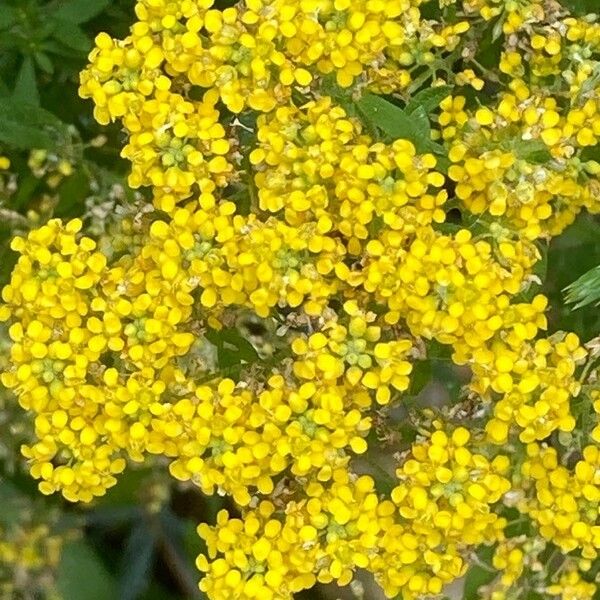
Known as the "Wall Alyssum" or "Yellow Tuft," this hardy perennial is a Mediterranean native that paints rocky landscapes in shades of brilliant gold. It is famous for its ability to thrive in the harshest conditions, often seen spilling over stone walls or tucked into the crevices of cliffside paths. While it looks like a delicate floral carpet, it is actually a rugged survivor with a hidden scientific superpower.
🔍 How to Identify
- 🌼 The Blooms: Features dense, flat-topped clusters of tiny, four-petaled flowers that are a vibrant, buttery yellow.
- 🍃 The Foliage: The leaves are narrow, lance-shaped, and have a distinct grayish-green hue due to a fine coating of silvery hairs.
- 🌱 Growth Habit: It forms low, spreading mounds that can become slightly woody at the base as the plant matures.
🏡 In Your Garden
- 🪨 The "Poor Soil" Specialist: This plant actually prefers "bad" soil. If you plant it in overly rich, fertilized earth, it may become leggy and short-lived. It thrives in sandy or rocky spots where other plants fail.
- ☀️ Drainage is Vital: While it is incredibly drought-tolerant, it cannot handle "wet feet." It requires sharp drainage, making it the perfect candidate for rock gardens, stone troughs, or sloped borders.
- ✂️ Post-Bloom Refresh: To keep the mound looking tight and prevent it from becoming too "twiggy," it’s best to shear the plant back by a third after the spring flowers fade.
⚠️ Safety & Toxicity
- ✅ Status: Generally considered non-toxic to humans and common household pets.
- 🧤 Skin Sensitivity: While not poisonous, some gardeners with sensitive skin may experience mild irritation from the tiny hairs on the leaves, so wearing gloves during heavy pruning is a good idea.
- 🐾 Pet Safety: It is not listed as a toxic plant for cats or dogs, making it a safe choice for low-level groundcover in pet-friendly yards.
✨ Fun Fact
- ⛏️ The Metal Eater: Alyssum murale is a "hyperaccumulator." It has the incredible ability to suck heavy metals like nickel out of the ground and store them in its leaves. Scientists actually use this plant for "phytomining"—growing the plant specifically to clean contaminated soil or even to harvest the nickel from the plant's ashes!

Detailed Care Instructions
To grow Alyssum Murale, you can follow these steps:
- Choose the right location: Alyssum Murale prefers full sun but can tolerate partial shade. Select a spot in your garden that receives at least 6 hours of direct sunlight per day.
- Prepare the soil: Alyssum Murale thrives in well-drained soil. Add organic matter such as compost or well-rotted manure to improve soil structure and fertility.
- Sow the seeds: Alyssum Murale can be grown from seeds. Sow the seeds directly into the prepared soil in early spring after the danger of frost has passed. Make sure to keep a distance of about 6-8 inches between each seed to allow proper growth.
- Watering: Water the seeds gently after sowing, keeping the soil moist but not waterlogged. Once the plants have established, they are relatively drought-tolerant and require less water. However, make sure to water during extended dry periods.
- Fertilizer: Alyssum Murale generally doesn't require much fertilization. If the growth appears slow or weak, you can apply a balanced, slow-release fertilizer according to the manufacturer's instructions.
- Mulching: Applying a layer of organic mulch around the plants will help conserve moisture, suppress weed growth, and improve the overall health of the plants.
- Pruning: Alyssum Murale doesn't require extensive pruning. However, it is a good idea to deadhead spent flowers regularly to promote continuous blooming.
- Pests and diseases: Alyssum Murale is relatively resistant to pests and diseases. However, keep an eye out for common garden pests such as aphids, slugs, and snails. Promptly treat any infestations using organic pest control methods if necessary.
By following these steps, you should be able to successfully grow Alyssum Murale in your garden. Enjoy the beautiful flowers and the sweet fragrance they bring to your outdoor space!

Place in a bright room that is sun drenched almost all day. Or directly in a south-facing window.

To properly water this plant, wait until the soil starts to dry out before watering. Do not let it completely dry out or sit in standing water. When watering, aim to water the soil around the base of the plant rather than getting water all over the foliage. It is best to water in the morning or evening when the sun is not as intense to avoid evaporation. Use a watering can or gentle hose setting to avoid damaging the delicate roots. If in doubt, touch the soil to check its moisture level before watering.
To fertilize this plant, it is recommended to use a balanced slow-release fertilizer once a month during the growing season. Additionally, incorporating organic matter or compost into the soil before planting can improve nutrient availability and overall growth. It is important not to over-fertilize, as this can lead to excessive foliage growth and poor flowering. Water the plant after fertilizing to help disperse the nutrients evenly throughout the soil.
The ideal soil for the Alyssum Murale plant is a well-draining, fertile soil that is slightly alkaline. It should be rich in organic matter and have a pH range of 6.5 to 7.5. The soil should not be too heavy and should be able to retain moisture without becoming waterlogged. The plant prefers a soil that is sandy or loamy and may benefit from the addition of perlite to improve drainage. It is recommended to avoid using heavy clay soils or soils that are too acidic. A balanced fertilizer can be added to the soil before planting to provide the necessary nutrients for healthy growth.
One way to propagate this plant is through stem cuttings. Select a healthy stem from the mother plant and use clean, sharp scissors or pruning shears to make a cut just below a leaf node. Remove any leaves or flowers from the lower portion of the stem, leaving only a few leaves at the top. Dip the cut end of the stem in rooting hormone powder to encourage root growth, then plant the stem in a small pot filled with moist potting soil. Keep the soil moist and place the pot in a bright, indirect light location. Within a few weeks, new roots and leaves should start to grow from the stem cutting. Once the plant has established itself and grown several inches, it can be transplanted into a larger pot or planted in the garden.








