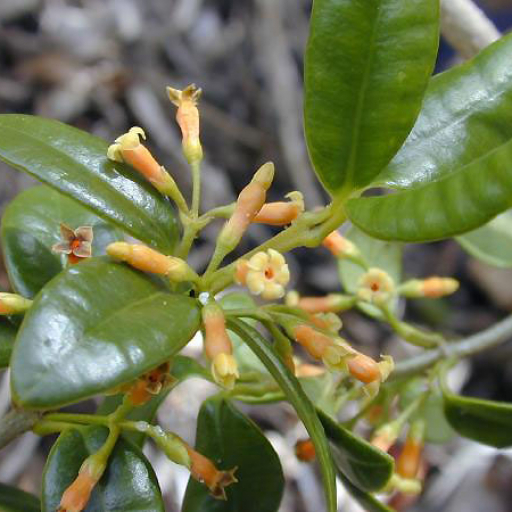
Plant Overview
Known in many Pacific cultures as a close relative of the sacred Maile, Alyxia stellata is a versatile woody climber that brings the intoxicating scent of the tropics to any landscape. Often called the "Gals-Gals" or simply Maile in certain regions, it is revered for its honey-scented flowers and glossy, star-patterned foliage. In the wild, it acts as a graceful "scrambler," weaving its way through the understory of lush coastal and mountain forests.
🔍 How to Identify
- 🍃 Starry Foliage: The leaves are typically arranged in "whorls" of three or four along the stem, creating a distinct star-like pattern that gives the plant its name, stellata.
- 🌼 Trumpet Blooms: It produces small, delicate, tubular flowers that range from creamy white to pale yellow, emitting a powerful, sweet fragrance similar to jasmine.
- 🫐 Elliptic Berries: After flowering, the plant develops small, fleshy, oval-shaped fruits that transition from green to a deep, polished black when fully ripe.
🏡 In Your Garden
- 🧗 Natural Scrambler: Unlike vines with grasping tendrils, this plant "scrambles" upward. In a garden setting, it requires a trellis, fence, or a sturdy neighboring tree to lean on as it reaches for the sun.
- 🏝️ Coastal Resilience: It is remarkably salt-tolerant and wind-resistant, making it an excellent choice for seaside gardens where other delicate ornamentals might struggle with the salt spray.
⚠️ Safety & Toxicity
- 🧪 Milky Sap: As a member of the Apocynaceae (Dogbane) family, Alyxia stellata contains a white, milky latex sap within its stems and leaves.
- 🐾 Mild Irritant: This sap can cause skin irritation or rashes in sensitive individuals and pets. While not considered deadly, it should be kept away from children or animals who might be tempted to chew on the leaves, as ingestion may cause stomach upset.
✨ Fun Fact
The plant contains a compound called coumarin, which produces a scent reminiscent of fresh hay or vanilla. This fragrance becomes even more intense as the leaves are crushed or dried, which is why it has been used for centuries in the Pacific to scent traditional clothing and create aromatic garlands.

Detailed Care Instructions
Growing Alyxia stellata, commonly known as the cinnamon vine or desert rose, requires specific conditions for it to thrive. Here are some steps to successfully grow this plant:
- Climate and Temperature: Alyxia stellata is native to tropical and subtropical regions. It grows best in USDA zones 9-11, where temperatures range from 50-95°F (10-35°C). Ensure that the plant is protected from frost.
- Sunlight: Provide the plant with full sunlight. Aim for at least 6-8 hours of direct sunlight per day.
- Soil: Alyxia stellata prefers well-draining soil. Use a mix of sandy or loamy soil with good drainage. Amend the soil with organic matter like compost to improve its fertility and moisture-retaining capabilities.
- Watering: Water the plant regularly to keep the soil evenly moist. Avoid overwatering, as the plant is sensitive to waterlogged conditions. Allow the top inch of soil to dry out before watering again.
- Fertilizer: Provide the plant with a balanced, slow-release fertilizer during the growing season. Follow the package instructions for application rates. Alternatively, you can use a liquid fertilizer every 2-4 weeks.
- Pruning: Prune the plant regularly to maintain its shape and promote bushier growth. Remove any dead, damaged, or overcrowded branches. Pruning can also help with airflow and prevent diseases.
- Propagation: Alyxia stellata can be propagated through stem cuttings. Take 6-8 inch (15-20 cm) cuttings from healthy, mature stems. Remove the lower leaves and dip the cut ends in rooting hormone powder. Plant the cuttings in a well-draining potting mix and keep them in a warm, humid environment until roots develop.
- Pests and diseases: Monitor the plant for pests like aphids, mealybugs, and whiteflies. Treat any infestations with appropriate insecticides. Additionally, ensure good air circulation to prevent fungal diseases.
- Support: Alyxia stellata tends to be a climber, so provide it with support like trellises or fences if you want it to climb.
Remember to research and understand the specific care requirements of Alyxia stellata to ensure optimal growth and blooming.
To water this plant, it is important to ensure that the soil is completely dry to the touch before watering. When watering, slowly pour water into the soil around the base of the plant until it starts to drip out of the drainage holes at the bottom of the pot. Avoid getting the plant's foliage wet as this can lead to fungal growth. It is important not to overwater as this can cause root rot. During the winter months, reduce watering frequency and allow the soil to dry out more before watering.
To fertilize this plant, use a well-balanced fertilizer with equal amounts of nitrogen, phosphorus, and potassium. Apply the fertilizer once a month during the growing season, typically in spring and summer. Dilute the fertilizer according to the manufacturer's instructions and apply it to the soil around the base of the plant. Avoid fertilizing in the drier and colder months as it may harm the plant.
To propagate this plant, you will need to take a stem cutting. Choose a healthy stem that is about 6 inches long and has several sets of leaves. Use a sharp, clean pair of scissors or shears to cut the stem at a 45-degree angle just below a node (where the leaves attach to the stem).
Remove the leaves from the bottom half of the stem. If there are any flowers or buds on the stem, remove them as well. Dip the cut end of the stem in rooting hormone powder to encourage rooting.
Prepare a pot with a well-draining potting mix. Moisten the soil slightly. Insert the cut end of the stem into the soil, burying it about an inch deep. Firm the soil around the stem to ensure good contact.
Cover the potted cutting with a clear plastic bag. This will create a humid environment that will help the cutting to root. Place the pot in a bright but indirect light location.
Check the cutting regularly to make sure the soil remains moist but not waterlogged. After a few weeks, gently tug on the stem to see if it feels rooted. Once the stem has rooted, you can remove the plastic bag and care for the plant as usual.








