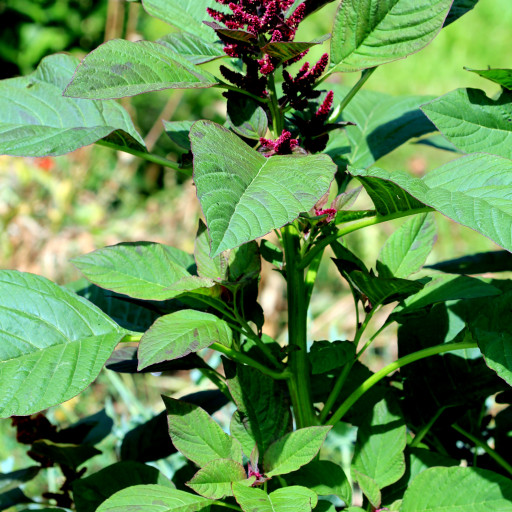
Plant Overview
Known as the "Prince’s Feather," this dramatic ornamental is much more than just a bold splash of color in the garden. Originating from Mexico, it was once a sacred crop for the Aztecs, who used its tiny, protein-rich seeds in religious ceremonies and as a staple food. Its unusual Latin name, hypochondriacus, actually means "melancholy," a reference to the somber, drooping appearance of some of its heavy flower spikes.
🔍 How to Identify
- 🪶 Velvety Plumes: The most striking feature is the dense, upright flower spikes that look like fuzzy feathers. They typically come in deep burgundy, but can also be found in gold or lime green.
- 🍃 Broad Foliage: The leaves are large, oval-to-lance-shaped, and often feature reddish veins or a purple underside that mirrors the color of the flowers.
- 📏 Stately Stature: This is a tall, structural plant that can easily reach five to six feet in height, making it a natural "back-of-the-border" centerpiece.
🏡 In Your Garden
- ☀️ Sun-Seeker: This plant is a true sun-lover; without at least six to eight hours of direct light, those brilliant colors will fade, and the stems may become leggy and weak.
- 🧱 Root Stability: It develops a significant taproot, which means it strongly dislikes being moved once established. For the best results, sow seeds directly into the garden soil after the last frost.
- 🌾 Drought Warrior: Once its root system is established, it is incredibly resilient to heat and dry spells, though a layer of mulch will help keep its "feet" cool during mid-summer heatwaves.
⚠️ Safety & Toxicity
- 🟢 General Status: Non-toxic and actually edible! The seeds are a "pseudo-cereal" and the young leaves are often cooked like spinach.
- 🐾 Pet Safety: While non-toxic to cats and dogs, the high fiber content of the plant can cause mild digestive upset if your furry friends decide to treat it like a snack bar.
- 🌱 Nitrate Caution: If grown in soil that is excessively fertilized with chemical nitrogen, the leaves can accumulate nitrates, which can be harmful if eaten in large quantities.
✨ Fun Fact
The name Amaranthus comes from the Greek word amarantos, meaning "unfading." It earned this title because the flowers retain their vibrant color even after being cut and dried, leading ancient cultures to view the plant as a symbol of immortality.

Detailed Care Instructions
| Soil Ph | Neutral To Acidic |
| Humidity | Normal |
| Lighting | Full Sun |
| Toxicity | Poisonous |
| Soil Type | Moist But Well-Drained |
| Bloom Time | Summer, Fall, Early Winter |
| Difficulty | Medium |
| Plant Type | Herbaceous Annual |
| Mature Size | Up To 4 Ft |
| Native Area | North America, Central America |
| Temperature | 19°C - 32°C |
| Sun Exposure | Full Sun, Partial Shade |
| Hardiness Zones | 9 - 10 |
To grow an Amaranthus Hypochondriacus plant, follow these steps:
- Planting: Choose a well-draining soil with a pH between 6 and 7. Sow the seeds directly into the garden bed after the last frost date in your region. Place the seeds about ¼-inch deep and 1 to 2 inches apart. Alternatively, you can start the seeds indoors 6 to 8 weeks before the last frost and transplant them later.
- Sunlight: Amaranthus Hypochondriacus requires full sun for at least 6 hours a day. Choose a location in your garden that receives ample sunlight.
- Watering: Keep the soil consistently moist but not waterlogged. Water the plant thoroughly whenever the top inch of soil feels dry. Be cautious to avoid overwatering, as it can lead to root rot.
- Fertilizing: Apply a balanced, slow-release fertilizer to the soil during planting or use a diluted liquid fertilizer every 2 to 3 weeks during the growing season. This will help provide the necessary nutrients for healthy growth.
- Pruning: Pruning is not necessary for Amaranthus Hypochondriacus plants, but you can remove any dead or damaged leaves to maintain plant health and aesthetics.
- Mulching: Apply a layer of organic mulch around the plants to retain moisture, suppress weed growth, and keep the soil temperature consistent.
- Pests and diseases: Amaranthus Hypochondriacus is generally resistant to pests and diseases. However, occasional issues such as aphids or powdery mildew may occur. Monitor the plants regularly and treat these problems if necessary using organic insecticides or fungicides.
- Harvesting: Harvest the seeds when the flowers have dried and turned brown. Cut the seed heads off and hang them upside down in a dry, well-ventilated area to allow the seeds to further dry. Rub the dried seed heads to release the seeds and store them in a cool, dry place for future planting or culinary use.
Remember to check the specific requirements of your particular variety, as some cultivars of Amaranthus Hypochondriacus may have slight variations in their growing preferences.

Place in a bright room that is sun drenched almost all day. Or directly in a south-facing window.

To properly water this plant, first check the soil moisture level by sticking your finger about an inch into the soil. If it feels dry, it is time to water. It is important to water deeply and thoroughly, ensuring that the water reaches the roots of the plant. However, make sure not to overwater as this can lead to root rot. During periods of high heat or dryness, the plant may require more frequent watering. It is also recommended to water the plant in the early morning or evening to reduce water evaporation.
Fertilize this plant with a balanced N-P-K (nitrogen, phosphorus, potassium) fertilizer once every four weeks during the growing season. Use a slow-release fertilizer or liquid fertilizer according to package instructions. Apply the fertilizer around the base of the plant and water thoroughly after application. Avoid over-fertilizing as this can lead to excessive foliage growth at the expense of flower production.
The recommended type of soil for Amaranthus Hypochondriacus is a well-draining soil that is rich in organic matter. It should have a pH level of 6.0 to 7.5 and be able to hold moisture without becoming waterlogged. A good mix can be created by combining equal parts of garden soil, compost, and sand or perlite. It is also important to ensure that the soil remains consistently moist, but not overly soggy, as the plant does not tolerate drought well. Adding a layer of mulch around the base of the plant can help to retain moisture and regulate temperature in the soil.
To propagate this plant, collect ripe seeds from the mature plant. Sow the seeds in well-draining soil, keeping it moist but not waterlogged. Germination typically takes 5-10 days, and the seedlings should be thinned out to 30-60 cm apart once they have several true leaves. The plant prefers full sun to partial shade and requires regular watering and fertilization. It is a fast-growing annual plant that produces showy, plumed flowers in late summer and fall.
Common pests of the prince's feather include Larvae. Make a habit of checking your prince's feather frequently for pests so that any infestations can be caught and managed early.








