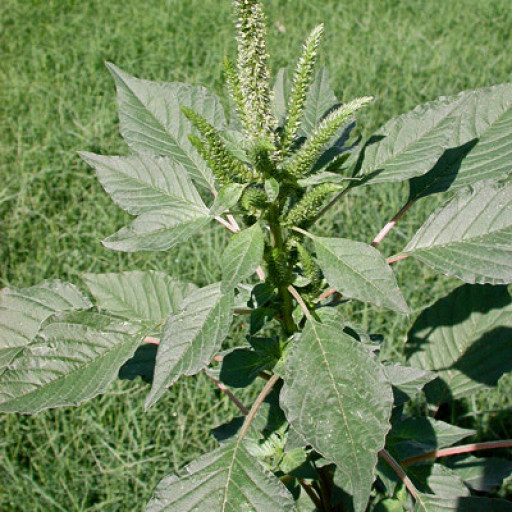
Plant Overview
Often called the "King of Pigweeds" or the "Superweed," Amaranthus palmeri is a desert native from the Southwestern US and Northern Mexico that has transformed into an agricultural powerhouse. While it shares a lineage with colorful ornamental amaranths, this species is known for its incredible resilience and its aggressive ability to outgrow and outcompete almost any neighbor.
🔍 How to Identify
- 🍃 The Petiole Test: A key trick to identify this species is bending a leaf back toward the stem; if the petiole (the leaf stalk) is longer than the leaf blade itself, you are likely looking at Palmer Amaranth.
- 💎 Diamond Foliage: The leaves are usually a matte green, shaped like wide diamonds or poinsettias, and often feature a faint white or reddish "V" shaped watermark (chevron) on the surface.
- 🌵 Prickly Spikes: The plant produces long, snake-like flower spikes that can reach up to 18 inches. Female plants feel sharp and prickly to the touch, while male plants are softer and release clouds of yellow pollen.
🏡 In Your Garden
- 🚫 A Formidable Invader: If you find this in your flower beds, act fast. It can grow up to 3 inches in a single day and a single female plant can produce over 500,000 seeds, making it a nightmare for your vegetable patches or native plants.
- 🌱 Deep Taproot: It survives droughts that kill other plants thanks to a massive, stubborn taproot. Because it is highly resistant to many common weed killers, the best way to manage it in a home garden is old-fashioned hand-pulling before it goes to seed.
⚠️ Safety & Toxicity
- 🐕 Nitrate Accumulator: While some amaranths are harvested as "greens," this specific species can accumulate high levels of nitrates from the soil. This makes it potentially toxic to cattle, horses, and pets if consumed in large quantities.
- 🖐️ Physical Irritant: The stiff, dried bracts on the female flowers are sharp enough to puncture thin garden gloves or irritate the skin, so handle mature plants with care.
✨ Fun Fact
🧬 Genetic Marvel: Scientists have labeled it a "Superweed" because it has evolved the ability to duplicate its own genes to "mask" the effects of herbicides, effectively building its own internal shield against chemicals that would easily kill other plants.

Detailed Care Instructions
To grow Amaranthus palmeri (commonly known as Palmer amaranth) plant, you can follow these steps:
- Location selection: Choose a location that receives full sun exposure for at least 6-8 hours a day. Ensure that the soil is well-draining.
- Soil preparation: Palmer amaranth prefers fertile soil. Add organic matter, such as compost or well-rotted manure, to improve soil quality and fertility. Avoid heavy clay soils if possible.
- Germination: Start by germinating the seeds indoors or sow them directly in the garden. If you start indoors, plant the seeds in seed trays or pots about 4-6 weeks before the last frost date.
- Planting: When the soil has warmed up to around 60°F (15°C), transplant the seedlings outdoors. Space the plants about 12-18 inches apart, as Palmer amaranth can grow quite large.
- Watering: Amaranthus palmeri plants need regular watering, especially during dry spells. Keep the soil moist but not soggy. Aim to provide about 1 inch of water per week.
- Mulching: Apply a layer of organic mulch around the plants to suppress weeds, conserve moisture, and maintain an even soil temperature. Mulching also helps in preventing the plants from competing with weeds.
- Fertilizer: Palmer amaranth benefits from regular fertilization. Apply a balanced, water-soluble fertilizer every 4-6 weeks or use a slow-release granular fertilizer at the beginning of the growing season.
- Pruning and trimming: Although not necessary, you may trim or pinch back the tops of the plants to encourage bushier growth. This can prevent them from becoming too tall and leggy.
- Pest and disease control: Monitor the plants regularly for pests like aphids or caterpillars. If necessary, treat with organic or chemical pest control methods. Keep an eye out for any signs of diseases and promptly address them to prevent spread.
- Harvesting: Depending on your desired usage, you can harvest the leaves, stems, flowers, or seeds of Amaranthus palmeri. The young leaves and tender stems can be harvested for use in salads or cooked dishes.
Remember to check local regulations and restrictions regarding the cultivation of Palmer amaranth, as it can be classified as a noxious weed in certain regions.

Place in a bright room that is sun drenched almost all day. Or directly in a south-facing window.

To water this particular plant, you should ensure that the soil is moist but not waterlogged. It is recommended that you water deeply and infrequently, rather than shallowly and frequently, to encourage deep root growth. You should also avoid watering the leaves and instead aim for the soil around the base of the plant. It is important to note that this plant may require more water in hot, dry conditions, so regular monitoring of the soil moisture levels is advised.
To promote healthy growth and maximize yield, fertilize the plant with a balanced all-purpose fertilizer. Apply the fertilizer evenly around the base of the plant, being careful not to allow it to touch the stem. Water the plant immediately after fertilizing to help distribute the nutrients. Repeat fertilization every 4-6 weeks during the growing season. However, be careful not to over-fertilize as this can lead to excessive foliage growth at the expense of flower or fruit production.
Amaranthus Palmeri plant grows well in a well-draining soil mix that is rich in organic matter. The soil pH should be between 6.0-7.0. The soil must be moist but not waterlogged. It can tolerate a wide range of soil types, including sandy soils, loamy soils, clayey soils, and even slightly saline soils. A soil mix that is blended with compost, perlite or pumice, and sand can improve the drainage and aeration of the soil, which can support healthy growth of the plant. It is important to avoid using heavy soils that can become waterlogged, leading to root rot or fungal infections. The soil should be regularly fertilized using a balanced fertilizer to ensure proper nutrient availability for the plant. Amaranthus Palmeri plants prefer full sunlight and warm temperatures for optimal growth.
Amaranthus Palmeri plant can be propagated through either seeds or stem cuttings. To propagate through seeds, collect mature seeds from the plant after it has flowered and the seed pods have dried out. Sow the seeds in fertile, well-draining soil either in the fall or early spring, and keep the soil moist until the seeds germinate.
To propagate through stem cuttings, take a cutting of the stem approximately four inches in length from a mature plant. Remove the bottom leaves, and leave only the top two or three leaves on the cutting. Dip the cut end in rooting hormone, and then plant the cutting in moistened soil in a container or directly in the ground. Keep the soil moist, and in a few weeks, the cutting should start to root and new growth will appear.
Regardless of the propagation method chosen, Amaranthus Palmeri plants prefer full sun and nutrient-rich soil. The plants also benefit from consistent moisture, making irrigation necessary during dry periods.
Common pests of the palmer's amaranth include Aphids, larvae. Make a habit of checking your palmer's amaranth frequently for pests so that any infestations can be caught and managed early.








