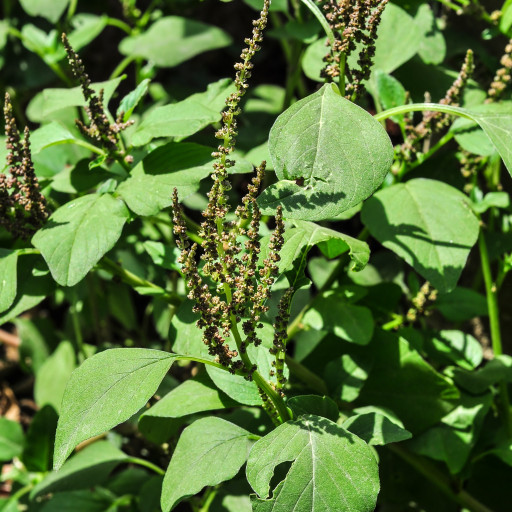
Plant Overview
Commonly known as Slender Amaranth or Green Amaranth, this hardy plant has traveled from the tropical Americas to become a global citizen. While often dismissed as a mere "weed" in manicured lawns, it is a nutritional powerhouse celebrated in kitchens from the Caribbean to Southeast Asia. Its resilient nature allows it to thrive in the cracks of sidewalks just as easily as in a well-tended vegetable patch, earning it the reputation of a true survivor.
🔍 How to Identify
- 🌿 The Leaves: Features broad, egg-shaped to triangular leaves that are bright green with slightly wavy edges and a distinct notch at the very tip.
- 🎋 The Stems: The plant grows upright on slender, smooth green stems (which occasionally take on a reddish tint near the base) reaching up to 2 feet in height.
- 🌾 The Flowers: Produces dense, finger-like spikes of tiny, inconspicuous green flowers that lack petals and feel slightly rough to the touch.
🏡 In Your Garden
- ☀️ Sun-Loving Opportunist: It thrives in disturbed, nutrient-rich soil and loves soaking up full sun. It is highly drought-tolerant once established, making it a common sight in dry, urban environments.
- 🌱 The Master of Seeding: A single plant can produce thousands of seeds. If you don't want it to take over your garden, it is best to harvest the leafy greens before the flower spikes turn brown and release their seeds.
⚠️ Safety & Toxicity
- 🥗 Status: Generally safe and edible for humans. It is widely cooked as a leafy vegetable (similar to spinach) and is rich in vitamins A and C.
- 🧪 Nitrate Caution: Like many in the Amaranth family, it can accumulate nitrates if grown in soil with heavy synthetic fertilizers. While safe for most people, it can be a concern for livestock (like cattle or sheep) if they graze on it in massive quantities.
- 🐾 Pets: It is generally considered non-toxic to cats and dogs, though its high fiber content might cause a mild stomach upset if they munch on too much of it.
✨ Fun Fact
In various cultures, Amaranthus viridis is known as a "famine food." Because it grows so rapidly and requires almost no care, it has historically saved entire communities from hunger during seasons when other primary crops failed.

Detailed Care Instructions
To grow Amaranthus Viridis, also known as slender amaranth or green amaranth, you can follow these steps:
- Select a sunny location: Choose a spot in your garden or balcony that receives at least 6-8 hours of direct sunlight daily.
- Prepare the soil: Amaranthus Viridis prefers well-draining soil with good fertility. Loosen the soil and remove any weeds or debris. You can add organic matter such as compost or well-rotted manure to improve the soil's fertility.
- Sow the seeds: Amaranthus Viridis can be directly sown in the garden or started indoors and transplanted later. If starting indoors, sow the seeds in seedling trays filled with potting soil. Plant the seeds around 1/4 inch deep and space them about 6 inches apart.
- Watering: Keep the soil moist but not waterlogged. Water the plants regularly, especially during dry periods. Be careful not to overwater, as excessive moisture can lead to root rot.
- Fertilization: Amaranthus Viridis benefits from regular fertilization. You can use a balanced, all-purpose fertilizer according to the manufacturer's instructions. Apply the fertilizer at least once a month during the growing season.
- Thinning and spacing: When the seedlings have developed their second set of true leaves, thin them to provide adequate space for growth. Space the plants about 10-12 inches apart to allow proper air circulation.
- Weed control: Keep the area around the plants free from weeds, as they can compete for nutrients and water. Regularly remove any weeds that appear near the Amaranthus Viridis plants.
- Harvesting: You can start harvesting the leaves from the plant when they are young and tender, typically around 30-40 days after sowing. Pick the leaves individually or cut the whole plant from the base. Regular harvesting promotes bushier growth.
- Pests and diseases: Keep an eye out for common garden pests such as aphids, caterpillars, or slugs. Use organic pest control methods or insecticidal soap to manage these pests. Ensure good air circulation and avoid overwatering to prevent fungal diseases.
- Saving seeds: If you want to save seeds for future planting, allow some plants to fully mature and produce flowers. Once the flowers have dried, you can collect the seeds by gently rubbing the seed heads between your fingers.
Remember to check the specific growing requirements of Amaranthus Viridis for your specific region/climate, as some adjustments may be necessary.

Place in a window with dappled sun or a spot in the middle of a room. Or directly in a window facing west or east.

To water this plant, first check the soil moisture level by inserting a finger about an inch into the soil. If the soil feels dry, it's time to water it. Use a watering can or hose to gently water around the base of the plant, taking care not to splash water on the leaves. Water until the soil feels moist but not waterlogged. Allow the soil to dry out slightly before watering again. It's important to avoid overwatering, as this can lead to root rot and other issues. Adjust watering frequency and amount based on the plant's environment, including temperature, humidity, and sunlight.
First, prepare the soil by loosening it to a depth of at least six inches. Mix in organic matter, such as compost or aged manure, to enrich the soil. Add a balanced fertilizer, such as a 10-10-10 or 12-12-12 NPK formula, according to the package instructions. Apply the fertilizer evenly around the base of the plant. Water the plant well after fertilizing to help the nutrients soak into the soil and reach the plant's roots. Repeat the fertilization every 4-6 weeks throughout the growing season to encourage healthy growth and vibrant foliage.
The best type of soil to use for the Amaranthus Viridis plant is a well-draining soil that is rich in organic matter and nutrients. This plant prefers a slightly acidic soil with a pH range of 6.0-7.0. The soil should be moist but not overly wet or dry. Adding compost to the soil can improve drainage and nutrient availability. The plant also prefers a sunny location with full or partial sun exposure. It can be grown in containers or in the ground, but it is important to ensure that the soil is fertile and well-draining.
To propagate this plant, take a cutting from a healthy, mature stem. Cut off a section of the stem with a sharp knife or scissors, making sure that the cutting is at least 4-6 inches long and has a few leaves attached. Remove the lowest leaves from the stem, leaving only a few at the top.
Next, dip the cut end of the stem into rooting hormone powder, which will help stimulate root growth. Plant the cutting into a pot filled with moist soil, making sure that the bottom of the stem is buried at least an inch deep.
Place the pot in a warm, bright place that is out of direct sunlight. Keep the soil moist but not waterlogged, and mist the leaves with water to keep them hydrated. In a few weeks, the cutting should begin to grow roots and new growth.
Once the cutting has grown into a full plant, it can be transplanted into a larger pot or outside into a garden bed. Allow the plant to fully mature before harvesting any leaves or seeds.
Common pests of the green amaranth include Spider mites, aphids, larvae, snails. Make a habit of checking your green amaranth frequently for pests so that any infestations can be caught and managed early.








