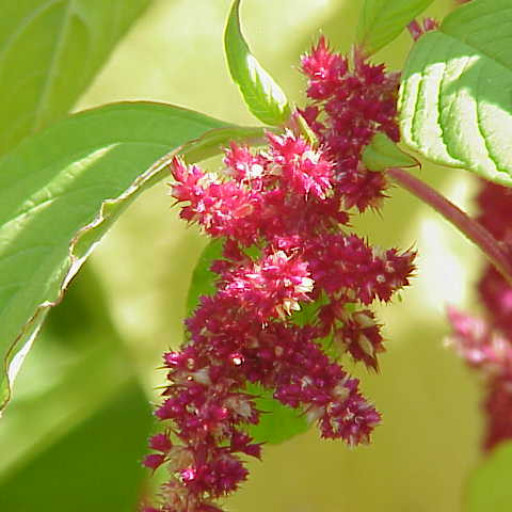
Plant Overview
Known as the "never-fading flower," Amaranthus has been a staple of human civilization for millennia, famously serving as a sacred "power food" for the Aztecs. Often called "Love-Lies-Bleeding" for its dramatic drooping crimson tassels, this plant bridges the gap between a nutritious superfood and a stunning ornamental. Whether it is towering in a backyard or appearing as a humble "Pigweed" in the wild, its resilience and vibrant colors make it impossible to miss.
🔍 How to Identify
- 🍃 Leaf Structure: Broad, oval, or lance-shaped leaves that range from deep forest green to striking variegated maroons and purples.
- 🧶 Flower Tassels: Dense, fuzzy clusters of thousands of tiny flowers that either stand bolt upright like flames or spill downward like velvet ropes.
- 🎋 Sturdy Stems: Thick, fibrous, and often ribbed stems that frequently take on the reddish pigment of the plant's blooms.
🏡 In Your Garden
- ☀️ Sun Worshipers: These plants are true children of the sun; they require intense light to develop their deep pigments and will become "leggy" or dull if tucked away in the shade.
- 🌱 The Great Travelers: Amaranthus is a prolific self-seeder, meaning a single plant can produce thousands of tiny grains that will happily pop up all over your garden next spring if not deadheaded.
- 🏜️ Heat Endurance: Unlike many ornamental flowers that wilt in the mid-summer haze, Amaranthus thrives in high temperatures and is remarkably drought-tolerant once its root system is established.
⚠️ Safety & Toxicity
- 🥗 Edible Status: For humans, many varieties are highly nutritious "pseudo-cereals" or leafy greens (often called Caribbean Callaloo).
- 🐕 Nitrate Warning: While generally safe, certain species (especially wild "Pigweed") can accumulate nitrates from the soil. This can be toxic to livestock and potentially harmful to pets if consumed in very large quantities, leading to digestive or kidney distress.
- 🌾 Pollen Alert: Because they produce massive amounts of fine pollen, they can be a significant trigger for hay fever sufferers during their blooming peak.
✨ Fun Fact
Amaranthus seeds are truly "out of this world"—they were selected by NASA to be grown on the Space Shuttle Atlantis in 1985 because of their incredible nutritional profile and ability to thrive in stressed environments!

Detailed Care Instructions
| Color | Red |
| Soil Ph | 6.5 To 7.5 (Neutral) |
| Invasive | Weed |
| Lighting | Full Sun |
| Soil Type | Average, Well-Drained Soil |
| Bloom Time | Mid Summer To Frost (Varies By Species) |
| Plant Type | Herbaceous Annuals |
| Mature Size | 2 To 7 Feet (Depends On Species And Variety) |
| Native Area | Southern U.s., Mexico |
| Sun Exposure | Full Sun To Part Shade |
| Hardiness Zones | Annual Plant; Grown In Zones 2 To 11 |
To grow an Amaranthus plant, you can follow these steps:
- Select a sunny and well-drained location: Amaranthus plants require full sun to thrive, so choose a spot that receives at least 6-8 hours of direct sunlight each day. Ensure the soil is well-drained to prevent waterlogged conditions.
- Prepare the soil: Before planting, prepare the soil by removing any weeds or debris. Loosen the soil with a garden fork or tiller and add organic compost or well-rotted manure to improve its fertility and drainage.
- Sow the seeds: Sow the Amaranthus seeds directly into the soil once the frost danger has passed and the soil has warmed up. Scatter the seeds over the prepared soil and lightly cover them with a thin layer of soil (about 1/4 inch deep). Space the seeds 12-18 inches apart to allow enough room for growth.
- Watering: Keep the soil consistently moist but not waterlogged until the seeds germinate, which usually takes around 7-14 days. After germination, water the plants deeply once a week or whenever the top inch of soil feels dry.
- Fertilizer: Amaranthus plants are not heavy feeders, but you can apply a balanced, organic fertilizer during the growing season to promote healthy growth. Follow the manufacturer's instructions for application rates.
- Mulching and weed control: Mulch around the base of the plants with a layer of organic mulch, such as straw or wood chips, to conserve moisture and suppress weed growth. Regularly remove any weeds that compete for nutrients and resources.
- Pruning and support: Amaranthus plants don't require much pruning, but you can pinch back the tips to encourage bushier growth. If you're growing tall varieties that may topple over, provide support with stakes or trellises.
- Pests and diseases: Keep an eye out for common pests like aphids, leaf miners, and spider mites. Use organic pest control methods such as neem oil or insecticidal soap to manage them. Amaranthus plants are generally resistant to diseases but can be susceptible to fungal infections in humid conditions.
- Harvesting: Harvest the Amaranthus leaves by cutting them near the base of the plant when they're young and tender, usually around 30-40 days after planting. You can also collect the mature seed heads for use in cooking or as decoration.

Place in a window with dappled sun or a spot in the middle of a room. Or directly in a window facing west or east.

1. First, ensure that the soil in which the plant is growing is properly prepared. It should be well-draining yet also retain moisture.
2. Water the plant deeply, allowing the water to penetrate down to the roots. This will encourage the roots to grow deeper and become more resilient.
3. Monitor the soil daily for signs of dryness. If the soil feels dry to the touch, water the plant again.
4. Avoid overwatering the plant, which can lead to root rot and other issues. Instead, aim for consistent moisture levels and avoid allowing the soil to become completely dry.
5. Use a watering can or similar tool to direct the water at the plant's base, rather than spraying it from above. This will help to ensure that the water reaches the roots where it is needed most.
6. Consider using a drip irrigation system or other method of watering that is designed to deliver water directly to the root zone while minimizing waste and runoff.
7. During periods of high heat or drought, increase the frequency of watering to help the plant cope with the stress.
For best results, fertilize this plant with a balanced, all-purpose fertilizer every 4-6 weeks during the growing season. Apply the fertilizer to the soil around the base of the plant, avoiding contact with the leaves. Water the plant thoroughly after fertilizing. Avoid over-fertilizing, as this can lead to excessive foliage growth at the expense of flower and seed development.
The ideal soil for the plant is one that is well-draining, loose, and loamy. It should have a neutral to slightly acidic pH level of around 6.5 to 7.5. The soil should be fertile, rich in nutrients, and contain high levels of organic matter. Additionally, the plant prefers soil that is moist but not waterlogged, so proper drainage is crucial. The recommended soil type for this plant is typically described as a mixture of sand, silt, and clay with a good balance of nutrients and pH levels. It is important to regularly maintain the soil by adding organic matter and fertilizer to keep the plant healthy and thriving.
To propagate this plant, you can take stem cuttings by selecting healthy branches. Cut the stem at a slight angle and remove any leaves that are close to the bottom. Dip the cut end in rooting hormone powder and plant the cutting in a pot with well-draining soil. Keep the soil moist and place the pot in a bright location but away from direct sunlight. Once the roots are established, the new plant can be transplanted into a larger pot or in the ground.







