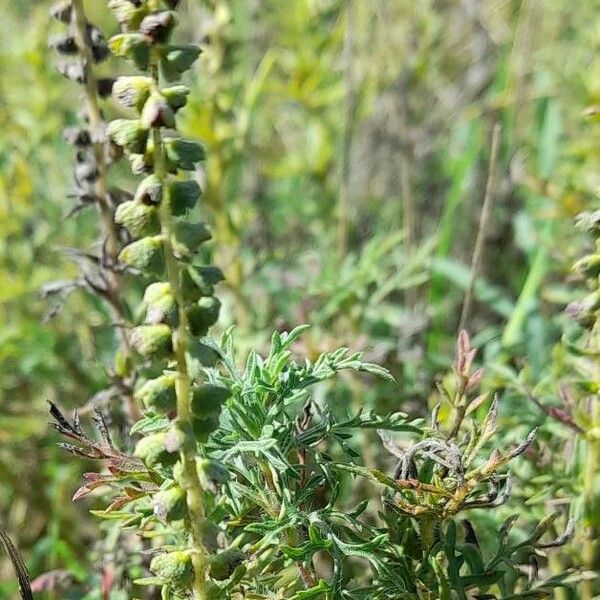
Plant Overview
Often called the Slimleaf Ragweed, this plant is a master of disguise. While its name Ambrosia translates to "food of the gods," most allergy sufferers would strongly disagree! Native to the South American pampas, it has traveled across the globe thanks to its incredible resilience and fine, lace-like foliage that allows it to blend seamlessly into meadows and roadsides.
🔍 How to Identify
- 🌿 Delicate Foliage: The leaves are the plant's namesake—"tenuifolia" means thin leaves. They are deeply divided into narrow, thread-like segments, giving the plant a soft, fern-like appearance.
- 🌾 Spiky Blooms: It produces tall, slender spikes (racemes) of tiny, yellowish-green male flowers. These are designed to catch the wind, releasing clouds of fine pollen.
- 📏 Growth Habit: It typically stands between 1 to 3 feet tall. The stems are grayish-green and often covered in tiny, stiff hairs that give them a slightly rough texture.
🏡 In Your Garden
- 🚜 Disturbed Soil Specialist: This plant thrives in "pioneer" conditions. It is often the first to arrive in abandoned lots, overgrazed pastures, or dry roadsides where the soil has been turned up.
- 🛡️ Hardy Rhizomes: Unlike common annual ragweeds, the Slimleaf Ragweed is a perennial that spreads through underground runners. This makes it a formidable opponent for gardeners, as it can regrow from even a small piece of root left in the ground.
- 💧 Drought Warrior: Because of its deep root system and thin leaves (which reduce water loss), it can stay green and thriving even in the heat of a punishing summer when other plants have withered.
⚠️ Safety & Toxicity
- 🤧 High Allergen: This is a primary culprit for seasonal hay fever. A single plant can produce millions of grains of pollen, which can travel for miles on the wind.
- 🐾 Pet & Skin Sensitivity: While not inherently poisonous to ingest in small amounts, the pollen and the oils on the leaves can cause "contact dermatitis" (itchy rashes) in both humans and sensitive pets like dogs.
✨ Fun Fact
Despite being a nightmare for people with hay fever, the genus name Ambrosia was chosen by the famous botanist Carl Linnaeus. He ironically named it after the mythical food that granted immortality to the Greek gods, possibly because of the plant's own near-immortal ability to survive in poor soil!

Detailed Care Instructions
To grow Ambrosia Tenuifolia, also known as ragweed or Roman wormwood, follow these steps:
- Choose a suitable location: Ambrosia Tenuifolia prefers full sun or partial shade. Ensure the area has well-draining soil.
- Prepare the soil: Before planting, amend the soil with compost or organic matter to improve its fertility and drainage.
- Sow the seeds: Directly sow the seeds into the prepared soil in the spring or fall. Lightly press the seeds into the soil, but do not cover them. Keep the seeds moist until they germinate, which usually takes around one to two weeks.
- Watering: Keep the soil evenly moist but avoid overwatering, as Ambrosia Tenuifolia prefers slightly drier conditions. Water deeply once or twice a week, allowing the top inch of soil to dry out between waterings.
- Mulching: Apply a layer of organic mulch around the base of the plants to help retain moisture, suppress weeds, and regulate soil temperature.
- Pruning: Trim back the plant after flowering to maintain its shape and encourage bushier growth. This will also prevent self-seeding, as Ambrosia Tenuifolia can be invasive in some areas.
- Fertilization: Ambrosia Tenuifolia generally does not require heavy fertilization. However, you can apply a slow-release organic fertilizer in the spring to provide nutrients throughout the growing season.
- Pests and diseases: The ragweed plant is relatively resistant to pests and diseases. However, keep an eye out for any signs of damage or infestation and take appropriate measures if needed.
- Harvesting and propagation: The leaves of Ambrosia Tenuifolia can be harvested and used for herbal purposes, such as making tea. To propagate new plants, collect the seeds in late summer or early fall and sow them as described in step 3.
Overall, Ambrosia Tenuifolia is a hardy plant that requires minimal care once established. However, it is worth noting that ragweed can cause allergies in some people, so consider this factor if you or your family members are sensitive to pollen.

Place in a bright room that is sun drenched almost all day. Or directly in a south-facing window.

To water this plant, ensure that the soil is dry to touch before watering. Water the plant slowly and deeply, making sure that the water reaches the roots. Avoid over-watering, as this can lead to root rot. Consider using rainwater or distilled water, as this plant is sensitive to minerals and chemicals found in tap water. Additionally, make sure the pot has drainage holes to prevent water from sitting in the soil.
To fertilize Ambrosia Tenuifolia, use a balanced fertilizer once a month during the growing season. Apply the fertilizer around the base of the plant and water it thoroughly. Avoid over-fertilizing as this can lead to excessive growth and reduced flowering.
The Ambrosia Tenuifolia plant requires a well-draining soil mix that is rich in nutrients and organic matter. It prefers a slightly acidic soil with a pH level between 5.5 and 6.5. A good soil mix for this plant would consist of a combination of peat moss, perlite or vermiculite, and coarse sand. This mix allows for good aeration and drainage while also providing the necessary nutrients for healthy plant growth. It is important to avoid using heavy or compacted soil as this can lead to root rot and other problems for the plant. Additionally, regular fertilization with a balanced fertilizer can help ensure the plant's health and vitality.
To propagate this plant, you will need to select healthy stems that have not yet flowered. Cut these stems at a 45-degree angle, and remove any leaves from the bottom two-thirds of the stem.
Prepare a soilless mix of peat moss and perlite, and wet it thoroughly. Then insert the stem cuttings into the mix, making sure that the bottom two-thirds are covered.
Place the pot or tray in a bright, warm location where it will receive indirect light. Keep the soil moist by misting it regularly, but avoid overwatering.
After a few weeks, you should start to see new growth appearing on the cuttings. Once they have developed a strong root system, they can be transplanted into individual pots with regular potting soil.
Keep the new plants in a warm, well-lit location and water them regularly. With proper care, they should continue to grow and thrive.








