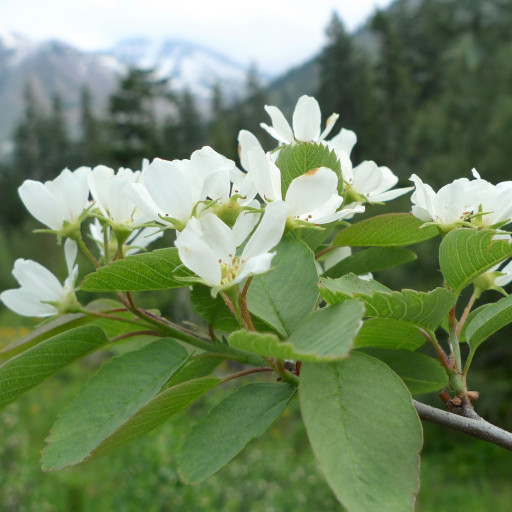
Plant Overview
Known affectionately as the Saskatoon Serviceberry or "Juneberry," this hardy shrub is the crown jewel of the North American prairies. It offers a stunning triple threat for any landscape: snowy white spring blossoms, delicious summer berries, and a fiery orange-red autumn display. Indigenous cultures have cherished this plant for centuries, utilizing it as both a staple food source and a medicinal powerhouse.
🔍 How to Identify
- 🍃 The Foliage: Small, oval-to-round leaves that are uniquely "toothed" or serrated, but usually only on the upper half of the leaf margin.
- 🌸 Spring Blooms: Elegant clusters of five-petaled, drooping white flowers that appear in early spring, often before the leaves have fully unfurled.
- 🍇 The Fruit: Small, pome-like berries that closely resemble blueberries, transitioning from a pale green to a dusty, deep purple when ripe.
🏡 In Your Garden
- ☀️ Sun for Sweetness: While this shrub is incredibly cold-hardy and can tolerate partial shade, it produces the largest and sweetest fruit yields when given full sun.
- 🪴 The Taproot Factor: Choose your planting spot wisely! This species develops a deep, stubborn taproot early in life, meaning mature shrubs are very difficult to transplant and may not survive a move.
- 🐦 Avian Neighbors: If you are growing this for jams or pies, be prepared to share. The berries are a favorite of robins and waxwings, who often spot the ripening fruit before humans do.
⚠️ Safety & Toxicity
- ✅ Safe & Edible: The berries are perfectly safe for human consumption and are packed with antioxidants and fiber.
- 🐶 Pet & Kid Friendly: The plant is generally considered non-toxic to cats, dogs, and children. However, like apples, the seeds contain trace amounts of cyanogenic glycosides; while harmless in typical quantities, it is best not to chew and swallow massive amounts of the seeds alone.
✨ Fun Fact
The city of Saskatoon in Saskatchewan, Canada, is actually named after this plant! The name is derived from the Cree word misâskwatômina, which specifically refers to the sweet, almond-flavored fruit of the Amelanchier alnifolia.

Detailed Care Instructions
| Color | White |
| Soil Ph | 5.5 - 7.0 |
| Toxicity | Non-Toxic |
| Soil Type | Moist, Well-Drained, Slightly Acidic |
| Bloom Time | Spring |
| Plant Type | Shrub |
| Mature Size | 8 - 10 Feet |
| Native Area | North America (Northeast And Midwest Usa, Canada) |
| Sun Exposure | Full Sun To Partial Shade |
| Hardiness Zones | 4-7 |
To grow Amelanchier alnifolia, also known as the Saskatoon berry or serviceberry, follow these steps:
- Choose a suitable location: Select a site with well-draining soil that receives full sun to partial shade. The plant can tolerate a wide range of soil types but prefers a slightly acidic to neutral pH.
- Obtain healthy plants: Purchase young Saskatoon berry plants from a reputable nursery or obtain them from a trusted source.
- Prepare the soil: Clear the area of any weeds or grass. Amend the soil with organic matter, such as compost or well-rotted manure, to improve fertility and drainage.
- Planting: Dig a hole twice the width and depth of the container holding the plant. Place the Saskatoon berry plant in the hole, spreading out its roots. Backfill the hole with soil, gently firming it around the roots. Ensure the top of the root ball is level with the soil surface.
- Watering: Water the newly planted Saskatoon berry thoroughly to settle the soil and remove any air pockets. Afterward, water regularly but avoid overwatering, as the plant prefers moderately moist soil.
- Mulching: Apply a layer of organic mulch, such as wood chips or straw, around the base of the plant. Mulch helps retain moisture, suppress weeds, and moderate soil temperature.
- Pruning: Prune young Saskatoon berry plants in late winter or early spring during their dormant period. Remove any damaged or crossing branches, as well as any suckers or shoots emerging from the base of the plant.
- Fertilization: In early spring, apply a balanced, slow-release fertilizer according to the manufacturer's instructions to promote healthy growth and fruit production.
- Pests and diseases: Monitor the plant for pests like aphids or sawflies. If necessary, use appropriate organic insecticides or insecticidal soaps to control infestations. Ensure good air circulation around the plants to prevent diseases like powdery mildew.
- Harvesting: Saskatoon berries typically ripen in mid to late summer. Harvest them when they are plump, dark purple, and easily detach from the stem. Use the fruits for fresh eating, baking, or making jams and jellies.
Remember to check with local gardening experts or extension services for specific recommendations on growing Saskatoon berries in your area, as conditions may vary.

Place in a window with dappled sun or a spot in the middle of a room. Or directly in a window facing west or east.

To provide adequate hydration to this particular plant, it is important to know its specific watering requirements. Begin by checking the soil daily and ensuring that it remains moist but not waterlogged. Use a watering can or hose to gently water the base of the plant, taking care not to wet the foliage or flowers. Be sure to water thoroughly, allowing the water to penetrate deeply into the soil. During hot or dry spells, increase the frequency of watering to prevent the plant from becoming stressed. Avoid watering during periods of heavy rain or when the soil is already saturated, as this can lead to root rot. Finally, observe the plant regularly to monitor its health and adjust watering practices as needed.
To fertilize this plant, apply a balanced, slow-release fertilizer in the spring, just before new growth appears. Use a fertilizer with equal amounts of nitrogen, phosphorus, and potassium, such as a 10-10-10 or 12-12-12 formula. Spread the fertilizer evenly around the base of the plant, being careful not to let it touch the stems or foliage. Water the plant well after fertilizing to help the nutrients penetrate the soil. Repeat the fertilization once or twice during the growing season, spacing the applications at least a month apart. Avoid fertilizing in the fall, as this can encourage new growth that may not have time to harden off before winter.
Amelanchier alnifolia prefers well-draining, acidic soil with a pH between 5.0 and 6.5. The ideal soil for this plant is a loamy, sandy soil with a high organic matter content. This type of soil will provide good drainage while still retaining enough moisture to keep the plant healthy. It is important to avoid heavy or clay soils, as these can lead to waterlogging and root damage. When planting, it is recommended to add compost or other organic matter to the soil to improve its fertility and structure. Lastly, it is important to ensure that the soil is kept consistently moist but not waterlogged, as this can cause damage to the plant.
One way to propagate this plant is by taking softwood cuttings in the early summer. Choose a healthy, vigorous stem with no flowers or buds. Cut a 4-6 inch section of the stem just below a leaf node, and remove any leaves from the bottom half of the stem. Dip the cut end in rooting hormone powder and plant it in a well-draining potting mix. Place the pot in a warm, bright location out of direct sunlight. Keep the soil moist and the humidity high, covering the pot with a clear plastic bag or container. After a few weeks, new growth should appear from the cutting, signaling successful rooting. Gradually acclimate the plant to lower humidity and brighter light before transplanting it to its permanent location outdoors.
Common pests of the western serviceberry include Spider mites, larvae. Make a habit of checking your western serviceberry frequently for pests so that any infestations can be caught and managed early.








