Plant Overview
Often called the Winged Everlasting, this Australian native is a favorite for those who want a garden that stays beautiful long after the season ends. Its blooms look like tiny, crisp fried eggs, and because they are naturally "everlasting," they retain their shape and color for years when dried. In the wild, it thrives in sandy soils, earning it the rugged nickname "Sand-flower."
🔍 How to Identify
- 🦋 The Winged Stems: The most striking feature is the stem itself, which has flat, leaf-like ridges or "wings" running vertically along its length, giving the plant a unique architectural look.
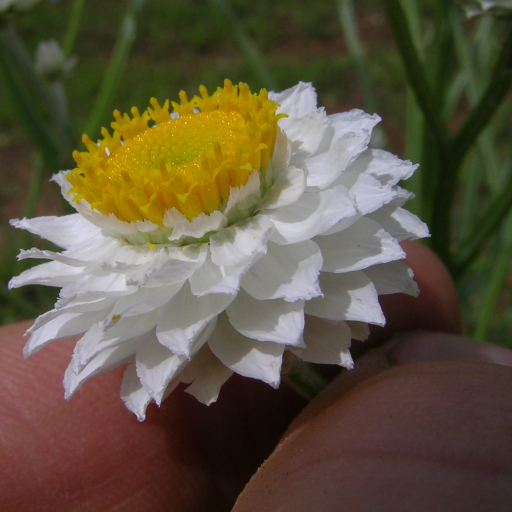
- 🍳 Fried-Egg Blooms: Small flowers (about 1-2 cm wide) feature stiff, papery white outer bracts surrounding a dense, bright golden-yellow center.
- 🧶 Woolly Base: Before the tall flower spikes emerge, the plant forms a basal rosette of silvery-green leaves covered in fine, downy hairs.
🏡 In Your Garden
- 🏜️ Drainage is King: True to its heritage, the Winged Everlasting demands excellent drainage. It is highly drought-tolerant once established but will rot quickly if left in heavy, waterlogged clay.
- 🌱 Look but Don't Move: This plant develops a deep taproot early in its life. Because of this, it hates being moved; it is best to sow seeds directly in their permanent home rather than transplanting seedlings.
- ✂️ Harvesting Secret: To use these for crafts or dried bouquets, cut the stems just as the first row of white "petals" opens. If you wait too long, the yellow centers can turn brown and drop seeds indoors.
⚠️ Safety & Toxicity
- ✅ Safe Status: Ammobium alatum is generally considered non-toxic to humans, cats, and dogs. It is a safe addition to a family-friendly garden.
- 🧤 Mild Irritation: While not poisonous, the fine, woolly hairs on the stems and leaves can be a minor skin irritant for people with very sensitive skin. Wearing gloves while pruning is a good practice.
✨ Fun Fact
The "petals" you see on the flower aren't actually petals at all! They are specialized, papery leaves called bracts. These bracts have almost no moisture in them even when the plant is growing, which is why they feel like stiff parchment while the flower is still alive.

Detailed Care Instructions
To grow Ammobium Alatum plants, also known as winged everlasting or sandhill immortelle, follow these steps:
- Climate: Ammobium Alatum thrives in a Mediterranean climate but can adapt to various conditions. They require full sunlight for at least six hours a day.
- Soil: Choose well-draining soil with a pH range of 6.0 to 7.5. Sandy or loamy soil is preferred. Ammobium Alatum can tolerate poor soil conditions but may not thrive in heavy clay or compacted soil.
- Seed collection: Gather seeds from mature Ammobium Alatum plants during late summer or early fall. Fully dried flowers will have seed heads that resemble small, round discs.
- Stratification: Ammobium Alatum seeds require stratification to break their dormancy. Place the seeds in a moist paper towel or small container with damp peat moss. Put them in the refrigerator for about two weeks.
- Seed planting: Sow the stratified seeds directly into the garden bed or seed trays in early spring, after the danger of frost has passed. Thinly sprinkle the seeds on the soil surface or gently press them into the soil.
- Germination: Keep the soil consistently moist but not waterlogged. The seeds usually take 10 to 20 days to germinate. Once the seedlings have established their first true leaves, thin them to a spacing of 12 to 18 inches (30-45 cm) apart.
- Watering and fertilizing: Ammobium Alatum plants require moderate watering. Water deeply and infrequently to encourage deep root growth. Apply a balanced, slow-release fertilizer once or twice during the growing season.
- Pruning and deadheading: Regularly deadhead the spent flowers to encourage continuous blooming and prevent seed formation. Cut back any overgrown or leggy stems to maintain a compact shape.
- Pests and diseases: Ammobium Alatum is generally resistant to pests and diseases. However, keep an eye out for aphids, snails, or slugs and take appropriate measures to control them if necessary.
- Harvesting: Harvest the flowers when they are fully open but still slightly immature. Cut the stems and hang them upside down in a dry and well-ventilated area. Once dried, remove the leaves and store the flowers in an airtight container for future use in dried arrangements or crafts.
By following these steps, you can successfully grow Ammobium Alatum plants and enjoy their beautiful, everlasting flowers.

Place in a bright room that is sun drenched almost all day. Or directly in a south-facing window.

To water this plant, you should ensure that the soil is consistently moist but not waterlogged. The best way to determine when it's time to water is to feel the soil a few inches below the surface. If it feels dry to the touch, it's time to water. Use a watering can or spray bottle to water the soil directly at the base of the plant, avoiding getting water on the leaves or flowers. Water early in the day to allow excess moisture to evaporate and prevent fungal growth. Avoid overwatering, which can lead to root rot and other plant health issues.
For optimal growth and flowering, fertilize the plant monthly during the growing season with a balanced, all-purpose fertilizer. Follow the instructions on the fertilizer package for the correct amount to use, and be sure to water the plant thoroughly after each application. Avoid over-fertilizing, as this can cause root burn and damage to the plant.
Ammobium Alatum plant prefers well-draining soil that is rich in organic matter. A recommended soil mixture is a 50:50 combination of loam and sand. The loam soil provides the necessary nutrients and retains moisture, while the sand improves drainage and prevents waterlogging. It is also important to ensure that the soil pH level is between 6.5 to 7.5, as this is the optimal range for Ammobium Alatum to grow. Avoid using heavy clay soils, as they can suffocate the plant's roots and cause root rot. Additionally, adding organic fertilizers during the growing season can provide the necessary nutrients for its growth.
To propagate this plant, begin by preparing a rooting hormone solution and dipping the cuttings in it. Next, select a healthy stem cutting that is approximately 4-6 inches long and remove any leaves from the bottom third of the stem. Make a clean cut just below a leaf node and dip the cut end in the rooting hormone solution, tapping off any excess. Plant the cutting in a well-draining soil mix and keep the soil moist but not waterlogged. Cover the cutting with a clear plastic bag or dome to create a humid environment and place it in bright, indirect light. After a few weeks, check for roots by gently tugging on the cutting. If it resists, it has rooted and can be acclimatized to normal growing conditions by gradually exposing it to more light and removing the covering gradually over a week or two.








