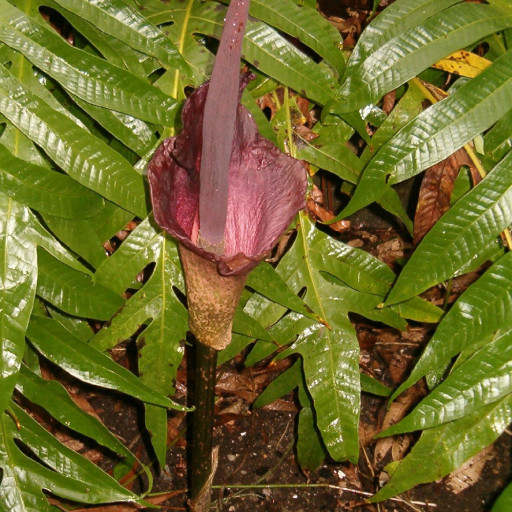
Plant Overview
Often referred to as the Voodoo Lily or Devil’s Tongue, the Amorphophallus konjac is one of the most dramatic and otherworldly plants you can grow. Known for its massive, deep-maroon bloom that smells like a prehistoric swamp (or rotting meat), this plant is a favorite for those who love "weird" nature. While it looks like something out of a sci-fi film, it has been cultivated for centuries in Asia for its edible starchy tuber.
🔍 How to Identify
- 👅 The Spadix: A long, dark purple or nearly black "tongue" that emerges from the center of a ruffled, petal-like spathe during bloom.
- 🐍 Mottled Stem: The single leaf stalk (petiole) is thick and features a striking, snake-like pattern of grey, green, and pink splotches.
- 🌳 Umbrella Canopy: When the flower dies back, a single, massive leaf emerges that branches out like a small, highly-segmented palm tree.
🏡 In Your Garden
- 🥔 The Tuber Cycle: This plant grows from a giant underground corm. It is a "heavy feeder," meaning it needs rich soil to build up enough energy to produce its spectacular bloom every few years.
- 💤 The Big Sleep: Don't panic if it disappears! Konjac goes completely dormant in the winter. The foliage will yellow and collapse, leaving only the tuber underground to wait for spring warmth.
- 🦟 The Stink Factor: The bloom produces heat and a strong scent of carrion to attract flies and beetles for pollination. If it blooms indoors, you might want to move it to the porch for a few days!
⚠️ Safety & Toxicity
- 🚫 Raw Toxicity: Like many aroids, the entire plant contains calcium oxalate crystals. If chewed raw, it causes intense stinging, swelling of the throat, and digestive distress.
- 🐾 Pet Warning: Keep this plant away from curious cats and dogs. The sap can cause skin irritation, and the tuber is dangerous if ingested.
- 🍜 Processing Required: While the tuber is the source of "Shirataki" noodles and Konjac flour, it must be specifically processed and cooked to be safe for human consumption.
✨ Fun Fact
The Amorphophallus konjac is the source of the popular "Konjac Sponge" used in skincare! The fibrous root is ground into a powder, mixed with water, and baked into a natural, exfoliating sponge that is gentle enough for sensitive skin.

Detailed Care Instructions
| Color | Red, Purple |
| Soil Ph | Neutral, Acidic |
| Humidity | Normal |
| Lighting | Part Sun |
| Toxicity | Toxic |
| Soil Type | Sandy, Well-Drained |
| Bloom Time | Winter |
| Difficulty | Medium |
| Plant Type | Perennial, Tuber |
| Mature Size | 6 Ft. Tall, 4 Ft. Wide |
| Native Area | Asia |
| Temperature | 22°C - 25°C |
| Sun Exposure | Partial, Shade |
| Hardiness Zones | 7-10 |
To grow an Amorphophallus Konjac plant, also known as the Konjac plant or Voodoo Lily, follow these steps:
- Purchase a healthy Amorphophallus Konjac plant or find a fresh corm (underground tuber) from a reputable source.
- The plant prefers a warm, humid climate, so choose a spot in your garden or a container with good drainage that receives partial or filtered sunlight.
- Prepare the soil by making it loose and rich in organic matter. Add compost or well-rotted manure to improve the soil fertility.
- Plant the corm about 6-8 inches deep and 12-18 inches apart, with the concave side facing up. Make sure the planting hole is wide enough to accommodate the corm.
- Water the newly planted corm thoroughly, ensuring the soil is evenly moist but not waterlogged. Avoid letting the soil dry out completely.
- Maintain a consistent temperature between 60-80°F (16-27°C), as this plant thrives in warm conditions. If grown in a container, bring it indoors during colder months.
- Provide the Konjac plant with a high humidity environment. Regularly mist the leaves with water or place a tray of water near the plant to increase humidity.
- Amorphophallus Konjac plants prefer slightly acidic soil, so you can periodically test and adjust the pH if necessary. Aim for a pH range of 6.0-6.8.
- Fertilize the plant during the growing season with a balanced, slow-release fertilizer or a liquid fertilizer diluted according to the package instructions.
- As the plant grows, ensure it has enough space to spread its large, umbrella-like leaves. Stake taller plants for support if needed.
- The Konjac plant blooms with a large, reddish-brown spathe and an unpleasant odor, similar to the smell of decaying flesh. Enjoy the unique bloom, but be aware that it may not occur until the plant is several years old.
- In colder climates, protect the plant from frost by covering it or bringing it indoors during winter.
- Keep an eye out for pests such as aphids or spider mites, which can occasionally infest the plant. Take appropriate measures to control these pests if necessary.
Remember that Amorphophallus Konjac plants are known for their strong odor when flowering, so consider this before planting them in an enclosed space or near living areas.

Place in a window with dappled sun or a spot in the middle of a room. Or directly in a window facing west or east.

Amorphophallus Konjac plant requires regular watering. It is essential to keep the soil moist but not waterlogged. Overwatering can result in root rot, which can lead to plant death. The amount of water needed depends on the plant's size, location, and environment. It may need to be watered daily during hot and dry weather or every few days in cooler weather. It is always a good idea to check the soil moisture before watering by sticking your finger a few inches into the soil. If it feels dry, it's time to water. It is best to water from the base of the plant rather than the top to avoid getting water on the leaves, which can cause fungal diseases. Finally, allow any excess water to drain out of the pot or container.
To fertilize this plant, use a balanced fertilizer with equal amounts of nitrogen, phosphorus, and potassium. Apply the fertilizer to the soil around the plant during the growing season, but only once a month. Take care not to get the fertilizer on the leaves or stem of the plant, as this can damage them. Additionally, the plant prefers a slightly acidic soil pH, so consider using a fertilizer specifically designed for acidic-loving plants. Finally, make sure to water the plant thoroughly after fertilizing to help the nutrients penetrate the soil.
The recommended soil for this plant should be rich in organic matter and well-draining. The soil pH should be slightly acidic, preferably between 5.5 to 6.5. Heavy or clay soils should be avoided as they can lead to waterlogged conditions. A mix of peat moss, perlite, and coarse sand can be used to create a suitable soil mixture. The plant prefers moist soil but not waterlogged conditions, so occasional watering may be necessary. It is also recommended to fertilize the plant with a slow-release organic fertilizer during the growing season.
Amorphophallus Konjac is a plant that can be propagated by dividing its corms. To do this, carefully dig up the parent plant when it is dormant, being sure to avoid damaging the roots. Gently remove any soil from around the corm, and separate it from any smaller corms that may have grown around it. Each smaller corm should have a small shoot and roots. Plant each corm in a pot in well-draining soil, with the top of the corm just below soil level. Water the newly planted corms sparingly until they begin to show signs of growth.
Common pests of the konjac include Scale insect, mealybugs, spider mites, aphids, thrips. Make a habit of checking your konjac frequently for pests so that any infestations can be caught and managed early.








