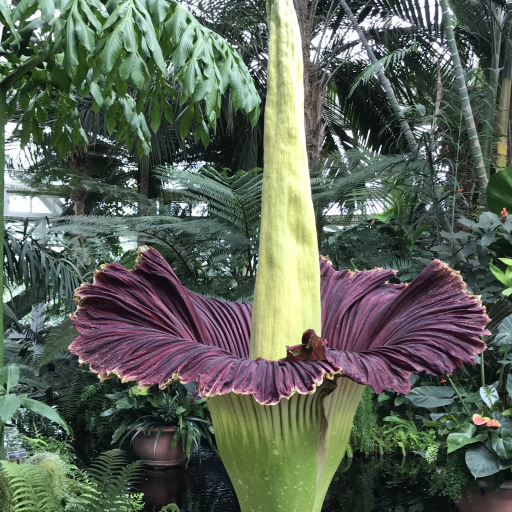
Plant Overview
Known globally as the "Corpse Flower" or "Titan Arum," this botanical giant is the undisputed rockstar of the plant world. Native to the rainforests of Sumatra, it holds the record for the world's largest unbranched inflorescence. It is famous—or perhaps infamous—for its dramatic, once-a-decade bloom that smells remarkably like a decaying animal to attract its unique pollinators.
🔍 How to Identify
- 🌸 The Spadix: A towering, pale yellow central spike that can reach over 10 feet in height, standing like a giant candle in the center of the bloom.
- 🍷 The Spathe: A massive, frilled "petal" (actually a modified leaf) that is lime green on the outside and a deep, velvety burgundy on the inside when it unfurls.
- 🌳 The "Tree" Phase: When not in bloom, the plant produces a single, massive leaf that branches out at the top, often mistaken for a small tree.
🏡 In Your Garden
- 🌡️ Extreme Tropical Needs: This is not a typical windowsill plant. It requires consistent tropical heat (above 75°F) and "steamy" humidity levels to mimic the Sumatran jungle.
- 🥔 The Hidden Giant: Below the soil lies a massive corm (tuber) that can weigh over 150 pounds. It requires an enormous pot and extremely well-draining, rich soil to prevent rot during its long dormant cycles.
- ⏳ Patience Required: A Titan Arum can take 7 to 10 years to gather enough energy to bloom for the first time, and even then, the flower only lasts for about 24 to 48 hours.
⚠️ Safety & Toxicity
- 🚫 Toxic if Ingested: Like most members of the Arum family, all parts of the plant contain calcium oxalate crystals.
- 🐾 Pet & Child Warning: If chewed or swallowed, it causes intense mouth irritation, swelling of the throat, and digestive distress. It is strictly ornamental and should be kept away from curious pets and children.
✨ Fun Fact
During the first night of its bloom, the spadix actually generates its own heat (thermogenesis), reaching temperatures close to human body heat. This "fever" helps broadcast its rotting-meat scent high into the canopy to attract flesh flies and dung beetles from miles away!

Detailed Care Instructions
| Color | Red, Purple |
| Soil Ph | Neutral, Acidic |
| Humidity | Dry |
| Lighting | Full Sun |
| Toxicity | Toxic |
| Soil Type | Sandy, Well-Drained |
| Bloom Time | Winter |
| Difficulty | Easy |
| Plant Type | Perennial, Tuber |
| Mature Size | Up To 8 Feet Tall |
| Native Area | Asia |
| Temperature | 18°C - 24°C |
| Sun Exposure | Partial, Shade |
| Hardiness Zones | 7-10 |
Growing an Amorphophallus titanum, also known as the corpse flower or titan arum, can be challenging, as it is a unique and demanding plant. Here are some steps to help you grow it successfully:
- Obtain a healthy tuber: Purchase a healthy tuber from a reputable source, as growing from seed can be difficult and time-consuming.
- Prepare the soil: Use a well-draining potting mix that is rich in organic matter. Amorphophallus titanum prefers acidic soil with a pH between 5.5 and 6.5.
- Choose a suitable container: Select a large pot with good drainage holes, as the corpse flower can grow quite large. A pot at least 18 inches in diameter is recommended.
- Plant the tuber: Place the tuber in the pot, covering it with soil but leaving the growing tip exposed. Press the soil gently around the tuber to ensure good contact.
- Provide the right conditions: This plant thrives in warm and humid environments. Maintain a temperature between 75-85°F (24-29°C) during the day and 60-70°F (15-21°C) at night. Use a humidifier or place a tray filled with water near the plant to increase humidity levels.
- Water appropriately: Keep the soil moist but not soggy. Water the plant when the top inch of soil feels dry. Avoid overwatering, as it can lead to root rot.
- Provide sufficient light: Place the corpse flower in a location with bright, indirect light. Avoid direct sunlight, as it can scorch the leaves.
- Fertilize regularly: Use a balanced, slow-release fertilizer specifically formulated for flowering plants. Follow the manufacturer's instructions for application.
- Support the growth: As the plant grows, it will need support for its enormous inflorescence. Use a stake or support ring to provide stability.
- Be patient: It can take several years for the corpse flower to bloom, sometimes up to 7-10 years. During this time, continue to care for the plant diligently and be prepared for its remarkable bloom when the time comes.
Remember to research and understand the specific needs of the Amorphophallus titanum plant, as successfully growing it requires careful attention to its unique requirements.

Place in a window with dappled sun or a spot in the middle of a room. Or directly in a window facing west or east.

To water this plant, first, check the moisture level of the soil. You can do this by sticking your finger about an inch or two into the soil. If it feels dry, it's time to water. Use room temperature water and pour it slowly onto the soil until it starts to drain out of the bottom of the pot. Be careful not to get water on the foliage, as this can cause damage. Allow the soil to drain completely before putting the plant back in its spot. Watering frequency will depend on factors such as temperature, humidity, and the size of the pot. Generally, it's best to let the soil dry out slightly between waterings, rather than keeping it constantly wet.
To fertilize this plant, mix a balanced, slow-release fertilizer with soil prior to planting or apply a diluted liquid fertilizer to the soil surface every three weeks during the growing season. Avoid over-fertilizing, as this can lead to burned roots and decreased plant health. Additionally, supplement fertilization with regular watering and provide ample light and warmth for optimal growth.
The ideal soil for the plant in question should be well-draining and rich in organic matter. It should be a mix of various materials such as peat moss, perlite, coconut coir, and compost. The soil should be slightly acidic, with a pH level of around 6.5 to 7.0. It is important to avoid using soil that is too heavy or has a high clay content, as this can lead to waterlogging and root rot. Additionally, the plant does not tolerate salty or saline soils, so ensure that the soil is not too salty. It is recommended to sterilize the soil before use to eliminate any harmful microorganisms. It is important to keep the soil moist but not excessively wet, as the plant is sensitive to overwatering.
To propagate this plant, you will need to wait until the plant forms a tuber or corm. Once the tuber has matured, you can carefully remove it from the soil and divide it into multiple sections. Each section should have at least one healthy bud and some roots attached. Be careful not to damage the buds or roots when dividing the tuber.
Next, prepare small pots with a well-draining potting mix. Plant each section of the tuber in its own pot, making sure that the bud is facing up and the roots are covered with soil. Water the pots well and place them in a warm and humid location, such as a greenhouse or grow room.
Once the plants have established themselves and are growing well, you can slowly acclimate them to more light and less humidity until they are ready to be planted outdoors. It is important to note that these plants are slow growing and may take several years to mature enough to produce their distinctive blooms.
Common pests of the titan arum include Scale insect, mealybugs, spider mites, aphids, thrips. Make a habit of checking your titan arum frequently for pests so that any infestations can be caught and managed early.








