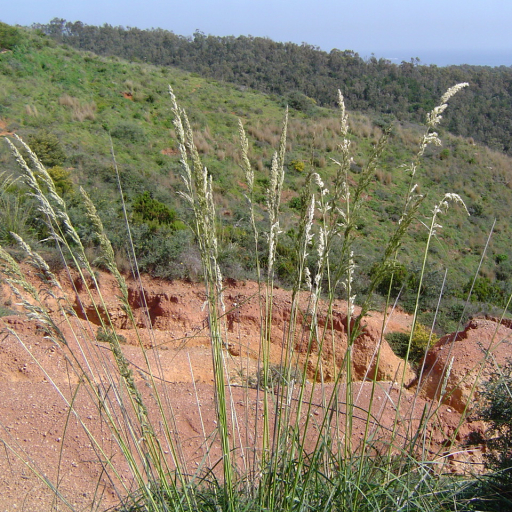
Plant Overview
Often called "Diss Grass" or "Mauritanian Rope Grass," Ampelodesmos mauritanicus is a Mediterranean giant that brings a sense of wild, rugged elegance to any landscape. This perennial grass doesn't just grow; it erupts in a fountain-like display of tough, arching foliage. For centuries, it was the "hardware store" of the hillsides, used by locals to weave everything from sturdy ropes and baskets to thatched roofs for rural dwellings.
🔍 How to Identify
- 📏 The Tussock: It forms massive, dense clumps (tussocks) that can reach over 3 meters (10 feet) in height when in full bloom, making it a true architectural centerpiece.
- 🍃 The Foliage: The leaves are long, narrow, and incredibly tough, with a leathery texture and a grayish-green hue that stays vibrant throughout the year.
- 🌾 The Panicles: In late spring, it sends up tall, elegant flowering stalks topped with one-sided, feathery plumes that turn a shimmering golden-straw color as they dry.
🏡 In Your Garden
- 🏜️ Drought Champion: This grass is built for survival in poor, rocky, or sandy soils. It thrives in high heat and requires very little water once established, making it perfect for xeriscaping or slopes.
- 🏛️ Design Statement: Because of its immense size and "fountain" shape, it is best used as a focal point or a natural screen. It hates "wet feet" and heavy clay; ensure the soil drains quickly to prevent root rot.
⚠️ Safety & Toxicity
- 🛡️ Non-Toxic but Sharp: While the plant is not chemically poisonous to humans or pets, its leaves are its primary defense.
- ✂️ Physical Risk: The leaf edges are extremely sharp and can cause painful, paper-cut-like slices on skin. It is best planted away from narrow walkways or areas where children and curious pets play frequently.
✨ Fun Fact
📜 The name Ampelodesmos comes from the Greek words ampelos (vine) and desmos (bond). Historically, the leaves were so strong and flexible that they were the primary tool used by Mediterranean farmers to tie grapevines to their supports!

Detailed Care Instructions
To grow Ampelodesmos mauritanicus, also known as Mauritanian grass, you can follow these steps:
- Choose a suitable planting location: Mauritanian grass prefers well-drained soil and full sun exposure. Select an area in your garden or landscape with these conditions.
- Prepare the soil: Before planting, prepare the soil by removing weeds, rocks, and other debris. Loosen the soil using a garden fork or tiller to a depth of about 6-8 inches. Add organic matter like compost or well-rotted manure to improve soil fertility and drainage.
- Sow the seeds: Ampelodesmos mauritanicus can be propagated from seeds. Sow the seeds directly in the prepared soil during the appropriate season, which is usually spring or early autumn. Scatter the seeds over the soil surface and gently rake them in, covering them with a thin layer of soil.
- Watering: After sowing, water the soil gently to keep it consistently moist until the seeds germinate. Avoid overwatering, as excessive moisture can lead to rotting.
- Thinning and spacing: Once the seedlings emerge, thin them out if they are too crowded, usually leaving a spacing of 6-12 inches between plants. This helps provide enough room for each plant to grow and prevents competition for nutrients and light.
- Regular care: Ampelodesmos mauritanicus is a low-maintenance plant. It is drought-tolerant once established, but occasional watering during dry spells can promote healthier growth. Additionally, a light application of organic fertilizer in spring can help enhance growth.
- Pruning: Mauritanian grass can be pruned back to the ground in late winter or early spring to encourage fresh growth. Trim off any dead or damaged leaves as necessary throughout the year.
- Pest and disease control: This grass is generally resistant to pests and diseases. However, keep an eye out for common garden pests like grasshoppers or aphids. If necessary, treat with organic or chemical insecticides following the product instructions.
By following these steps, you should be able to successfully grow Ampelodesmos mauritanicus in your garden or landscape.

Place in a bright room that is sun drenched almost all day. Or directly in a south-facing window.
Ampelodesmos Mauritanicus plant requires regular watering to keep the soil moist, but not waterlogged. Watering should be done in the morning or evening when the temperatures are cooler to minimize moisture evaporation. The frequency of watering depends on the weather conditions, soil moisture levels, and plant growth stage. Generally, the plant requires watering every 3-5 days during hot and dry weather conditions and once a week during cooler seasons. It is recommended to water the plant deeply, allowing the water to penetrate the soil up to the root zone. Overwatering should be avoided as it can cause root rot, yellowing of leaves, and eventually death of the plant. It is better to slightly underwater rather than overwater the plant. The use of a layer of mulch around the base of the plant can help to retain soil moisture for longer periods, reducing water requirements.
- Use a balanced fertilizer that provides equal amounts of nitrogen, phosphorus, and potassium.
- Apply the fertilizer in the early spring before the new growth begins.
- Scatter the fertilizer evenly throughout the soil around the plant, taking care not to apply it directly to the leaves or stem.
- Water the plant after applying the fertilizer to help it absorb the nutrients.
- Repeat the fertilizer application in the mid to late summer to encourage continued growth and flowering.
- Avoid over-fertilizing, as this can lead to leaf burn or other foliage damage. Read the label instructions carefully and use only the recommended amount.
- If the plant appears to be suffering from nutrient deficiencies, such as yellowing leaves or reduced growth, consider applying a specialized fertilizer formulated to address these issues.
A suitable soil for Ampelodesmos Mauritanicus plant should be a well-draining and sandy soil mix with the addition of organic matter for improved nutrient retention and moisture regulation. This plant prefers mildly acidic to neutral soil pH levels between 6.0 and 7.5. The soil should be kept moderately moist, but not waterlogged, and should be allowed to dry slightly in between watering sessions. It is also important to ensure good soil aeration and avoid overcrowding of the plant, which can lead to poor growth and disease incidence. Regular fertilization with a balanced fertilizer can help boost the plant's growth and overall health.
To propagate this plant, one can start by collecting the seeds from the mature plant. The seeds should be thoroughly cleaned before sowing. Sow the seeds in a well-draining soil mix in a pot or tray. The pot or tray should be kept in a warm and sunny location and should be watered regularly. The seeds should start to germinate within a few weeks.
Another way to propagate this plant is by using stem cuttings. Take a stem cutting from a healthy and mature plant, preferably with a few leaves. Remove the lower leaves from the stem and dip the cut end in rooting hormone. Plant the stem cutting in a well-draining soil mix and keep it moist. The cutting should be kept in a warm and sunny location and should root within a few weeks.
Division is also a way to propagate this plant. Dig up the mature plant and carefully separate the roots into smaller sections. Each section should have a few stems and some roots. Plant these divided sections in a well-draining soil mix and keep them moist. They should start growing within a few weeks.








