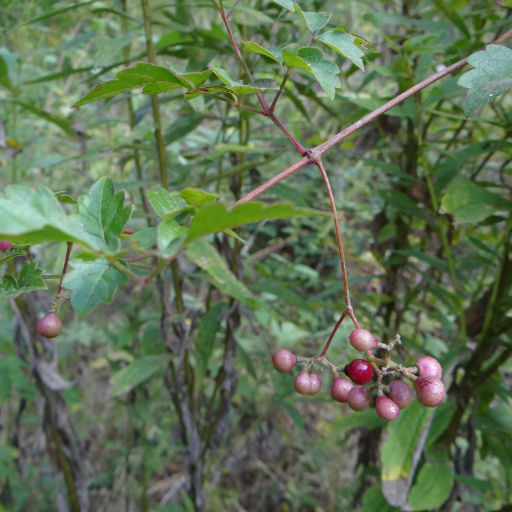
Plant Overview
Commonly known as the Peppervine, Ampelopsis arborea is a tenacious and elegant climber native to the southeastern United States. While its name might suggest a spicy culinary use, this plant is actually a relative of the grapevine, prized more for its lacy, "parsley-like" foliage and its ability to transform a plain fence into a wall of deep green. In the wild, it acts as a vigorous groundcover or a scrambling vine, often found dancing along the edges of swamps and woodlands.
🔍 How to Identify
- 🌿 Lacy Foliage: The leaves are "bipinnate" (doubly compound), meaning they are divided into multiple small, serrated leaflets that give the plant a delicate, fern-like appearance.
- 🍇 Color-Changing Berries: It produces clusters of berries that undergo a dramatic transformation, shifting from pale green to vibrant hot pink and magenta, finally ripening into a glossy, obsidian black.
- 🧗 Bushy Habit: Unlike some vines that grow straight up, the Peppervine is often semi-woody and bushy, using branched tendrils to pull itself over shrubs and structures.
🏡 In Your Garden
- 🌱 Aggressive Elegance: While beautiful, it is a vigorous grower. In a garden setting, it needs a strong trellis or fence; otherwise, it may "swallow" smaller nearby plants. It is perfect for those who want quick coverage in moist, sunny areas.
- 🐝 Wildlife Magnet: It is a high-value plant for local ecology. The inconspicuous greenish flowers are a favorite for honeybees and native pollinators, while the ripe black berries are a crucial food source for songbirds in the autumn.
⚠️ Safety & Toxicity
- 🚫 Non-Edible: The berries are strictly for the birds. They contain calcium oxalate crystals, which can cause intense stinging and irritation in the mouth and throat if consumed by humans.
- 🐾 Pet Safety: Keep an eye on curious dogs and cats; ingesting the berries or foliage can lead to digestive upset and mouth pain. The sap can also cause mild skin irritation (dermatitis) for gardeners with sensitive skin.
✨ Fun Fact
Despite its name, "Peppervine" has no botanical relation to black pepper or chili peppers. The name was inspired solely by the visual resemblance of its dark, round fruit clusters to bunches of peppercorns!

Detailed Care Instructions
To grow Ampelopsis Arborea plant, also known as the peppervine or porcelainberry vine, follow these steps:
- Select a suitable location: Ampelopsis Arborea prefers full sun to partial shade, so choose a spot in your garden that receives at least 6 hours of direct sunlight per day. The plant also thrives in well-draining soil.
- Prepare the soil: Before planting, prepare the soil by removing any weeds or grass from the planting area. Loosen the soil with a garden fork or tiller to a depth of 8-10 inches. You can also add compost or organic matter to improve the soil's fertility and drainage.
- Planting: Plant Ampelopsis Arborea in early spring after the last frost date or in fall. Dig a hole twice as wide and as deep as the plant's root ball. Place the plant in the hole, ensuring the top of the root ball is level with the soil surface. Backfill the hole with soil, gently firming it around the plant. Water thoroughly after planting to settle the soil.
- Watering: Ampelopsis Arborea generally needs regular water during its first growing season to establish a deep, healthy root system. Water deeply, ensuring the soil remains evenly moist but not waterlogged. Once established, the plant is relatively drought-tolerant and only requires watering during extended dry periods.
- Pruning: Prune Ampelopsis Arborea annually during late winter or early spring. Remove any dead or damaged branches and trim the vine to the desired shape and size. This helps promote healthy growth and prevents the plant from becoming too sprawling or overgrown.
- Mulching and Fertilizing: Apply a layer of mulch around the base of the plant to help conserve moisture, suppress weed growth, and moderate soil temperature. Additionally, you can fertilize the plant in early spring using a balanced, slow-release fertilizer to provide necessary nutrients.
- Support structure: Ampelopsis Arborea is a climbing vine and requires support to grow vertically. Install a trellis, arbor, or other suitable support structure for the plant to grow on.
- Pests and diseases: Monitor the plant regularly for any signs of pests or diseases, such as aphids, scale insects, or powdery mildew. Treat any issues promptly using appropriate organic or chemical control methods.
Following these steps will help you successfully grow and maintain Ampelopsis Arborea in your garden.

Place in a window with dappled sun or a spot in the middle of a room. Or directly in a window facing west or east.

To water this plant, you should ensure that the soil is moist but not waterlogged. Take care not to let the soil dry out completely as this can stress the plant. Water regularly, allowing the excess water to drain away to prevent root rot. You may need to water more frequently during hot weather or when the plant is actively growing. It is also a good idea to mulch around the base of the plant to help retain moisture in the soil.
To fertilize your Ampelopsis Arborea plant, follow these instructions:
- Choose a slow-release balanced fertilizer formulated for woody plants. Look for a ratio of N-P-K (nitrogen-phosphorus-potassium) around 10-10-10 or 14-14-14. This will provide a balanced nutrient supply.
- Read the instructions on the fertilizer packaging carefully to determine the appropriate amount of fertilizer to use based on the size and age of your Ampelopsis Arborea plant.
- Apply the fertilizer evenly around the base of the plant, making sure to avoid direct contact with the stem or leaves. You can lightly scratch the surface of the soil to incorporate the fertilizer or use a handheld spreading tool.
- Water the plant thoroughly after applying the fertilizer to help dissolve the nutrients and ensure they reach the plant's roots. This will also prevent any potential fertilizer burn.
- Monitor the plant's response to fertilization. If the leaves show signs of burning or discoloration, you may have applied too much fertilizer. In such cases, it's important to flush out the excess nutrients by watering the plant abundantly.
- Repeat the fertilization process according to the recommended frequency on the fertilizer packaging or based on the specific needs of your Ampelopsis Arborea plant. Typically, fertilization should be done once or twice a year, ideally in spring or late winter before new growth starts.
Remember, always consult the specific instructions provided with your chosen fertilizer and consider the specific requirements of your Ampelopsis Arborea plant to ensure optimal fertilization practices and overall plant health.
The Ampelopsis Arborea plant grows best in well-draining soil that is rich in nutrients. A soil mix that is composed of equal parts of sand, organic matter, and garden soil is ideal for this plant. It is important to ensure that the soil pH is between 5.5-7.5, as anything outside of this range can make it difficult for the plant to absorb nutrients. Additionally, the soil should be moist but not waterlogged, and it is recommended to add a layer of mulch to retain moisture and prevent the soil from getting too dry. Lastly, it is important to avoid using high-nitrogen fertilizers, as they can promote excessive foliage growth at the expense of flowering. A balanced fertilizer that is rich in phosphorus and potassium is recommended for optimal growth and flowering of the Ampelopsis Arborea plant.
To propagate Ampelopsis Arborea, also known as the plant you are referring to, you can follow these steps:
- Start by collecting mature seeds from the plant. Look for plants with fully developed fruits that contain seeds. Harvest the fruits and let them fully ripen before removing the seeds.
- Clean the seeds by removing any remaining fruit pulp or debris. Wash them gently under running water and pat them dry using a paper towel.
- Prepare a well-draining potting mix that consists of equal parts of peat moss, perlite, and vermiculite. This will provide a suitable growing medium for the seeds.
- Fill small pots or seed trays with the potting mix. Make sure the containers have drainage holes to avoid waterlogging.
- Sow the seeds on the surface of the potting mix, spacing them evenly. Lightly press the seeds into the soil but avoid burying them too deeply.
- Mist the potting mix with water to ensure it is evenly moist. Placing a clear plastic cover over the pots or trays can help retain moisture.
- Place the pots or trays in a warm location with indirect sunlight. Maintain a consistent temperature of around 70-75°F (21-24°C).
- Check the moisture level regularly and mist the potting mix whenever it feels dry. Avoid overwatering, as excessive moisture could lead to fungal or mold growth.
- Germination may take several weeks or even a few months. Once the seedlings emerge, remove the plastic cover and provide them with bright, indirect sunlight.
- As the seedlings grow, transplant them into larger pots or individual containers with a well-draining potting mix. Allow them to develop a strong root system before transplanting them into the garden or a permanent outdoor location.
- When the plants are around 6-8 inches tall and display a healthy root system, they can be transplanted into their final growing location. Ensure the chosen site has adequate sunlight and sufficient space for the mature plant to grow and spread.
- Water the newly transplanted plants deeply, and add a layer of organic mulch around the base to conserve moisture and suppress weed growth.
- Monitor the plants for any signs of pests or diseases and take appropriate actions.
- Over time, Ampelopsis Arborea will establish itself and continue to thrive, providing attractive foliage and potential benefits to the surrounding environment.
Note: It's important to research and comply with relevant regional regulations before propagating or planting any species of plants.
Common pests of the peppervine include Scale insect, mealybugs, spider mites, thrips. Make a habit of checking your peppervine frequently for pests so that any infestations can be caught and managed early.







