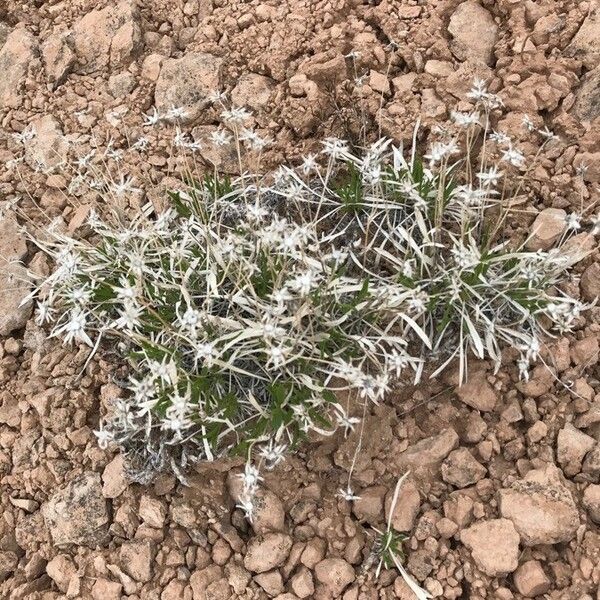
Plant Overview
Commonly known as the Longtube Blue-star, this elegant perennial is a hidden gem of the high deserts of Texas and New Mexico. Unlike its more common garden cousins, Amsonia longiflora looks like a delicate explosion of icy-blue stars caught in mid-air. It is prized by native plant enthusiasts for its ability to bring a soft, airy texture to rugged, sun-drenched landscapes.
🔍 How to Identify
- ⭐ The Bloom: Look for clusters of pale blue to white flowers with exceptionally long, slender tubes—sometimes reaching up to two inches—that flare out into a perfect five-pointed star.
- 🌿 The Foliage: The leaves are narrow, almost needle-like or willow-like, giving the plant a feathery, cloud-like appearance from a distance.
- 🍂 Seasonal Shift: In the autumn, the vibrant green foliage undergoes a dramatic transformation, turning a brilliant, glowing golden-yellow that lights up the garden.
🏡 In Your Garden
- 🌵 Desert Roots: This plant is a true survivor of rocky, limestone-rich soils. It has a deep taproot that makes it incredibly drought-tolerant once established, but this also means it hates being moved—pick its "forever home" carefully!
- ☀️ Sun Seeker: While it can handle light dappled shade, it performs best in full sun. Too much shade can cause the stems to become "floppy" as they stretch toward the light, losing that neat, rounded shrub-like habit.
⚠️ Safety & Toxicity
- 🚫 Status: Mildly Toxic / Skin Irritant.
- 🧪 The Milky Sap: Like many members of the Dogbane family, this plant contains a milky white latex sap. If you break a stem, avoid getting this sap on your skin as it can cause irritation. It is also bitter and toxic if ingested, making it naturally "deer-resistant" but potentially harmful to curious pets or toddlers.
✨ Fun Fact
The "Longtube" in its name isn't just for show; it is a specialized evolutionary trait. Because the nectar is hidden deep at the bottom of that long floral tube, the plant relies almost exclusively on long-tongued Hawkmoths for pollination, which hover like tiny hummingbirds to reach the sweet reward inside!

Detailed Care Instructions
To grow Amsonia longiflora, also known as Blue Star, you can follow these steps:
- Select the right planting location: Choose a spot in your garden that receives full to partial sun. The soil should be well-draining and preferably slightly acidic to neutral (pH 5.5-7.0).
- Prepare the soil: Before planting, ensure the soil is loose and free of weeds. Add organic matter, such as compost or well-rotted manure, to improve soil fertility and drainage if needed.
- Planting: Dig a hole that is twice the size of the plant's root ball. Place the Amsonia longiflora into the hole, ensuring the top of the root ball is level with the surrounding soil. Backfill the hole with soil, gently pressing it around the plant to eliminate air pockets.
- Watering: Give the newly planted Blue Star a thorough watering to help settle the soil. Continue to water regularly, especially during dry periods, but make sure not to overwater as this plant prefers slightly moist soil.
- Mulching: Apply a layer of organic mulch, like wood chips or bark, around the base of the plant to help retain moisture and suppress weed growth. Leave a small gap around the stem to prevent rotting.
- Fertilizing: Blue Star generally doesn't require excessive fertilization. However, you can apply a balanced slow-release fertilizer in early spring.
- Pruning: Trim back any dead or damaged stems in late winter or early spring before new growth starts. This will help maintain a neat appearance and improve the plant's overall health.
- Winter care: Established Amsonia longiflora plants are generally cold-hardy, but you can provide some winter protection by mulching around the base of the plant to insulate the roots.
By following these steps, you should be able to successfully grow Amsonia longiflora in your garden.
To water Amsonia Longiflora plant, you should follow these steps:
- Assess the soil moisture: Before watering, it is important to check the soil moisture level. Insert your finger approximately 2 inches deep into the soil and feel if it is dry or still moist. Only water the plant if the soil feels dry to touch.
- Watering container-grown plants: For container-grown Amsonia Longiflora plants, water the container thoroughly until you see water coming out from the drainage holes at the bottom. This ensures that the water reaches the entire rootball.
- Watering landscape plants: For Amsonia Longiflora planted in the ground, use a hose or watering can to provide a slow, steady stream of water at the base of the plant, directly onto the soil. Avoid wetting the foliage excessively, as this may increase the risk of diseases.
- Deep watering: It is beneficial to water deeply but infrequently to encourage the plant's roots to grow deeper into the soil. This helps the plant become more resistant to drought in the long run. Watering deeply means providing enough water so that it penetrates the root zone, which is typically 6-8 inches deep.
- Watering frequency: In general, water the Amsonia Longiflora plant when the top inch of soil feels dry. The frequency of watering depends on various factors such as temperature, humidity, and rainfall. During hot and dry periods, you might need to water more frequently, while during cooler periods, less frequent watering may be required.
- Mulching: Applying a layer of organic mulch around the base of the plant can help conserve moisture in the soil and regulate soil temperature. This can reduce the need for frequent watering by preventing evaporation.
Remember, the specific watering needs may vary depending on the climate and growing conditions. Always observe the plant's response and adjust the watering accordingly to maintain proper soil moisture levels.
When fertilizing Amsonia Longiflora, it is advisable to follow these instructions:
- Begin fertilizing in the early spring, once new growth starts to emerge.
- Choose a balanced, slow-release fertilizer with an N-P-K ratio around 10-10-10 or similar.
- Dilute the fertilizer according to the package instructions, or adjust the amount based on the size of the plant.
- Apply the fertilizer evenly around the base of the Amsonia Longiflora plant, avoiding direct contact with the stems or leaves.
- Gently work the fertilizer into the surrounding soil using a garden fork or cultivator, ensuring it is well-incorporated.
- Water the plant thoroughly after fertilizing to promote nutrient absorption and prevent potential leaf burn.
- Reapply fertilizer once or twice throughout the growing season, following the same procedure as described above.
- In late summer or early fall, discontinue fertilization as the plant begins to prepare for dormancy.
- Monitor the plant's response to fertilization, adjusting the frequency and quantity if needed, as each plant's nutrient requirements may vary.
Amsonia Longiflora is a perennial plant that requires a specific type of soil to thrive. It prefers well-drained soil that is loamy and rich in organic matter. This type of soil not only allows excess water to drain away but also retains enough moisture for the plant's roots.
The soil pH should ideally be slightly acidic to slightly alkaline, ranging from 6.0 to 7.5. It is important to avoid extremely acidic or alkaline soils, as they can impact the plant's growth and health.
When it comes to soil texture, Amsonia Longiflora grows best in loamy soil with a balanced proportion of sand, silt, and clay. Loamy soil provides ideal conditions for root development, allowing them to easily spread and extract nutrients.
Additionally, it is recommended to prepare the planting area by loosening the soil and adding organic matter such as compost or well-rotted manure. This will enhance the soil's fertility, drainage, and moisture-retention capabilities.
In summary, Amsonia Longiflora thrives in well-drained, loamy soil with a slightly acidic to slightly alkaline pH range. Improving soil fertility through the addition of organic matter is also beneficial for the plant's overall health and growth.
Propagation Method:
- Choose a healthy parent plant: Select a mature and healthy Amsonia Longiflora plant from which you want to propagate.
- Timing: The best time to propagate Amsonia Longiflora is during the spring or early summer when the plant is actively growing.
- Soil preparation: Prepare a well-draining potting mix by combining equal parts peat moss, perlite, and coarse sand. This mix provides an ideal medium for root development.
- Cutting selection: Take semi-ripe cuttings from the parent plant. Semi-ripe cuttings are stems that have partially hardened at the base but are still green at the tips.
- Cutting preparation: Select a stem that is approximately 6-8 inches long and use sharp, sterilized pruning shears to make a clean cut just below a leaf node. Remove any lower leaves to expose a few inches of bare stem.
- Hormone application: Dip the base of the cutting into a rooting hormone powder or gel to enhance rooting success. Follow the instructions on the packaging for proper application.
- Potting: Make a hole in the potting mix and carefully place the cutting in it, ensuring that at least two leaf nodes are buried. Gently press the soil around the cutting to hold it in place.
- Mist and cover: Mist the cutting with water to increase humidity and cover the container loosely with a clear plastic bag or place it in a propagator. This will help to create a mini greenhouse environment, promoting moisture retention.
- Provide appropriate conditions: Place the container in a warm location with bright, indirect light. Avoid exposing the cutting to direct sunlight, as it may lead to excessive drying.
- Care and maintenance: Mist the cutting regularly to keep the environment humid and check the soil moisture level. Keep the soil slightly moist but not waterlogged. Overwatering can lead to root rot.
- Root development: In about 6-8 weeks, the cutting should develop a strong root system. You can check for root growth by gently tugging at the cutting. If you feel resistance, roots have formed.
- Transplanting: Once the cutting has established roots, it is ready to be transplanted into a larger container or directly into the garden. Handle it carefully and ensure it is planted at a similar depth as before.
- Acclimatization: Gradually expose the newly propagated plant to outdoor conditions, starting with a few hours of shade and gradually increasing its exposure to sunlight. This will help the plant adjust and prevent shock.
By following these steps, you should successfully propagate Amsonia Longiflora and expand your collection of this beautiful plant.








