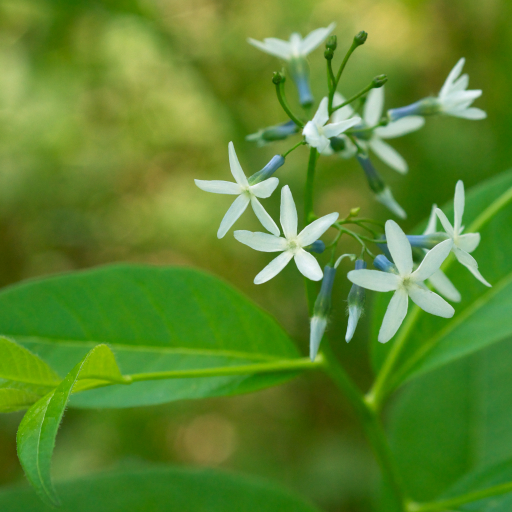
Plant Overview
Known affectionately as the Eastern Bluestar, this North American native is a true "four-season" treasure for any garden. While many perennials fade after their spring performance, Amsonia tabernaemontana transitions gracefully from a cloud of ethereal blue stars to a lush, willow-like shrub, finally erupting into a brilliant golden bonfire in the autumn. It is widely celebrated by native plant enthusiasts for its rugged reliability and its ability to look "neat" without much human intervention.
🔍 How to Identify
- ⭐ The Flowers: Delicate, soft-blue petals form a perfect five-pointed star shape, appearing in dense clusters at the tips of the stems in late spring.
- 🍃 The Foliage: Leaves are long, narrow, and lance-shaped, closely resembling the leaves of a willow tree. They are arranged alternately along the sturdy, upright stems.
- 💧 The Sap: If a leaf or stem is broken, the plant reveals a thick, milky white latex sap, which is a key identifying feature of the dogbane family.
🏡 In Your Garden
- 🌱 Root Stability: This plant develops a deep, woody taproot over time. This makes it incredibly drought-tolerant once established, but it also means it "hates" being moved. Choose its forever home carefully, as transplanting an older Bluestar can be a struggle for both the gardener and the plant.
- 🍂 Autumn Transformation: While many gardeners buy it for the blue spring blooms, the real show often happens in October. The entire clump turns a vivid, glowing butter-yellow that stands out sharply against the fading browns of a late-season garden.
- 🦌 Natural Defense: Because of its bitter, milky sap, it is virtually "pest-proof." Deer and rabbits usually take one sniff and move on to tastier options, making it an excellent choice for woodland edges where wildlife pressure is high.
⚠️ Safety & Toxicity
- 🛡️ Status: Low toxicity, but a skin irritant.
- 🧤 Details: The milky sap contains alkaloids that can cause mild skin irritation or dermatitis in sensitive individuals. It is best to wear gloves when pruning. While not considered deadly, the sap can cause stomach upset in pets if ingested in large quantities, though its bitter taste usually prevents this.
✨ Fun Fact
The specific epithet tabernaemontana honors the 16th-century botanist Jacobus Theodorus Tabernaemontanus, who is often called the "Father of German Botany." He was one of the first scientists to use detailed woodcut illustrations to help common people identify medicinal plants!

Detailed Care Instructions
To grow Amsonia Tabernaemontana (Eastern Bluestar) plant, follow these steps:
- Choose a suitable location: Amsonia Tabernaemontana prefers full sun to partial shade. Select a location in your garden that receives at least 6 hours of sunlight per day.
- Soil preparation: This plant thrives in well-draining soil. Prepare the soil by adding organic matter, such as compost, to improve drainage and fertility.
- Planting: Dig a hole that is slightly larger than the plant's root ball. Place the plant in the hole, ensuring that the top of the root ball is level with or slightly above the soil surface. Backfill the hole with soil, gently firming it around the plant.
- Watering: Water the plant immediately after planting to help settle the soil and remove any air pockets. Provide regular watering throughout the first growing season until the plant is established. Afterward, occasional watering during dry periods or droughts will suffice.
- Mulching: Apply a layer of organic mulch, such as wood chips or straw, around the base of the plant. Mulching helps retain moisture, suppresses weeds, and regulates soil temperature.
- Pruning: Prune the plant in early spring to remove any dead or damaged branches. This encourages new growth and maintains a more compact form.
- Fertilizing: Amsonia Tabernaemontana does not typically require frequent fertilizing. However, applying a slow-release balanced fertilizer in early spring can benefit the plant's overall health and growth.
- Division: Every few years, you can divide mature clumps of Amsonia Tabernaemontana to propagate new plants. Spring or fall is the best time to divide the plant. Dig up the clump, separate it into smaller sections, and replant the divisions.
- Pests and diseases: Amsonia Tabernaemontana is generally pest and disease resistant. However, it might be susceptible to aphids or powdery mildew. Keep an eye out for these issues and take appropriate measures if necessary, such as using organic insecticides or fungicides.
By following these guidelines, you can successfully grow Amsonia Tabernaemontana in your garden.

Place in a window with dappled sun or a spot in the middle of a room. Or directly in a window facing west or east.

This plant prefers to be watered regularly, with a deep and thorough watering about once a week depending on the moisture level of the soil. It is important to make sure that the soil does not become too waterlogged, as this can cause root rot. Allow the soil to dry out slightly between waterings, but do not let it completely dry out. When watering, make sure to water the base of the plant rather than the leaves, as wet leaves can lead to disease. Additionally, it is important to avoid overhead watering as much as possible, as this can also lead to disease.
To fertilize this plant, apply a slow-release, balanced fertilizer in the early spring before new growth begins. Water the plant thoroughly before and after fertilizing to prevent root burn. Avoid over-fertilizing, as this can lead to excessive growth and reduce flowering. Monitor the plant throughout the growing season and fertilize again if the leaves start to yellow or growth slows down. Always follow the fertilizer manufacturer's instructions for application and dosage. Finally, make sure to apply fertilizer evenly around the plant's base and avoid getting fertilizer on the foliage or stems.
The ideal soil for the Amsonia Tabernaemontana plant is a well-draining, moist soil with a pH level of 6.0-7.5. It prefers a soil that is rich in organic matter and slightly acidic to neutral. A sandy or loamy soil with good drainage is preferable, as the plant does not tolerate waterlogged soil. The plant requires a moderate amount of water, so it is important to keep the soil consistently moist but not waterlogged. Adding compost or organic matter to the soil can help improve soil fertility and water retention. It is also important to avoid compacting the soil around the plant, as this can impede water and nutrient uptake. Overall, the key to growing a healthy and vibrant Amsonia Tabernaemontana plant is to provide it with well-draining, nutrient-rich soil and consistent moisture.
One way to propagate this particular plant is through stem cuttings. First, select a healthy stem with several leaves on it. Using a sharp, clean knife, make a cutting that is approximately 4-6 inches long. Remove the bottom leaves from the cutting, leaving only two or three leaves at the top. Dip the cut end of the stem into rooting hormone (if desired) and place the stem into a container filled with moist potting soil. Cover the container with a plastic bag to increase humidity and place it in a warm, bright location (but out of direct sunlight). Make sure to keep the soil moist, but not overly wet, and after a few weeks, you should begin to see roots forming. Once the plant has established roots, it can be transplanted into a larger container or directly into the ground.








