Plant Overview
The Ananas comosus, universally known as the Pineapple, is the ultimate symbol of tropical hospitality and exotic luxury. Originally hailing from the heart of South America, this bromeliad is more than just a snack; it is a dramatic, architectural plant that can be grown right from the "crown" of a store-bought fruit. Once so rare that European aristocrats would rent them by the hour to display at parties, it remains a favorite for patient gardeners looking for a taste of the tropics.
🔍 How to Identify
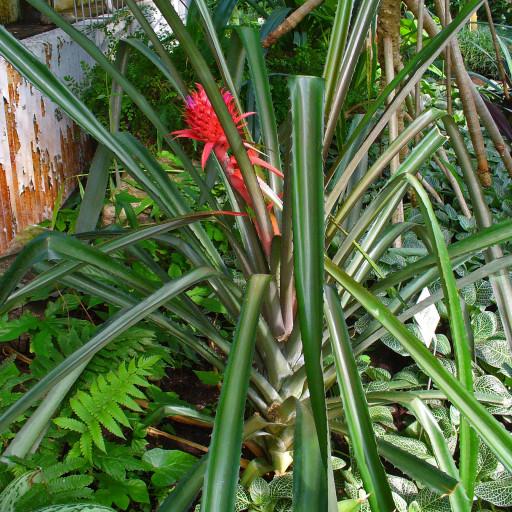
- 🌵 Leaf Structure: Features long, sword-shaped, waxy leaves arranged in a tight spiral (rosette) that can reach up to 3–5 feet in length in ideal conditions.
- ⚔️ Spiny Margins: Most traditional varieties have sharp, saw-like teeth along the edges of the leaves, though some modern "Smooth Cayenne" types are less prickly.
- 🍍 The Terminal Spike: A thick, sturdy stalk emerges from the center of the rosette, topped by a cluster of purple or red flowers that eventually fuse together to form the compound fruit.
🏡 In Your Garden
- ☀️ Sun-Drenched Ambitions: Unlike its cousins that grow on trees, the Pineapple is a terrestrial bromeliad. It requires a wide, stable pot and at least 6–8 hours of intense sunlight to produce the energy needed to grow a heavy fruit.
- 🪴 Well-Draining Thirst: It hates "wet feet." Use a sandy, acidic potting mix (like a cactus or citrus blend) to prevent root rot. It is surprisingly drought-tolerant but appreciates consistent humidity.
- ⏳ The Test of Patience: Growing a pineapple from a crown takes time. Expect to wait 2 to 3 years before seeing your first flower spike appear from the center of the leaves.
⚠️ Safety & Toxicity
- 🐱 Pet Warning: While the ripe fruit is a safe treat in moderation, the leaves and the skin of the plant contain bromelain, which can cause digestive upset or mouth irritation in cats and dogs.
- 🖐️ Physical Hazards: The serrated leaves are sharp enough to draw blood. It is best to keep this plant away from high-traffic walkways where children or pets might brush against it.
- 👅 Unripe Risks: Consumption of significantly unripe pineapple fruit can lead to severe throat irritation and acts as a powerful laxative.
✨ Fun Fact
🍍 A pineapple is not a single fruit, but a "coalesced berry." Each "eye" or scale on the surface was once an individual flower that fused together around a central core to create the large fruit we recognize today!

Detailed Care Instructions
To propagate a pineapple from a grocery store fruit, twist or cut off the leafy top of the plant. Remove some of the lower leaves. Plant the cutting so the leaves are flush or slightly above the soil line, then start watering to keep the soil moist. Roots will start to form in about 8 weeks.
What plant pests are common to pineapple?
Look for common pests like mealybugs and scale. If you notice signs of an infestation, treat the plant with a non-toxic horticultural oil, like neem oil, frequently until all evidence of pests has disappeared.
| Color | Yellow |
| Soil Ph | 5.0-6.0 |
| Humidity | Normal |
| Lighting | Part Sun |
| Toxicity | Non-Toxic |
| Soil Type | Rich, Sandy, Loamy |
| Bloom Time | Summer, Fall |
| Difficulty | Medium |
| Plant Type | Perennial |
| Hibernation | Cold Period |
| Mature Size | 3 To 4 Feet Tall |
| Native Area | South America |
| Temperature | 18°C - 25°C |
| Sun Exposure | Full Sun, Part Shade |
| Hardiness Zones | 10-12 |
Here are some steps to help you grow Ananas comosus, also known as pineapple plant:
- Obtain a pineapple fruit: Purchase a fresh, ripe pineapple from the grocery store. Make sure it is healthy with a green crown of leaves on top.
- Prepare the pineapple: Twist or cut off the crown (the leafy top) of the pineapple, ensuring that a small portion of the fruit is still attached.
- Remove excess fruit: Carefully remove any remaining fruit flesh from the bottom of the crown. Allow it to dry for a few days to prevent rotting.
- Prepare the pot: Choose a pot with drainage holes, filled with well-draining potting soil. Pineapples prefer slightly acidic soil, so adding some compost or peat moss can help.
- Plant the crown: Gently push the pineapple crown into the soil, ensuring that the bottom leaves are just above the soil level. Firmly pat the soil around the base of the crown to hold it in place.
- Provide sunlight: Place the pot in a location that receives bright, indirect sunlight. Pineapples require at least six hours of sunlight daily.
- Watering: Keep the soil consistently moist but not waterlogged. Allow the top inch of soil to dry out between watering sessions.
- Fertilize: After the plant has established itself, which may take a few months, you can start applying a balanced, water-soluble fertilizer every one to two months.
- Monitor growth: Over time, the pineapple crown will grow roots and produce new leaves from the center. Be patient, as it can take up to two years for the plant to produce a pineapple fruit.
- Transplanting: Once the pineapple plant has outgrown its pot, you can carefully transfer it to a larger container or even plant it directly in the garden.
Remember to protect the plant from extreme temperatures and provide regular care such as removing dead leaves, controlling pests if necessary, and pruning back any overly long or damaged leaves. With proper care, your Ananas comosus plant should thrive and potentially bear fruit in the future!

Place in a window with dappled sun or a spot in the middle of a room. Or directly in a window facing west or east.

To properly water this plant, you should first assess the soil's moisture level by sticking your finger about 1-2 inches into the soil. If it feels dry, it's time to water. When watering, make sure to pour the water slowly at the base of the plant to avoid damaging the leaves. Additionally, make sure the water is able to drain out of the pot by leaving a saucer underneath to catch any excess water. It's important not to overwater this plant, as it can lead to root rot. Therefore, water only when necessary and make sure the soil has a chance to dry out slightly before watering again.
To fertilize this plant, apply a balanced fertilizer with equal amounts of nitrogen, phosphorus, and potassium. You can use a slow-release fertilizer once every two months or a liquid fertilizer once a month during the growing season. Be sure to water the plant thoroughly before and after fertilizing to prevent root burn. Finally, avoid getting fertilizer on the leaves of the plant as this can cause damage.
The ideal soil to use for this plant is a mixture of well-draining soil, sand, and organic matter. It should have a pH of around 5.5 to 6.5, which is slightly acidic to neutral. It should also be rich in nutrients, such as nitrogen, phosphorus, and potassium, which are essential for healthy growth. The soil should be loose and have good drainage to prevent waterlogging, as this can lead to root rot. Additionally, it is important to avoid using heavy clay soils, as they do not provide adequate drainage and can lead to waterlogging. Overall, the soil should be well-draining, nutrient-rich, and slightly acidic to neutral for optimal growth of this plant.
To propagate this plant, you will need a sharp and clean knife, a small pot, sterile soil, and rooting hormone.
- Begin by selecting a strong and healthy mature plant to take the cutting from. Choose a stem that has no flowers or fruits and is about 4 inches long.
- Using the sharp and clean knife, cut the stem just below a leaf node. Remove the lower leaves from the cutting, leaving only a few at the top.
- Dip the cut end of your cutting into rooting hormone and shake off any excess.
- Fill a small pot with sterile soil and make a hole in the center. Insert the end of the cutting into the hole and gently pat the soil down around the stem.
- Water the soil until it is moist but not soaked.
- Cover the pot with a clear plastic bag or a plastic wrap to create a humid environment, which will encourage root growth.
- Place the pot in a warm and bright location, but not in direct sunlight.
- In about 2-3 weeks, roots should start to form. Once the roots are established, you can remove the plastic cover and move the plant to a larger container.
- Water the plant regularly to maintain the soil's moisture level, but be careful not to over-water.
- Your propagated plant should start to show new growth in a few weeks, and you can enjoy it as a new addition to your plant collection.
Common pests of the pineapple include Scale insect, mealybugs, spider mites. Make a habit of checking your pineapple frequently for pests so that any infestations can be caught and managed early.








