Plant Overview
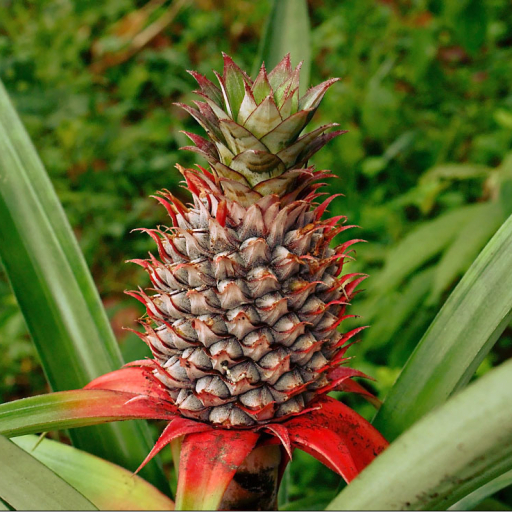
Known as the "Red Pineapple" or "Smooth-Leaved Pineapple," Ananas lucidus is the fashionista of the bromeliad family. While its edible cousin focuses on flavor, this South American native chooses drama, sporting glossy, sunset-hued foliage that can light up any indoor or outdoor space. It is a symbol of exotic beauty and is often grown as a spectacular "living centerpiece" in tropical gardens.
🔍 How to Identify
- 🍃 The Foliage: The leaves are its most striking feature—long, arching, and colored in deep shades of bronze, burgundy, and olive green. Unlike common pineapples, these leaves are famously "smooth," lacking the sharp, saw-like teeth found on most other varieties.
- 🍍 The Fruit: It produces a miniature, upright pineapple that transitions from a vibrant pinkish-red to a deep scarlet. While the fruit is small and largely ornamental, it emits a powerful, sweet tropical fragrance as it matures.
- 🌸 The Bloom: Before the fruit appears, a central spike emerges bearing tiny lavender-to-purple flowers tucked between decorative reddish bracts.
🏡 In Your Garden
- ☀️ Light for Color: This plant is a sun-lover; the more bright, indirect light it receives, the more intense its red and bronze pigments become. If kept in too much shade, the plant will "fade" to a dull green and lose its signature glow.
- 💧 The Central Tank: Like many bromeliads, this plant has a central "cup" formed by its leaves. In the wild, it uses this to catch rainwater. At home, it prefers a chunky, well-draining soil mix (like orchid bark) and appreciates a little fresh water kept in that central cup.
⚠️ Safety & Toxicity
- 🐾 Pet Friendly: Ananas lucidus is generally considered non-toxic to cats and dogs, making it a much safer tropical alternative to lilies or sago palms.
- 👅 Digestive Warning: While the fruit is technically edible when perfectly ripe, it is extremely acidic and contains high levels of bromelain. Eating the fruit—especially when unripe—can lead to severe mouth irritation or stomach upset. It is best treated as an ornamental plant.
✨ Fun Fact
In parts of the Amazon, the incredibly strong and fine fibers found within the leaves of Ananas lucidus have historically been harvested to weave high-quality hammocks, fishing nets, and even traditional bowstrings!

Detailed Care Instructions
To grow Ananas Lucidus (also known as the red pineapple or wild pineapple), follow these steps:
- Obtain a ripe Ananas Lucidus fruit: Find a mature and fully ripe fruit from a local farmer's market, plant nursery, or by harvesting it from the wild if it grows in your area.
- Collect seeds: Cut open the fruit and collect the seeds. Make sure to thoroughly rinse them to remove any fruit residue.
- Prepare the soil: Ananas Lucidus prefers well-draining soil. Prepare a pot or planting area with a mix of loamy soil, organic matter, and sand. Ensure that the planting area has good drainage.
- Soak the seeds: Soak the seeds in warm water for about 24 hours. This process helps to soften the seed coat and improve germination rates.
- Plant the seeds: Plant the seeds about 1/4 inch deep in the prepared soil. Ensure they are spaced apart to allow room for growth. Water lightly after planting.
- Provide the right conditions: Ananas Lucidus requires warm and humid conditions to thrive. Place the pot or plant in a location with indirect sunlight or partial shade. Maintain a temperature between 70-85°F (21-29°C) for optimal growth.
- Watering: Keep the soil moist but not waterlogged. Water the plant whenever the top inch of soil feels dry. Avoid overwatering, as this can lead to root rot.
- Fertilize: Apply a balanced fertilizer every two weeks during the growing season (spring and summer) to provide necessary nutrients for the plant's growth.
- Pruning: As the Ananas Lucidus plant grows, remove any dead or yellowing leaves to maintain its health and appearance.
- Transplanting: Once the plant has established a good root system and outgrows its pot, transplant it into a larger container or into the ground if the climate allows.
- Patience: Ananas Lucidus can take several years to reach maturity and produce fruit. Be patient and continue to care for the plant, and it will reward you with beautiful red pineapples.
Remember to research specific growing conditions for your particular region and provide any additional care required based on your location and climate.

Place in a window with dappled sun or a spot in the middle of a room. Or directly in a window facing west or east.

To properly water this plant, you should thoroughly moisten the soil around the base of the plant until the water starts to run out of the bottom of the container or until the soil feels damp to the touch. It is important to not overwater the plant, as this can lead to root rot and other issues. Wait until the top layer of soil feels dry before watering again, typically every 1-2 weeks depending on the environment and the size of the container. Be sure to also avoid getting water on the leaves or in the rosette of the plant, as this can cause it to rot. Additionally, this plant prefers well-draining soil and should be fertilized every few months during the growing season for optimal growth.
To provide proper nourishment for the Ananas Lucidus plant, apply a high-quality fertilizer every two weeks during the growing season. Use a balanced fertilizer that contains equal amounts of nitrogen, phosphorus, and potassium. Dilute the fertilizer to half the recommended strength and apply it directly to the soil around the base of the plant. Avoid over-fertilizing, as this can cause damage to the roots and foliage.
An ideal soil for Ananas Lucidus plant would consist of a loose, well-draining mix that provides good air circulation around the roots. It should be composed of a combination of organic materials such as peat moss, compost, and aged bark, along with inorganic materials like perlite or vermiculite to improve drainage.
The soil should also have a slightly acidic pH, ranging from 5.5 to 6.5. This will ensure that the plant can absorb essential nutrients from the soil. A pH test kit can be used to determine the acidity of the soil.
It is important to avoid heavy, clayey soils that can retain too much moisture and lead to root rot. Additionally, the soil should not be overly rich in nutrients, as this can result in rapid, leggy growth that produces fewer flowers.
Regular application of a balanced fertilizer can provide the necessary nutrients for healthy growth. It's important to allow the soil to dry out slightly between watering to prevent overwatering and root rot.
There are several ways to propagate the Ananas Lucidus plant. One way is through stem cuttings, which involves taking a small section of the stem and planting it in soil. The stem should be about 4-6 inches long and should be cut at a 45-degree angle. The plant should then be placed in a location with bright, indirect sunlight and watered regularly.
Another method of propagation is through suckers, which are small shoots that grow from the base of the plant. To propagate through suckers, the shoots should be carefully removed from the mother plant using a sharp knife or pruning shears. The plants should then be planted in a well-draining soil mix and kept in a warm, humid location.
Finally, the Ananas Lucidus plant can also be propagated through seeds. The seeds should be planted in a well-draining soil mix and kept moist. The plants should be kept in a warm, humid location until they begin to germinate. Once the plants have grown a few inches tall, they can be transplanted into individual pots and grown to maturity.
Common pests of the pineapple include Scale insect, mealybugs, spider mites. Make a habit of checking your pineapple frequently for pests so that any infestations can be caught and managed early.








