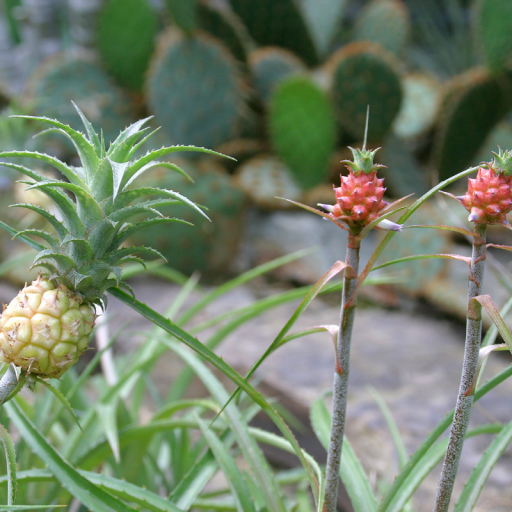
Plant Overview
The Ananas Nanus, better known as the Dwarf Pineapple, is like a tropical postcard come to life on your windowsill. This miniature relative of the supermarket pineapple is prized not for its juice, but for its pint-sized, perfectly formed fruit that emerges from a crown of sword-like leaves. Originating from the rainforests of South America, it brings a bold, architectural flair and a touch of the exotic to even the smallest indoor spaces.
🔍 How to Identify
- 🍍 The Fruit: A tiny, decorative pineapple—often no larger than a golf ball—perched atop a sturdy central stalk. It starts green and matures to a pale yellow or pinkish-tan.
- ⚔️ The Foliage: Long, stiff, sword-shaped leaves arranged in a dense spiral (rosette). The leaves are typically a deep waxy green, sometimes with silvery undersides.
- 🌵 The Edges: Most varieties feature sharp, tiny serrated teeth along the leaf margins, though some modern cultivars are bred to be smoother.
🏡 In Your Garden & Home
- ☀️ The Light Craving: While it’s a hardy houseplant, the Dwarf Pineapple requires very bright, indirect light to produce its iconic fruit. If the light is too low, the plant will stay green and lush but may never "bloom" its tiny pineapple.
- 💧 The "Cup" Care: Like many bromeliads, this plant can take in some moisture through its central crown. However, it is sensitive to "heart rot," so it’s best to water the soil directly and ensure it has excellent drainage to prevent soggy roots.
- 🪴 The Pups: This plant follows a "one and done" lifecycle. Once the central fruit matures and eventually withers, the mother plant will slowly die off. Before she goes, she will produce small baby plants (pups) at the base that you can pot up to start the cycle over again.
⚠️ Safety & Toxicity
- 🟢 Status: Generally non-toxic to humans and pets.
- 🩹 Physical Hazards: The primary danger is the foliage. The sharp, serrated edges of the leaves can cause painful scratches to curious cats or toddlers.
- 👅 Digestive Note: While the fruit is technically edible, it is extremely fibrous, sour, and contains high levels of bromelain (an enzyme), which can cause temporary mouth irritation or an upset stomach if consumed in large quantities.
✨ Fun Fact
In its native Brazil and Suriname, the Ananas Nanus is often used as a "living fence." Because the leaves are so stiff and prickly, planting them in dense rows creates a natural, miniature barbed-wire barrier that keeps small animals out of gardens!

Detailed Care Instructions
To grow an Ananas Nanus (dwarf pineapple) plant, follow these steps:
- Starting with a ripe pineapple: Purchase a ripe Ananas Nanus pineapple from a grocery store or obtain it from a mature plant.
- Cutting off the top: Cut off the leafy top of the pineapple, making sure to leave some flesh at the base. Allow the top to dry for a few days before proceeding.
- Preparing the soil: Choose a well-draining potting mix for your plant. It should be rich in organic matter. Mix in perlite or sand to enhance drainage.
- Planting: Place the dried pineapple top into the potting mix, burying it about halfway into the soil. Firmly press the soil around the base of the top to ensure stability.
- Watering: Initially, water the plant well, making sure the soil is moist but not waterlogged. Once established, water it when the top inch of soil is dry.
- Sunlight: Place the potted plant in a location that receives bright, indirect sunlight. Ananas Nanus prefer warm temperatures, ideally between 70 to 85°F (20 to 30°C).
- Fertilizing: If desired, you can apply a balanced, slow-release fertilizer to the soil every few months, following the package instructions. Remember not to over-fertilize, as it can damage the plant.
- Pruning: As the plant grows, remove any dead or yellowing leaves to maintain its health and appearance.
- Patience: Ananas Nanus plants take time to grow and produce fruit. It may take several years before you see pineapple fruit.
- Harvesting: When the pineapple fruit turns golden in color and gives off a sweet aroma, it is ready to be harvested. Gently twist and pull the fruit off the plant.
By following these steps and providing proper care, you can successfully grow an Ananas Nanus plant and eventually enjoy its delicious pineapple fruit.

Place in a window with dappled sun or a spot in the middle of a room. Or directly in a window facing west or east.

To water this plant, you should ensure that the soil is completely dry before watering it again. This plant prefers moderate watering, and overwatering can lead to root rot. Water the plant slowly and thoroughly, ensuring that water reaches the root zone. Avoid getting water on the leaves to prevent fungal problems. When watering, you can use room-temperature water. It is recommended to allow excess water to drain out of the pot to avoid waterlogged soil. If there is standing water in the bottom of the pot, empty it out. Ensure that the plant is not left in standing water as this can lead to root rot. Monitor the plant to determine its water needs based on the humidity and temperature levels in your environment.
To fertilize this plant, use a balanced fertilizer specifically formulated for fruiting plants. Apply the fertilizer once a month during the growing season, which is typically in the spring and summer. Make sure to dilute the fertilizer according to the package instructions. Be careful not to over-fertilize, as this can damage the plant. Water the plant before and after fertilizing to help distribute the nutrients evenly in the soil.
The recommended soil for Ananas Nanus plant is a well-draining, rich, and light soil with a pH between 4.5 and 6.5. It should not be too compact or heavy as this can cause waterlogging and root rot. A mixture of peat moss, perlite, and compost can create the ideal soil for this plant. The soil should also have good moisture retention and provide proper aeration for the roots. It is important to avoid using soils that have high clay or sand content, as these can negatively impact the growth and development of the plant.
Ananas Nanus can be propagated through vegetative means. Take a healthy stem cutting that is around 10cm in length and remove the lowest leaves. Dip the cut end of the cutting in rooting hormone and plant it in a well-draining soil mix. Keep the soil moist but not waterlogged and place the cutting in a spot with bright, indirect light. In a few weeks, roots should start to develop, and new growth will emerge from the tip of the cutting. Once the new growth is well established, it can then be transplanted into a larger pot or outside in a suitable location.








