Plant Overview
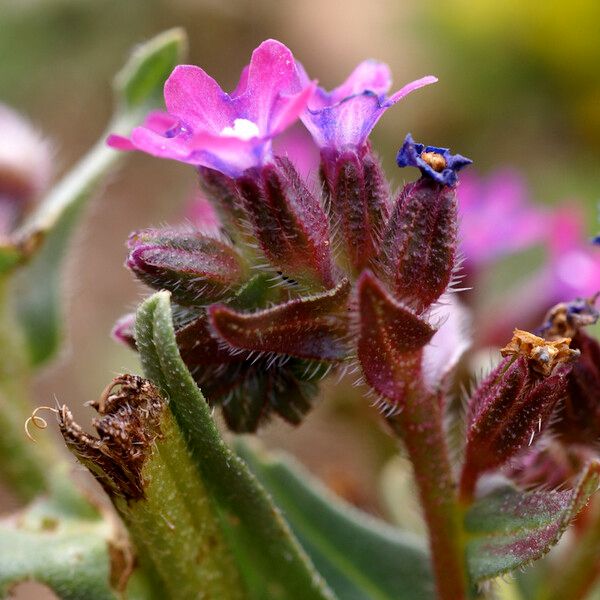
The Atlantic Bugloss (Anchusa atlantica) is a rugged coastal specialist that thrives where most plants would wither—right in the face of salty sea breezes and shifting sands. Often called the "Sea-side Alkanet," this rare member of the Borage family is a master of survival along the Atlantic coastlines of Portugal, Spain, and Morocco. With its bristly, "hairy" texture and brilliant blue blooms, it acts as a vital oasis for coastal pollinators navigating the dunes.
🔍 How to Identify
- 🌊 The Flowers: Small, vibrant trumpet-shaped blooms that transition from a pinkish-purple to a deep, sapphire blue, often featuring a tiny white "eye" at the center.
- 👅 The Foliage: Long, lance-shaped leaves covered in stiff, white bristly hairs. These hairs give the plant a rough, sandpaper-like texture, similar to an ox's tongue.
- 🌱 The Habit: It typically grows as a low-spreading or decumbent herb, rarely reaching more than 30–50 cm in height, allowing it to hug the ground and escape the harshest ocean winds.
🏡 In Your Garden
- 🏖️ Soil Preferences: This plant is a "psammophile," meaning it literally loves sand. If you are growing it, avoid rich, heavy potting soils. It requires extremely sharp drainage and thrives in nutrient-poor, gritty environments that mimic the dunes.
- ⚓ Taproot Sensitivity: Like many of its cousins, the Atlantic Bugloss develops a deep taproot to search for moisture in dry sand. Because of this, it resents being moved; once you plant a seedling, it’s best to let it stay put for its entire lifecycle.
⚠️ Safety & Toxicity
- 🚫 Status: Generally considered non-edible and potentially irritating.
- 🐾 Details: Like many members of the Boraginaceae family, this plant may contain trace amounts of pyrrolizidine alkaloids, which can be harmful to the liver if ingested in large quantities by pets or livestock. Additionally, the stiff hairs on the leaves can cause mild skin irritation or "prickling" for those with sensitive skin.
✨ Fun Fact
The common name "Bugloss" is derived from the Greek words bous (ox) and glossa (tongue). This isn't because of the flower's shape, but because the ancient Greeks thought the rough, raspy texture of the leaves felt exactly like the tongue of an ox!

Detailed Care Instructions








