Plant Overview
Often called the Cape Forget-Me-Not or "Summer Forget-Me-Not," Anchusa capensis is a vibrant South African native known for its electric blue blooms that seem to capture a piece of the summer sky. Unlike its common woodland cousins, this hardy relative thrives in the sun, offering a more upright and rugged presence in the landscape. In the language of flowers, these intense blue blossoms are often associated with enduring memory and deep, steadfast affection.
🔍 How to Identify
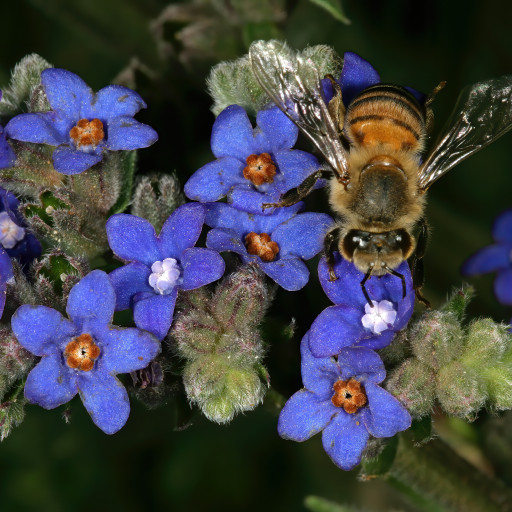
- 💙 The Blooms: Small, star-shaped flowers that are an intense, true blue, often featuring a tiny white "eye" or center. They typically emerge from coiled clusters that unfurl as they bloom.
- 🌿 The Foliage: Long, lance-shaped leaves that are a dull green. The most striking feature is that the entire plant is covered in stiff, bristly hairs that give it a rough, sandpaper-like texture.
- 📏 Growth Habit: It grows in an upright, bushy mound, usually reaching about 12 to 18 inches in height, making it much more structural than the low-creeping European Forget-Me-Not.
🏡 In Your Garden
- ☀️ Sun Seeker: While many blue flowers prefer the shade, the Cape Forget-Me-Not is a sun-worshipper. It requires bright light to prevent its stems from becoming "leggy" or flopping over.
- 🌱 The Taproot Secret: This plant develops a deep taproot, which makes it incredibly drought-tolerant once established. However, this means it absolutely hates being moved; choose its home carefully, as transplanting often leads to "transplant shock."
- 🦋 Pollinator Party: It is a magnet for honeybees and butterflies, who are drawn to the nectar-rich flowers. It’s an excellent choice for a "wild" or cottage-style garden where biodiversity is the goal.
⚠️ Safety & Toxicity
- 🟢 Status: Generally non-toxic, but handle with care.
- 🧤 Skin Irritation: The stiff, bristly hairs on the stems and leaves can cause mild skin irritation or "contact dermatitis" for some gardeners. It is best to wear gloves when pruning or clearing old growth.
- 🐾 Pet Safety: While not listed as a major toxin, it belongs to the Boraginaceae family, which can contain alkaloids. It is best to discourage pets from grazing on the foliage to avoid stomach upset.
✨ Fun Fact
The Cape Forget-Me-Not is a "garden traveler." Because it produces a large amount of seed and is very hardy, it often "hops" around the garden, popping up in cracks in the pavement or neighboring pots, effectively replanting itself for the next season!

Detailed Care Instructions
To grow Anchusa Capensis (Cape forget-me-not), follow these steps:
- Climate: Make sure you live in a climate suitable for growing Anchusa Capensis. It thrives in full sun to partial shade and prefers moderate temperatures.
- Soil: Choose a well-draining soil that is slightly acidic to neutral (pH 5.5 to 7). Amend the soil with organic matter or compost to improve its fertility and drainage.
- Planting: Start by sowing the seeds indoors in early spring or directly in the garden after the last frost. Sow the seeds 1/8 inch deep and 12-15 inches apart. Gently water the soil to ensure good moisture.
- Watering: Anchusa Capensis prefers regular watering. Keep the soil consistently moist but not waterlogged. Avoid letting the soil completely dry out. A layer of mulch around the plants can help retain moisture and regulate temperature.
- Fertilizing: Apply a balanced slow-release fertilizer or organic compost once a month during the growing season to promote healthy growth and blooming.
- Pruning: Trim back any dead or yellowing leaves and spent flowers to encourage continuous blooming and maintain a tidy appearance.
- Pests and diseases: Monitor your plants regularly for pests such as aphids, snails, or slugs. Treat any infestations promptly with appropriate methods, like insecticidal soap or organic pesticides. Anchusa Capensis generally has good resistance to diseases.
- Support: If the plants grow tall and start to flop, use stakes or plant them near a support structure to keep them upright.
- Propagation: Anchusa Capensis can self-seed, so if you want to propagate additional plants, allow some flowers to go to seed. Collect the seeds once they turn brown, dry them, and store them in a cool, dark place until the next planting season.
- Winter care: Anchusa Capensis is a perennial in some regions, while in colder climates it is usually grown as an annual. In areas with freezing temperatures, cover the plants with mulch or move them indoors to protect them during the winter.
By following these steps, you should be able to successfully grow Anchusa Capensis and enjoy its vibrant blue or pink flowers throughout the growing season.

Place in a bright room that is sun drenched almost all day. Or directly in a south-facing window.

Anchusa Capensis plant requires regular watering to thrive and stay healthy. It prefers moist but well-draining soil. To water this plant, you should water the soil around the base of the plant, rather than the leaves or flowers. This will help prevent fungal diseases and keep the roots hydrated. You should water the plant deeply, allowing the water to penetrate the soil to a depth of at least several inches. However, it's important not to over water the plant, as this can lead to root rot. The frequency of watering will depend on factors such as the climate, season, and soil type. During hot, dry weather, you may need to water the plant more frequently, whereas during cooler, wetter periods, you may need to water it less often. A good rule of thumb is to water the plant when the top inch of soil feels dry to the touch.
Anchusa Capensis should be fertilized with a balanced fertilizer, such as a 10-10-10 mix, every two weeks during the growing season. Dilute the fertilizer according to the package instructions and water the plant thoroughly before and after application. Take care not to over-fertilize, as this can damage the plant. If the plant is not growing vigorously or appears yellowish, increase the frequency of fertilization. Avoid fertilizing the plant during the dormant season.
Anchusa Capensis plant prefers a well-drained soil that is rich in organic matter. The soil should have a slightly acidic to neutral pH level (between 6.0-7.0). It is also important to ensure that the soil is not too compacted, as this can limit the plant's root growth and lead to poor overall health. A mixture of sandy loam and compost is ideal for growing this plant, as it provides good drainage and nutrient content. It is recommended to avoid using soils that are too heavy, such as clay, as well as soils that are too light and lacking in nutrients, such as pure sand.
To propagate this plant, you can take stem cuttings from healthy and mature plants during the active growing season. Make cuts on the stems just below a node, and remove any lower leaves. Dip the cuttings in rooting hormone and plant them in a mixture of well-draining soil and sand. Keep the cuttings in a warm and bright location, misting them regularly. It may take a few weeks for roots to form, after which you can transplant the new plants to their permanent location.








