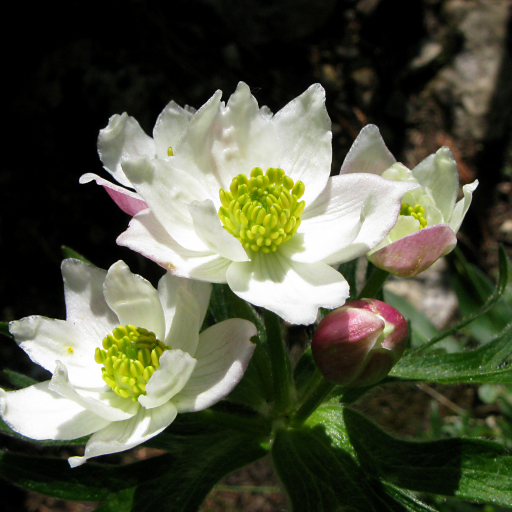
Plant Overview
Known as the Narcissus-flowered Anemone, this high-altitude beauty looks like a curated bouquet growing straight out of the wild mountain grass. Often found dancing in the wind across the Alps or the Rockies, it derives its name from the striking resemblance its blossoms bear to the classic spring Narcissus. In folklore, anemones are often called "Windflowers," as ancient Greeks believed they would only bloom when the spring breezes blew upon them.
🔍 How to Identify
- 🌸 Floral Clusters: Unlike many anemones that grow as solitary blooms, this species produces 3 to 8 creamy white flowers in a single cluster (umbel) atop a sturdy, upright stem.
- 🌿 Deeply Cut Foliage: The leaves are palm-shaped and deeply divided into narrow, finger-like segments, giving the base of the plant a lush, feathery appearance.
- ☁️ Silky Hairs: Look closely at the stems and the undersides of the leaves; they are often covered in soft, silvery-white hairs that help the plant retain heat in chilly mountain air.
🏡 In Your Garden
- 🏔️ The Alpine Specialist: This plant is a "cool-weather" specialist. It thrives in rock gardens or alpine troughs where the roots can stay cool and moist while the foliage enjoys bright, indirect light. It rarely performs well in hot, humid lowlands.
- 💧 Drainage is Key: While it loves consistent moisture, it cannot stand "wet feet." In a garden setting, it requires gritty, well-draining soil to mimic the natural scree and rocky meadow habitats of its origin.
⚠️ Safety & Toxicity
- 🚫 Toxic Assessment: Highly Toxic. Like most members of the Buttercup (Ranunculaceae) family, this plant is not safe for consumption.
- 🐾 Details: It contains protoanemonin, which can cause severe gastrointestinal distress if ingested by humans, dogs, or cats. The sap may also cause "Anemone dermatitis"—a blistering skin irritation—so it is best to wear gloves when dividing or pruning the plant.
✨ Fun Fact
- 📜 Ancient Survivor: Anemonastrum narcissiflorum is considered a "relict" species. This means it survived the last Ice Age in high-altitude pockets that remained ice-free, and it has remained largely unchanged for thousands of years!

Detailed Care Instructions
- Choose the right location: Anemonastrum Narcissiflorum plants thrive in full sun to partial shade. Choose a location that receives at least 4-6 hours of sunlight per day.
- Prepare the soil: These plants prefer well-draining soil that is rich in organic matter. Amend the soil with compost or well-rotted manure before planting.
- Planting: Plant Anemonastrum Narcissiflorum plants in the spring or fall. Dig a hole that is slightly larger than the root ball and place the plant in the hole, making sure the top of the root ball is level with the soil surface. Water thoroughly after planting.
- Watering: Anemonastrum Narcissiflorum plants prefer evenly moist soil, so water regularly, especially during dry periods. Avoid overwatering, as this can cause root rot.
- Mulching: Mulch around the base of the plant to help retain moisture and suppress weeds. Use a layer of organic mulch such as bark chips or shredded leaves.
- Fertilizing: Anemonastrum Narcissiflorum plants do not typically require fertilizing if planted in nutrient-rich soil. If your soil is poor, you can apply a balanced fertilizer in the spring.
- Pruning: Trim back any dead or damaged foliage as needed to promote new growth and maintain a tidy appearance.
- Division: Anemonastrum Narcissiflorum plants can be divided every few years to rejuvenate the plant and prevent overcrowding. Dig up the plant in the spring or fall and carefully divide the rhizomes, making sure each division has both roots and shoots. Replant the divisions in prepared soil and water well.
By following these tips, you can successfully grow Anemonastrum Narcissiflorum plants in your garden.
Anemonastrum Narcissiflorum plants prefer to be watered consistently throughout the growing season. They should be watered thoroughly, allowing the soil to become damp but not waterlogged. It is important to let the top layer of soil dry out slightly between waterings to prevent root rot.
When watering, it is best to water directly at the base of the plant to ensure the roots receive an adequate amount of moisture. Avoid getting water on the leaves, as this can lead to fungal diseases. Watering in the morning is ideal, as it allows the plant to absorb the water before the heat of the day.
During the winter months, reduce watering frequency as the plant goes dormant. It is important to monitor the soil moisture levels and adjust the watering schedule accordingly to prevent overwatering.
Overall, providing the right amount of water is crucial for the health and growth of Anemonastrum Narcissiflorum plants.
Fertilize the plant in early spring with a balanced fertilizer, such as a 10-10-10 formula. Apply the fertilizer according to the package instructions, taking care not to over-fertilize. Water the plant thoroughly after fertilizing to help distribute the nutrients throughout the soil. Repeat this process every 4-6 weeks during the growing season, but stop fertilizing in late summer to allow the plant to prepare for dormancy.
Anemonastrum narcissiflorum plants prefer well-draining, slightly acidic soil. A sandy loam or loamy soil with a pH level of around 6.0 to 6.5 is ideal for these plants. It is important to ensure that the soil is rich in organic matter and nutrients to support healthy growth. Adding compost or aged manure to the soil before planting can help improve soil fertility. Avoid using heavy clay soils, as they can retain too much moisture and lead to root rot. It is also recommended to plant Anemonastrum narcissiflorum in a location that receives partial shade to full sun for optimal growth.
Anemonastrum Narcissiflorum can be propagated through division, seeds, or cuttings. To propagate this plant through division, carefully dig up a mature plant and separate the rhizomes or tubers into smaller sections, making sure each section has enough roots and shoots to survive on its own. Replant the divisions in a new location with well-draining soil.
To propagate Anemonastrum Narcissiflorum from seeds, collect ripe seeds from the plant and sow them in a seed tray filled with well-draining soil. Keep the soil moist and place the tray in a warm, bright location until the seeds germinate. Once the seedlings have grown large enough, transplant them into individual pots and continue to care for them until they are ready to be planted in the garden.
Alternatively, Anemonastrum Narcissiflorum can be propagated from cuttings. Take a cutting from a healthy, mature plant and remove any lower leaves. Dip the cut end of the cutting in rooting hormone and plant it in a pot filled with well-draining soil. Keep the soil moist and place the pot in a warm, bright location. Once roots have developed, transplant the cutting into the garden or a larger container.








