Plant Overview
Known as Hama-udo in its native Japan, Angelica japonica is a robust, architectural giant often found standing guard along rocky coastlines and sandy beaches. This perennial member of the carrot family is beloved by landscape designers for its "prehistoric" look and its ability to thrive where salt spray kills lesser plants. In Japanese culture, it is often grouped with "Sansai" (wild mountain vegetables), though it requires expert knowledge to prepare safely.
🔍 How to Identify
- 🌿 The Foliage: Look for large, glossy green leaves that are deeply divided into thick, leathery leaflets. Unlike many of its delicate cousins, these leaves feel sturdy and waxy to the touch.
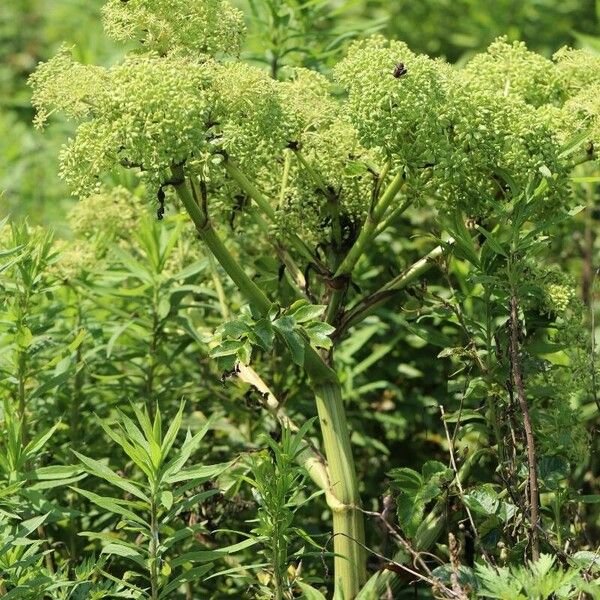
- ☁️ The Blooms: It produces massive, umbrella-like clusters (umbels) of tiny white flowers that look like exploding stars or dense lace doilies.
- 🎋 The Stem: The stalks are remarkably thick, often reaching heights of 3 to 5 feet. They are typically smooth, hollow, and may show a purplish tint near the base.
🏡 In Your Garden
- 🌊 Salt & Wind Specialist: This plant is an evolutional marvel for coastal gardens. It has a natural "antifreeze" and salt-resistance that allows it to flourish in harsh sea breezes where other plants would wither.
- 🌱 Root Depth: It develops a deep, sturdy taproot to anchor itself against coastal gales. Because of this, it hates being moved once established; choose its "forever home" in your garden carefully to avoid transplant shock.
- 🦋 Pollinator Magnet: The flat, wide flower heads act as landing pads for a massive variety of beneficial insects, including hoverflies and predatory wasps that help keep garden pests in check.
⚠️ Safety & Toxicity
- 🚫 Skin Sensitivity: Like many members of the Apiaceae family, this plant contains furanocoumarins. The sap, when combined with sunlight, can cause "phytophotodermatitis"—a painful skin rash or blistering. Always wear gloves when pruning.
- 🐾 Pet Warning: While not typically lethal in small amounts, the sap can cause oral irritation and digestive upset in cats and dogs. It is best kept at the back of borders away from curious pets.
✨ Fun Fact
In Japan, the name "Hama-udo" literally translates to "Beach Aralia." While it looks strikingly similar to the edible Udo (mountain asparagus), it is much tougher and more bitter, earning it a reputation as the "rugged beach-dwelling twin" of the Japanese vegetable world.

Detailed Care Instructions







