Plant Overview
Known colloquially as the Coolabah Apple, this rugged Australian native is a master of survival in the harsh, dry inland regions of New South Wales and Queensland. Unlike its smooth-barked relatives, the Coolabah Apple wears a permanent coat of rough, grey armor that helps it withstand the intense heat of the outback. It’s a tree that embodies the spirit of the bush, offering shade and sustenance in environments where few other things thrive.
🔍 How to Identify
- 🪵 The Bark: Features a persistent, fibrous, and scaly bark that covers the trunk and branches, often appearing greyish-brown or weathered.
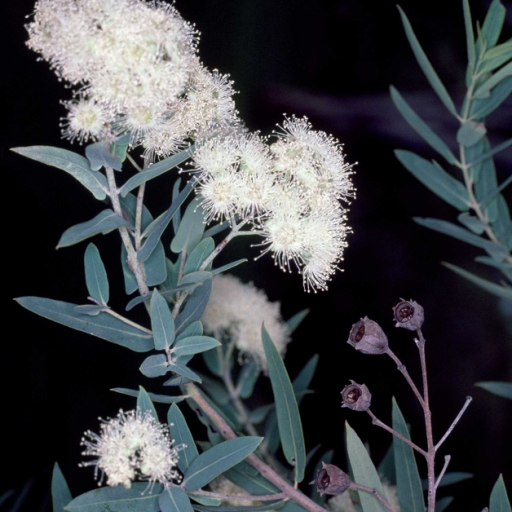
- 🍃 The Leaves: Distinctively paired—meaning they grow directly opposite each other on the stem—which is a key way to tell it apart from many Eucalyptus species. They are narrow, lance-shaped, and usually a dull green.
- ☁️ The Flowers: Produces dense, fluffy clusters of creamy-white blossoms that appear in late spring and summer, looking like small puffs of smoke against the foliage.
🏡 In Your Garden
- 🏜️ Hardiness: This tree is incredibly drought-tolerant once established. It has evolved to survive long periods without rain, making it an excellent "set and forget" tree for large, arid landscapes.
- 🦅 Wildlife Hub: If you plant a Coolabah Apple, expect visitors. The nectar-rich flowers are a primary food source for native honeyeaters, bees, and butterflies, while the rough bark provide nooks for beneficial insects.
- 🌱 Soil Preference: It prefers sandy or loamy soils and is particularly fond of "red-dust" country. Ensure it has plenty of room to spread its roots, as it dislikes being cramped or moved once its deep taproot is set.
⚠️ Safety & Toxicity
- ✅ Status: Non-toxic and generally safe.
- 🐾 Details: There are no known toxic effects for dogs, cats, or horses. However, like most woody trees, the fallen seed capsules (which look like tiny wooden goblets) can be a minor choking hazard for very small pets or a tripping hazard on firm garden paths.
✨ Fun Fact
While it looks almost identical to a Eucalyptus tree, you can tell the Angophora is different by looking at the flower buds. Eucalyptus trees have a little "cap" (called an operculum) that pops off to reveal the flower, but the Coolabah Apple has tiny individual petals and sepals instead—it’s the "cap-less" cousin of the gum tree!

Detailed Care Instructions








