Plant Overview
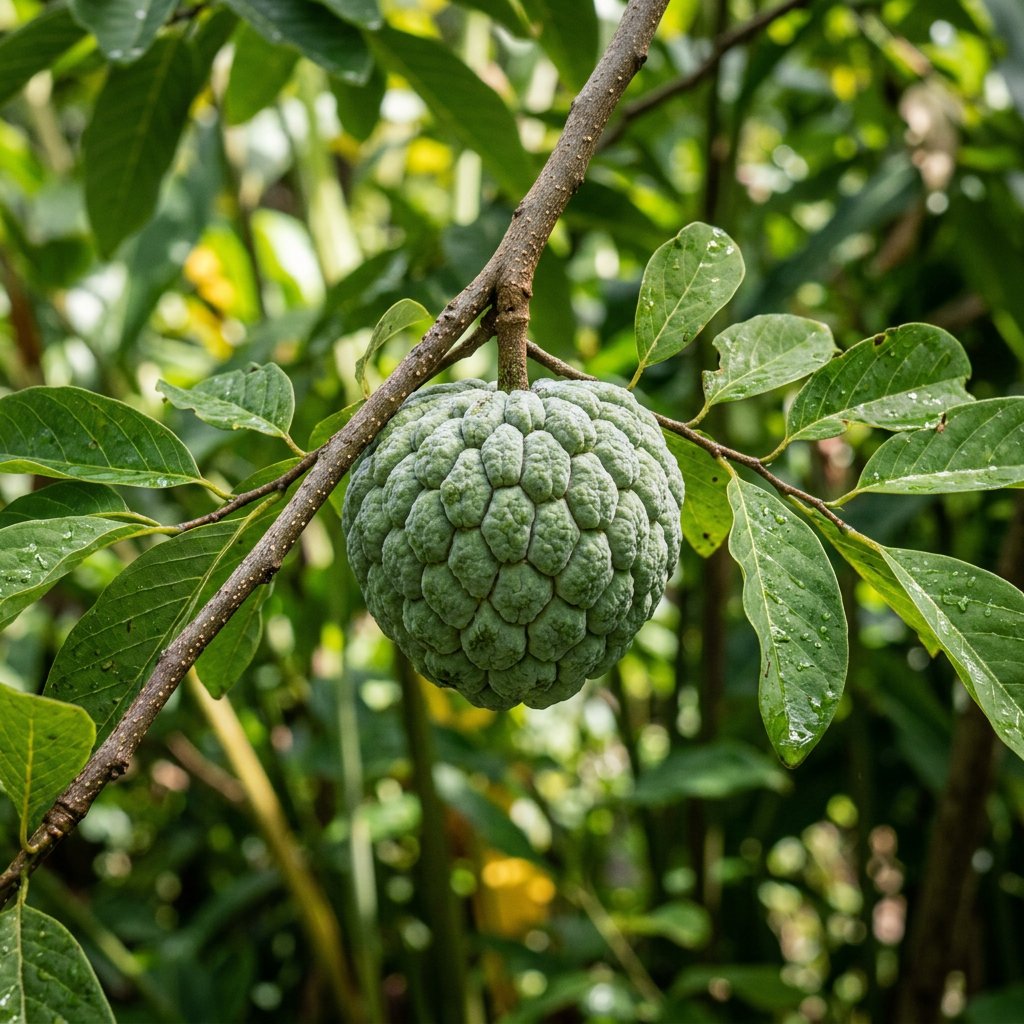
Known as the "Sugar Apple" or "Sweetsop," the Annona squamosa is a tropical treasure cherished for its decadent, custard-like fruit. In India, it is affectionately called "Sitaphal," named after the goddess Sita, while in other regions, it’s nicknamed the "Cinnamon Apple." Its fruit looks like a green, hand-crafted pinecone, hiding a world of sweet, creamy pulp that tastes like a blend of pineapple and vanilla.
🔍 How to Identify
- 🍎 The Fruit: Heart-shaped or spherical with a distinct "scaly" exterior. These thick, knobby segments are actually fused carpels that can be pulled apart when the fruit is ripe.
- 🍃 The Foliage: Long, dull-green leaves that are oblong and thin. They have a pleasant, slightly spicy scent when crushed between your fingers.
- 🌸 The Flowers: Drooping, greenish-yellow blossoms that appear in clusters. They aren't particularly showy and often look like unripened fruit hiding among the branches.
🏡 In Your Garden
- ☀️ Sun & Warmth: This is a true tropical resident. It demands full sun and hates the cold; even a light frost can cause significant damage or death to the tree.
- 💧 The Drainage Rule: While it loves a humid environment, it is highly sensitive to "wet feet." It needs sandy, well-draining soil to prevent root rot.
- 🌱 Root Sensitivity: Like many of its cousins, the Sugar Apple has a sensitive taproot. It hates being moved once established, so choose its "forever home" in your garden carefully.
⚠️ Safety & Toxicity
- 🚫 Toxic Seeds: While the white flesh is delicious, the hard black seeds contain acetogenins, which are toxic if ingested. Never swallow or chew the seeds.
- 🐾 Pet Safety: The seeds, leaves, and bark are toxic to dogs, cats, and horses. If you have a curious pet, ensure fallen fruit is picked up immediately.
- 👁️ Irritant Alert: The sap and crushed seeds can cause severe eye irritation or even temporary blindness if they come into contact with your eyes. Always wash your hands after handling the tree's bark or seeds.
✨ Fun Fact
In some cultures, the Sugar Apple is believed to have magical properties. In the Caribbean, the leaves are often placed under a pillow or tucked into a bed to induce a restful, deep sleep and ward off "heavy spirits."

Detailed Care Instructions
| Lighting | Full Sun |
| Hardiness Zones | Min 10A |
To grow Annona squamosa, also known as sugar apple or custard apple, you can follow these steps:
- Select a suitable location: Choose a spot with full sun exposure, as Annona squamosa thrives in bright sunlight. Ensure that the soil is well-draining and rich in organic matter.
- Planting: Dig a hole at least twice as wide and deep as the root ball of the plant. Place the plant in the hole and backfill it with soil, gently pressing down to eliminate air pockets.
- Watering: Water the newly planted Annona squamosa deeply and regularly. Keep the soil moist but not waterlogged. Water more during the summer months and reduce watering during winters.
- Fertilization: Apply a balanced, slow-release fertilizer, such as 10-10-10, during the growing season. Follow the instructions on the packaging for proper dosage. Fertilize every 2-3 months to promote healthy growth.
- Pruning: Prune the plant to maintain its shape and remove dead or damaged branches. Pruning should be done in early spring before new growth begins.
- Mulching: Apply a layer of organic mulch around the base of the plant to retain moisture, regulate soil temperature, and suppress weed growth. Use materials like straw, wood chips, or compost for mulching.
- Protect from pests and diseases: Monitor the plant for any signs of pests or diseases, such as aphids or fungal infections. Use organic insecticides or fungicides if necessary to control the problem.
- Harvesting: Annona squamosa typically takes 3-4 years from planting to start bearing fruit. The fruit is ready to be harvested when it turns yellow and gives a slight yield to gentle pressure. Use a knife or scissors to cut the fruit from the tree.
Remember to consult local gardening experts or agricultural extension offices specific to your area for any region-specific guidelines or recommendations.

Place in a bright room that is sun drenched almost all day. Or directly in a south-facing window.

When it comes to watering the plant that belongs to the genus Annona and species Squamosa, it is important to water it consistently and deeply. This plant prefers to be watered when the soil is dry to the touch, but be careful not to let the soil completely dry out. During the growing season, typically spring to fall, it is recommended to water the plant 1-2 times a week, depending on the conditions of the environment. However, during the winter months, reducing watering to once every 1-2 weeks is recommended. When watering, it is important to make sure the water reaches the root zone, which can be achieved by watering slowly and deeply, rather than shallowly and frequently. Additionally, it is important to use well-draining soil and pots with drainage holes to prevent waterlogged roots, which can cause the plant to wilt and potentially die.
To fertilize this plant, apply a balanced fertilizer with equal amounts of nitrogen, phosphorus, and potassium every three months. During the flowering and fruiting season, increase the frequency to once a month. Make sure to apply the fertilizer to the soil around the base of the plant and water thoroughly. Avoid applying fertilizer to the leaves or fruit. Additionally, supplement with organic matter, such as compost or manure, during the growing season to improve soil quality.
For optimal growth and health of this specific plant species, it is advisable to use a rich soil that is well-draining and contains a balanced mixture of organic matter and mineral nutrients. The soil should have a pH level between 6 and 7, which is slightly acidic to neutral. The use of a high-quality commercial potting mix or a well-prepared homemade soil mix comprising loamy soil, sand, peat moss, and compost will promote healthy root growth, moisture retention, and proper nutrient uptake. It is important to avoid using soil that is too dense or heavy, as this can lead to waterlogging and adverse effects on plant growth and yield. Additionally, adding occasional doses of organic fertilizers, such as fish emulsion or manure tea, can provide essential nutrients and boost plant growth. Proper watering is also important for maintaining healthy soil conditions, and it is recommended to water the plant deeply but infrequently, allowing the soil to dry out slightly between watering sessions.
There are a few methods to propagate the plant. The first method is through seed propagation. Collect seeds from mature fruit and soak them in water overnight. Plant the seeds in a well-draining potting mix and keep the soil moist. The second method is through air-layering. Choose a healthy branch and make a shallow cut on the bark. Apply rooting hormone on the cut and cover with damp sphagnum moss. Cover with plastic and tie the moss and plastic with string. Check for roots after a few months and transplant the new plant. The last method is through cutting propagation. Choose a healthy branch and make a clean cut below a node. Dip the cutting in rooting hormone and plant it in well-draining potting mix. Keep the soil moist and wait for root development. Transplant the new plant once it has grown a sturdy root system.
Common pests of the sugar apple include Scale insect, mealybugs, spider mites, larvae. Make a habit of checking your sugar apple frequently for pests so that any infestations can be caught and managed early.








