Plant Overview
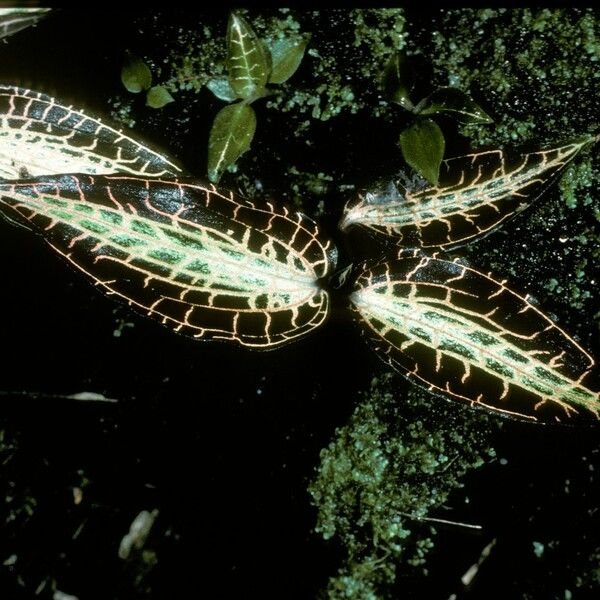
Known as the "King of the Forest" in its native Southeast Asian habitats, Anoectochilus roxburghii is the undisputed crown jewel of the orchid world. Unlike most orchids that are prized for their fleeting blooms, this terrestrial treasure is celebrated for its hypnotic, shimmering foliage that looks as if it has been hand-stitched with golden lightning. It is a slow-growing inhabitant of the damp, shaded jungle floor, making it a perfect, albeit demanding, centerpiece for high-end terrariums.
🔍 How to Identify
- 🍃 The Foliage: Deep, dark velvety leaves that range from emerald green to nearly black, providing a dramatic backdrop for its veins.
- ✨ Lightning Veins: A complex, branching network of golden, copper, or reddish-pink veins that possess a metallic iridescence, appearing to glow under soft light.
- 🌸 Small Blooms: While rare in home settings, it produces a single upright stalk with small, white, or pale yellow tubular flowers that have a delicate, fringed "lip."
🏡 In Your Garden
- 🌡️ Humidity is Essential: This orchid breathes through its leaves and requires high humidity (above 70%) to thrive. Because of this, it is rarely grown as a standard houseplant and does much better in a glass cloche or enclosed terrarium.
- 💧 Water Quality Matters: It is incredibly sensitive to the chemicals found in tap water. To prevent "leaf melt" or root rot, always use distilled, RO (reverse osmosis), or clean rainwater to keep the substrate consistently damp but never soggy.
⚠️ Safety & Toxicity
- ✅ Non-Toxic: Anoectochilus roxburghii is generally considered non-toxic to humans and common household pets like cats and dogs.
- ✋ Delicate Texture: While safe to touch, the velvety surface of the leaves is easily damaged by the oils on human skin or rough handling. It is best to admire this "jewel" from behind glass.
✨ Fun Fact
In traditional Chinese medicine, this plant is known as Jinxianlian and has been used for centuries to treat various ailments. Because of its high value and slow growth rate, it is often referred to as the "Ginseng of the Orchids" and is highly protected in the wild.

Detailed Care Instructions
To grow Anoectochilus Roxburghii, also known as jewel orchid, you can follow these steps:
- Climate and lighting: Anoectochilus Roxburghii prefers a warm and humid climate. It grows well in temperatures ranging from 65°F to 75°F (18°C to 24°C). It requires low to medium light conditions, ideally filtered sunlight or indirect light.
- Soil and potting: Use a well-draining soil mix that retains moisture. A mixture of orchid bark, sphagnum moss, and perlite is suitable. Ensure the pot has drainage holes to prevent waterlogging.
- Watering: Keep the soil consistently moist but not oversaturated. It is best to water when the top inch of soil feels dry. Avoid letting the roots sit in standing water as it can cause root rot.
- Humidity: Maintain high humidity levels by grouping plants together, using a humidifier, or placing the pot on a tray filled with water and pebbles. Avoid direct exposure to drafts or dry air from heating or cooling systems.
- Fertilization: Use a balanced orchid fertilizer diluted to half-strength. Apply it once a month during the growing season (spring to fall). Reduce or stop fertilizing during winter, as the plant goes into a dormant phase.
- Repotting: Repot every one to two years or when the plant outgrows its pot. This is usually done in spring. Gently remove the plant from the pot, trim any dead or rotten roots, and place it in a slightly larger container with fresh potting mix.
- Pests and diseases: Monitor the plant for pests like spider mites or aphids. Treat any infestations promptly with organic or chemical insecticides. Additionally, watch for signs of diseases such as fungal leaf spots or root rot. Ensure good air circulation and avoid overwatering to prevent these issues.
- Propagation: Anoectochilus Roxburghii can be propagated through division or by planting leaf cuttings. Dividing the plant when repotting allows you to separate new growths with roots. Leaf cuttings can be taken and placed in a suitable growing medium until new plants develop.
By following these guidelines, you should be able to successfully grow Anoectochilus Roxburghii and enjoy its beautiful foliage.

Place in a dark room with little light, like a dark bedroom or a spot far away from a window or directly in a north-facing window.

Anoectochilus Roxburghii plant prefers to be watered regularly to keep its soil moist but not waterlogged. It is important to let the top layer of soil dry out slightly in between watering to avoid root rot and fungal diseases. The plant should be watered thoroughly with room temperature, filtered water to ensure the roots are well hydrated. Water should be poured gently onto the soil, avoiding the leaves and stem to prevent liquid from sitting in the crown of the plant which can cause rot. In winter, the watering schedule should be reduced to allow the soil to dry out more between watering.
To fertilize this plant, use a well-balanced fertilizer with equal parts nitrogen (N), phosphorus (P) and potassium (K) once a month during the growing season. Dilute the fertilizer in water as per the package instructions before applying it to the soil. Avoid over-fertilizing as it may cause the plant's leaves to turn yellow or brown. Always water the plant thoroughly before and after fertilizing to prevent the roots from burning.
An appropriate soil type for the Anoectochilus Roxburghii plant would be a loose, well-draining substrate with a slightly acidic pH level. It should have a high percentage of organic matter, such as compost or peat moss, and be rich in essential minerals such as nitrogen, phosphorus, and potassium. The soil should be loose enough to provide good aeration and root development, but not so porous that it dries out too quickly. Adding some sand or perlite can help improve drainage, while adding vermiculite can help retain moisture. The soil should be kept moist, but not waterlogged, and the plant should be fertilized regularly with a balanced, water-soluble fertilizer.
Anoectochilus Roxburghii plant can be propagated through several methods. One method is through division. To do this, the mature plant is carefully dug up and the rhizomes (underground stems) are separated using a sharp, sterile knife. Make sure that each division has a healthy root system and leaves. These divisions can then be planted in separate pots with well-draining soil.
Another method is through seed propagation. Anoectochilus Roxburghii produces tiny seeds that can be collected from mature plants. The seeds need to be surface sown onto a well-draining soil mix that has been moistened. Cover the container with a plastic bag or dome to maintain humidity and place it in a bright, warm location. The seeds should germinate within a few weeks.
Finally, Anoectochilus Roxburghii can also be propagated through tissue culture. This method involves taking small pieces of tissue from a mature plant and placing them in a nutrient-rich medium under sterile conditions. The pieces of tissue will then grow into separate plants that can be transplanted into individual containers after a few months. This method is commonly used in commercial production and can produce large numbers of plants quickly.








