Plant Overview
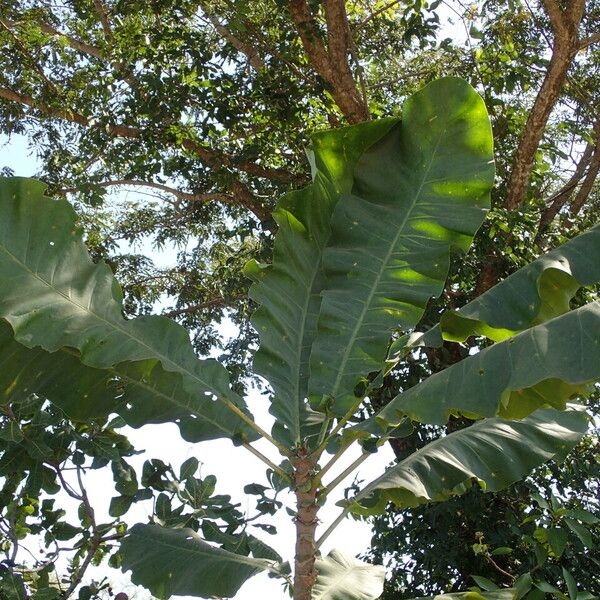
Known as the "Forest Cabbage Tree" or the "Fever Tree" in parts of West Africa, Anthocleista djalonensis is a striking tropical giant. With its massive, paddle-shaped leaves that sprout in clusters like a gargantuan head of cabbage, it is a hallmark of the secondary forests of the Djalon mountains. Historically, it has been a "living pharmacy" for local communities, prized for its bitter barks and roots used in traditional healing.
🔍 How to Identify
- 🍃 The Foliage: The leaves are incredibly large, leathery, and broad (obovate). They grow in dense clusters at the very ends of the branches, creating a distinctive "rosette" look.
- 🪵 The Trunk: It grows straight and tall, often reaching heights of 15–20 meters. On younger branches, you might notice small, twin prickles or "spines" at the base of the leaf stalks.
- 🌼 The Blooms: It produces clusters of creamy-white or pale-yellow tubular flowers that are quite fragrant, particularly in the evening when they attract pollinators.
🏡 In Your Garden & Ecology
- ☀️ Light Seeker: This is a "pioneer species," meaning it is one of the first trees to grow back in cleared forest areas. It demands full sun and struggles in the deep shade of a closed canopy.
- 💧 Tropical Thirst: It thrives in high-humidity environments with well-draining but moist soil. Because it has a vigorous root system designed for the rainforest, it is rarely kept as a container plant and needs plenty of room to spread.
- 🦋 Pollinator Hub: The fragrant flowers are a magnet for moths and bees, while the large leaves provide significant shade and shelter for smaller forest creatures.
⚠️ Safety & Toxicity
- 🩺 Medicinal Potency: While the plant is widely used in traditional African medicine for stomach issues and skin conditions, it is extremely bitter.
- 🐕 Pet & Human Safety: It is generally safe to touch, but the high concentration of alkaloids (like swertiamarin) means it should never be ingested without professional pharmacological guidance. Ingesting raw parts of the plant can cause nausea or digestive distress.
✨ Fun Fact
In some West African cultures, the hollowed-out wood of Anthocleista species is so lightweight and easy to work with that it has been traditionally used to craft quivers for arrows and even certain types of ceremonial drums!

Detailed Care Instructions








