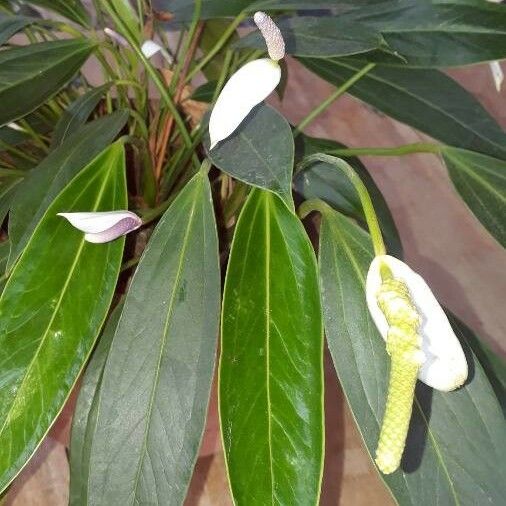
Plant Overview
Hailing from the mist-shrouded mountain forests of Colombia, Anthurium antioquiense is a masterclass in understated elegance. Unlike its flashy, waxy-petaled cousins, this species is prized for its slender, willow-like foliage and delicate, lavender-tinted blooms. Often called the "Antioquia Anthurium," it represents a more refined, graceful side of the diverse Aroid family.
🔍 How to Identify
- 🍃 Leaf Shape: Features extremely narrow, elongated "linear" leaves that look like green ribbons. They are thick to the touch and can grow quite long while remaining very slim.
- 🌸 The Spathe: The modified leaf (spathe) surrounding the flower is lance-shaped and typically a soft, creamy white or pale pink.
- 🟣 The Spadix: The central flower spike is the star of the show, often displaying a striking lavender or violet hue that contrasts beautifully against the pale spathe.
🏡 In Your Garden
- ☁️ Cloud Forest Vibes: Because it originates from high-altitude environments, it craves consistent humidity. It thrives best when the air is moist; otherwise, the tips of those beautiful ribbon-leaves may turn brown and crisp.
- 🏺 Breathable Roots: This plant is highly sensitive to "wet feet." It prefers a very airy, chunky substrate—think orchid bark, charcoal, and perlite—to mimic the mossy tree branches it clings to in the wild.
- 💧 Watering Nuance: It prefers to stay evening moist but never soggy. Use filtered water if possible, as it can be sensitive to the heavy minerals found in some tap water.
⚠️ Safety & Toxicity
- 🚫 Toxic Status: High. Like almost all Anthuriums, this plant contains insoluble calcium oxalate crystals.
- 🐾 Pets & Children: If leaves or stems are chewed, these crystals cause immediate oral irritation, swelling of the tongue, and difficulty swallowing. It is best kept on high shelves away from curious cats, dogs, or toddlers.
- 🧤 Skin Sensitivity: Some gardeners find the sap irritating to the skin. It’s a good idea to wear gloves when pruning or repotting to avoid "Aroid itch."
✨ Fun Fact
- 🇨🇴 Regional Pride: This plant is named specifically after the Antioquia department of Colombia, a global biodiversity hotspot that serves as the ancestral home to some of the most famous plants in the modern "houseplant jungle" movement!

Detailed Care Instructions
To grow Anthurium antioquiense plants successfully, you can follow these steps:
- Choose a suitable location: Anthurium antioquiense prefers bright, indirect light. Choose a location where the plant will receive filtered or shaded light throughout the day.
- Provide the right temperature and humidity: This plant thrives in warm and humid conditions. Maintain the temperature between 60-80°F (15-27°C) and humidity levels around 60-70%. Use a humidifier or place the plant on a tray filled with water and pebbles to increase humidity.
- Select the proper potting mix: Anthuriums prefer a well-draining potting mix that retains some moisture. Use a mix of equal parts peat moss, perlite, and orchid bark to provide good drainage.
- Planting: Choose a pot size that allows the plant to have enough space to grow over time. Plant the Anthurium antioquiense at the same depth it was originally in the nursery pot. Gently pat the soil around the roots to secure them.
- Watering: Water the plant thoroughly and allow the top inch of soil to dry out between watering sessions. Avoid overwatering or leaving the plant sitting in water as it can lead to root rot.
- Fertilization: Apply a balanced, water-soluble fertilizer every two to four weeks during the growing season (spring and summer). Follow the package instructions for proper dilution and application.
- Pruning: Trim any yellow or wilted leaves, as well as any damaged or dead stems. Regularly prune to encourage bushier growth and remove any leggy or unruly growth.
- Repotting: Anthurium antioquiense plants generally require repotting every two to three years. Choose a pot slightly larger than the current one and follow the same planting process mentioned earlier.
- Pest control: Monitor your plant for common pests such as aphids, mealybugs, or spider mites. If you notice any infestations, treat them with an appropriate insecticidal soap or neem oil.
- Provide support: As the Anthurium antioquiense plant grows, it may require support for its leaves or stems. Use stakes or a moss pole to help the plant stay upright and prevent any bending or damage.
Remember to observe your plant regularly and adjust care as needed. With proper attention, your Anthurium antioquiense should grow well and reward you with its beautiful foliage and flowers.
To properly water the plant, ensure that you do not overwater or underwater it. Overwatering can lead to root rot, while underwatering can cause the leaves to wilt and dry out.
It is important to allow the top inch of soil to dry out before watering the plant. The amount of water you give to the plant will depend on its size and the environment it is in.
Ensure that the pot has adequate drainage holes to allow excess water to drain out. You can also add gravel or rocks at the bottom of the pot to improve drainage.
When watering the plant, pour water directly onto the soil rather than over the leaves to avoid water droplets settling on them, which can cause damage.
The soil should be kept moist but not soggy. You can use a moisture meter to check the moisture levels in the soil, or stick your finger into the soil to feel the moisture level. If the soil is dry, it is time to water.
To fertilize this plant, use a balanced, water-soluble fertilizer with equal amounts of nitrogen, phosphorus, and potassium. Dilute the fertilizer according to the instructions on the label and apply it to the soil once every two weeks during the growing season. Be careful not to apply too much fertilizer, as this can lead to burning of the roots and damage to the plant. Additionally, make sure to water the plant thoroughly before and after fertilizing to avoid drying out the roots.
Anthurium Antioquiense plant requires a specific soil type to thrive. The soil should be well-draining and rich in organic matter. It should have a medium level of acidity, with a pH between 5.5 and 6.5. The ideal soil type for this plant is a well-aerated, porous, and moisture-retentive soil mix. One can create a soil mix by mixing garden soil with equal parts of organic matter like peat moss, perlite, and sand. Always ensure that the soil is not too compact, as the roots of Anthurium Antioquiense require sufficient oxygen to grow properly. It is essential to avoid boggy soils and standing water to prevent the roots from rotting. Additionally, one should fertilize the soil every few months with a balanced fertilizer to provide proper nutrients to the plant.
To propagate this particular plant, you will need to first choose a healthy and mature specimen with a few leaves and a visible root system. Next, you will need to sterilize a sharp knife or pair of scissors with rubbing alcohol or a flame. Cut off a healthy leaf along with a portion of the stem, making sure to leave a small section of the stem intact.
Prepare a container with well-draining soil or a mixture of peat moss and perlite. Dip the cut end of the stem into rooting hormone powder to encourage root growth, and plant it in the container. Keep the soil moist but not waterlogged and place the container in a bright and warm location, away from direct sunlight.
After a few weeks, new growth should appear, indicating that the cutting has successfully rooted. At this point, you can gently remove the new plant from the container and transplant it into a larger pot with fresh soil, or plant it directly in the ground if the weather is warm enough. With proper care, your new Anthurium Antioquiense plant should grow into a healthy and vibrant specimen.








