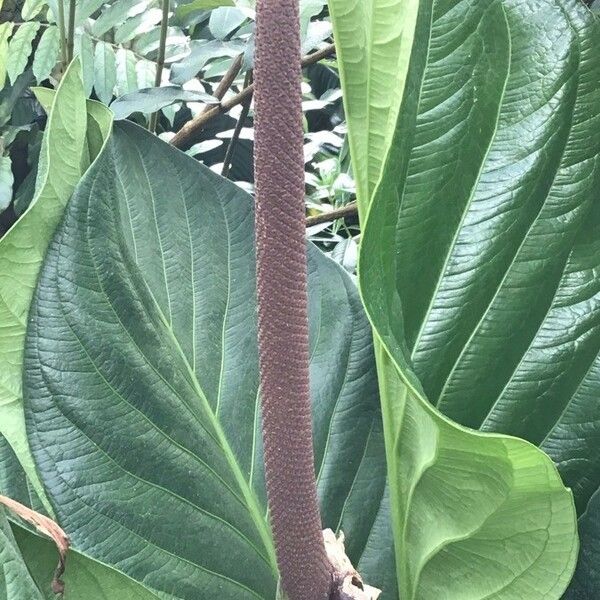
Plant Overview
Often called the "Cobra Anthurium" or the "Bird’s Nest Anthurium," Anthurium bonplandii is a prehistoric-looking masterpiece from the jungles of South America. Unlike its velvety, heart-shaped cousins, this species is prized for its thick, leathery foliage and architectural growth habit. It is a slow-growing survivor that adds an exotic, "lost world" vibe to any indoor collection.
🔍 How to Identify
- 🍃 Leather-Like Texture: The leaves are incredibly thick (coriaceous) and feel almost like plastic or stiff cardboard to the touch.
- 🦅 Bird’s Nest Habit: Instead of climbing a totem, the leaves grow in a tight, circular rosette pattern, designed to catch falling debris and water in the wild.
- 🌑 Distinctive Petioles: The leaf stalks are often short and thick, sometimes showing dark speckling or a reddish tint near the base.
- ✨ Matte Sheen: While many Anthuriums are shiny, bonplandii (especially the 'Grey' variety) often has a sophisticated matte, blue-green, or silvery finish.
🏡 In Your Garden
- 🪵 The "Chunky" Secret: In its native habitat, this plant grows on rocks or tree branches. It hates heavy, suffocating potting soil. Use a mix heavy in orchid bark, perlite, and charcoal to keep the roots "breathing."
- 💧 Drought Tolerance: Because of those thick leaves, it stores water better than most tropicals. Wait until the top half of the soil is dry before watering; overwatering is the fastest way to kill this resilient plant.
- 🌤️ Light Nuance: It loves bright, filtered light. Too much direct sun will scorch those thick leaves, but too little light will cause the "nest" to stretch out and lose its compact, symmetrical shape.
⚠️ Safety & Toxicity
- 🐾 Toxic to Pets: Like all members of the Araceae family, it contains insoluble calcium oxalate crystals. If chewed, it causes immediate mouth irritation and swelling.
- 👶 Keep Out of Reach: It is not safe for ingestion by children. The sap can also cause mild skin irritation for those with sensitive skin during pruning.
✨ Fun Fact
This plant is named after the famous French explorer and botanist Aimé Bonpland, who traveled through Latin America with Alexander von Humboldt. In the wild, its "bird's nest" shape serves as a personal compost bin, catching falling leaves that rot down into nutrients for the plant’s roots!

Detailed Care Instructions
Growing Anthurium bonplandii involves providing the right conditions and care for the plant. Here are some steps you can follow to grow Anthurium bonplandii successfully:
- Light: Anthurium bonplandii thrives in bright, indirect light. Place the plant near a window where it receives filtered sunlight or provide it with fluorescent or LED grow lights.
- Temperature: Maintaining a temperature between 65-80°F (18-27°C) is ideal for Anthurium bonplandii. Avoid exposing the plant to extreme temperatures, drafts, or cold drafts.
- Humidity: Anthurium bonplandii enjoys high humidity levels. You can increase humidity by placing the plant on a tray filled with water and pebbles or using a humidifier. Regular misting can also help keep the plant moist.
- Watering: Water your Anthurium bonplandise plant thoroughly when the top inch of the soil feels dry. Ensure good drainage to prevent the roots from sitting in water. Avoid overwatering, as it can lead to root rot.
- Soil: Use well-draining soil that retains some moisture but doesn't hold water. A mix of potting soil, peat moss, and perlite or orchid bark works well for Anthurium bonplandii.
- Fertilizer: Use a balanced, water-soluble fertilizer at half strength once a month during the growing season (spring and summer). Follow the manufacturer's instructions for application.
- Repotting: Anthurium bonplandii prefers to be slightly root-bound, so repotting is generally not necessary frequently. However, if the plant becomes too large for its container or starts to decline, repot it into a slightly larger pot with fresh soil.
- Pruning: Regularly remove any yellow or dead leaves to promote growth and maintain the plant's appearance. Cut back damaged or leggy stems to encourage new growth.
- Propagation: Anthurium bonplandii can be propagated through division. Carefully separate the plant into smaller sections, ensuring each section has roots attached. Pot the divisions in separate containers with fresh soil, and provide them with the same care as a mature plant.
By following these guidelines and giving your Anthurium bonplandii plant proper care, you should be able to promote its growth and maintain its health.

Place in a window with dappled sun or a spot in the middle of a room. Or directly in a window facing west or east.

To water this plant, it is important to check the soil moisture level before giving it water. The best way to do this is to stick your finger or a moisture meter into the soil to feel for moisture. If the top inch of soil is dry to the touch, it is time to water.
When watering, it is important to be gentle so as not to damage the plant's roots. One method is to water slowly and evenly around the base of the plant until water begins to drain out of the bottom of the pot. It is important not to let the plant sit in standing water, as this can cause root rot.
In terms of frequency, Anthurium Bonplandii plants should ideally be watered once a week, but this can vary depending on the temperature, humidity, and size of the plant. It is best to monitor the soil moisture and adjust watering accordingly.
Additionally, it is important to provide proper drainage for the pot by using a container with drainage holes or adding a layer of gravel at the bottom of the pot. This will help prevent water from sitting in the soil and causing root rot.
To fertilize Anthurium Bonplandii plant, mix a balanced, water-soluble fertilizer with water according to the instructions on the fertilizer packaging. Apply the fertilizer solution to the soil every two to four weeks during the growing season (spring and summer), reducing the frequency to once a month during the dormant season (fall and winter). Avoid applying fertilizer to dry soil or to the plant's leaves. Water thoroughly after fertilizing to prevent the build-up of excess nutrients in the soil.
Anthurium Bonplandii plant prefers well-draining soil that retains some moisture but is not waterlogged. The soil should be airy and light, as the plant's roots require good airflow. It is recommended to use a mix of organic matter, such as peat moss or coconut coir, and perlite or vermiculite to increase drainage and aeration. A pH level of 6.0 to 7.0 is ideal for Anthurium Bonplandii. The soil should also be enriched with nutrients, like nitrogen, phosphorus, and potassium, which can be achieved through the addition of fertilizers or organic matter. It is essential to repot the plant in fresh soil every two to three years, as the soil can become depleted over time.
Anthurium Bonplandii plant propagation can be done through the Division Method. This involves separating new growth or offshoots from the parent plant and planting them in their own pot or area.
First, choose a healthy and mature plant with at least two healthy leaves and a well-developed root system. Carefully remove the plant from its pot and carefully separate the offshoots from the main plant, making sure to keep the roots intact.
Next, prepare a pot or soil bed with a well-draining potting mix. Gently place the separated offshoots into the soil and cover with the potting mix. Water the plants thoroughly to help settle the soil.
Ensure that the new plants are kept in a warm and humid environment with indirect sunlight. Make sure to keep the soil moist, but not waterlogged.
After a few weeks, look for new growth and signs of health in the new plants. Once they have established a healthy root system, transplant them to a larger pot or outside planting area.
Overall, Anthurium Bonplandii plant propagation through division is a relatively easy process that can help you create new plants from an existing, healthy plant.
Common pests of the bonpland's anthurium include Mealybugs, spider mites, thrips. Make a habit of checking your bonpland's anthurium frequently for pests so that any infestations can be caught and managed early.








