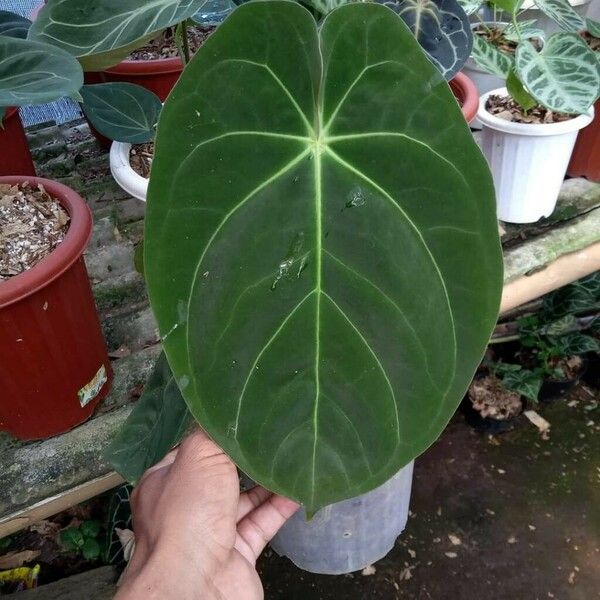
Plant Overview
Known as the "Velvet Heart of Panama," Anthurium dressleri is a crown jewel for rare plant collectors. This species is famous for its hauntingly dark, velvety foliage that seems to swallow light rather than reflect it. Native to the humid rainforests of Central America, it carries an air of prehistoric elegance that transforms any indoor collection into a high-end tropical sanctuary.
🔍 How to Identify
- 🖤 Velvet Surface: The leaves possess a dense, plush texture that feels like heavy silk or suede to the touch.
- 🌑 Deep Pigmentation: Mature leaves are a dark, obsidian green, while new leaves often emerge with a striking copper or burgundy tint before hardening off.
- 📐 Heart-Shaped Profile: Broad, rounded lobes at the top (the sinus) taper down into a sharp point, creating a dramatic, symmetrical heart shape with pale, contrasting veins.
🏡 In Your Garden
- 🌫️ Humidity is King: This is not a "windowsill" plant; it demands high humidity (70%+) to prevent the delicate velvet edges from crisping. A terrarium or dedicated plant cabinet is often its best home.
- 🍃 Terrestrial Tendencies: Unlike many climbing Anthuriums, dressleri often grows closer to the forest floor. It prefers a very airy, "chunky" aroid mix that mimics decaying forest litter—think orchid bark, perlite, and charcoal.
- 💧 Mineral Sensitivity: It is a "diva" regarding water quality. Using tap water can lead to leaf spotting; it much prefers distilled, RO, or rainwater to keep its foliage pristine.
⚠️ Safety & Toxicity
- 🚫 Status: Toxic to humans and animals.
- 🐾 Details: Like most Arums, it contains insoluble calcium oxalate crystals. If chewed, it causes immediate mouth pain, swelling of the throat, and digestive distress. Keep this "Black Queen" on a high shelf away from curious cats, dogs, and toddlers.
✨ Fun Fact
This plant is named after the legendary botanist Robert Dressler. In its native Panama, it is considered a "relict" species, meaning it survives in very specific, isolated pockets of the rainforest that have remained biologically stable for thousands of years!

Detailed Care Instructions








