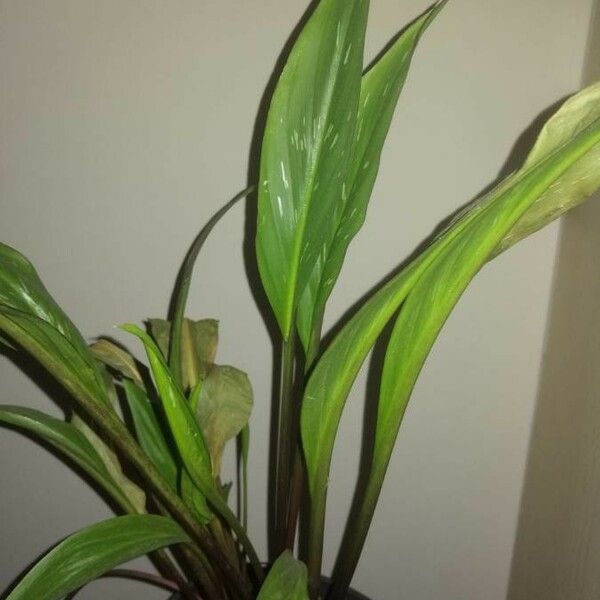
Plant Overview
Commonly known as the "Bird's Nest Anthurium," the Anthurium jenmanii is often called the aristocrat of the aroid world. Unlike its cousins with flashy, colorful flowers, this plant is a foliage superstar, prized for its massive, stiff, and sculptural leaves that grow in a majestic rosette. Once the center of a massive "plant craze" in Southeast Asia, it remains a symbol of elegance and status in any indoor jungle.
🔍 How to Identify
- 🌿 Leaf Texture: The leaves are remarkably thick and leathery, often feeling more like cardboard or stiff plastic than a living plant.
- 🦅 Growth Habit: It grows in a "Bird's Nest" form, where the leaves emerge from a central point in a tight, upright circle, creating a natural bowl shape.
- 📏 Blade Shape: Look for elongated, paddle-shaped leaves with prominent veins and wavy margins that give the plant a rugged, prehistoric look.
🏡 In Your Garden & Home
- 🏺 Breathable Roots: Because this is an epiphytic plant (it grows on trees in the wild), it absolutely hates "wet feet." It thrives best in a chunky aroid mix consisting of orchid bark, perlite, and charcoal rather than standard potting soil.
- 🌬️ Airflow is Key: In your home, it appreciates high humidity but requires good air circulation to prevent fungal spots from forming on its magnificent blades. It is a slow grower, so patience is a virtue with this species.
⚠️ Safety & Toxicity
- 🚫 Toxicity Status: Like almost all members of the Araceae family, this plant is toxic if ingested.
- 🐾 Pet & Child Safety: It contains calcium oxalate crystals. If chewed, it can cause immediate mouth irritation, swelling of the throat, and digestive distress in cats, dogs, and curious toddlers. It’s best kept on a high pedestal or a sturdy plant stand.
✨ Fun Fact
During the mid-2000s, "Anthurium Mania" hit Indonesia, and rare specimens of Anthurium jenmanii were so highly coveted that they were sometimes traded for luxury cars or even houses! Even today, large, mature specimens are considered a prestigious "trophy" for serious plant collectors.

Detailed Care Instructions
To grow an Anthurium jenmanii plant, follow these steps:
- Choosing the right location: Anthurium jenmanii prefers bright but indirect sunlight. Find a spot in your home that provides filtered light or shade, away from direct sunlight.
- Select the right pot and soil: Choose a pot with good drainage holes, as Anthurium jenmanii doesn't like to sit in waterlogged soil. Use a well-draining potting mix that retains some moisture but doesn't become overly compacted.
- Planting: Plant your Anthurium jenmanii in the potting mix, ensuring the roots are covered but not buried too deeply. Gently pat the soil around the plant to secure it.
- Watering: Water the plant thoroughly but allow the soil to partially dry out between waterings. Overwatering can cause root rot, so make sure the soil is slightly moist before watering again.
- Humidity: Anthurium jenmanii thrives in high humidity, so misting the leaves with water or placing a tray of water nearby can help increase humidity. You can also use a humidifier to maintain optimal conditions.
- Temperature and airflow: Anthurium jenmanii prefers temperatures between 60-80°F (15-27°C) and good airflow. Avoid placing it near drafts or in extreme temperature zones.
- Fertilization: Use a balanced houseplant fertilizer diluted to half strength once a month during the growing season (spring and summer). Avoid fertilizer use during the colder months.
- Pruning: Remove any yellow leaves or spent blooms to maintain the plant's overall health and appearance. Pruning also helps stimulate new growth.
- Repotting: As the plant grows, it may require repotting every 1-2 years into a slightly larger pot to provide more space for the roots. Repotting is best done in the spring.
- Pests and diseases: Keep an eye out for common pests like aphids, mealybugs, or spider mites. Treat them with organic insecticides or insecticidal soaps if necessary. Also, avoid overwatering, as it can lead to root rot.
By following these care tips, you can successfully grow an Anthurium jenmanii plant. Remember to be patient, as it may take time for your plant to establish and start producing its beautiful flowers.

Place in a window with dappled sun or a spot in the middle of a room. Or directly in a window facing west or east.

The plant requires regular watering, preferably with lukewarm water. It is important to provide adequate water but also ensure that the soil does not become waterlogged. Watering should be done when the soil feels dry to the touch, but do not allow the soil to become bone dry. It is recommended to use a pot with drainage holes to prevent water from accumulating in the pot, which can lead to root rot. During the winter months, when the plant is not actively growing, reduce watering and allow the soil to dry out more between waterings.
To properly fertilize this plant, use a water-soluble fertilizer with balanced N-P-K (nitrogen, phosphorus, potassium) ratio once a month during the growing season (spring and summer). Dilute the fertilizer to half-strength and apply it to the soil, avoiding direct contact with the foliage. During the dormant season (fall and winter), reduce fertilization to once every two months or suspend it altogether. Avoid over-fertilizing as it can harm the plant.
Anthurium Jenmanii plant prefers a well-draining and moisture-retentive soil mix. It is best to use a soil mix that consists of a blend of peat moss, perlite, and bark or coconut coir. The pH level of the soil should be slightly acidic, between 5.5 and 6.5. Avoid using heavy, clay-based soils as they may retain too much moisture and lead to root rot. Additionally, adding a slow-release fertilizer to the soil mix can provide the necessary nutrients for the plant's growth and health. Overall, the ideal soil for Anthurium Jenmanii should be loose, airy, and have good drainage.
To propagate this plant, one should start by taking a cutting from the parent plant. This cutting should be taken from the top of the plant and should have at least two nodes. The cutting should be allowed to dry out for a few hours before being planted in a pot with well-draining soil. The pot should be kept in a warm, humid location with bright but indirect light. The soil should be kept moist but not overly wet. After a few weeks, the cutting should have developed roots and can be planted in its permanent location.
Common pests of the atta mokka include Mealybugs, spider mites, thrips. Make a habit of checking your atta mokka frequently for pests so that any infestations can be caught and managed early.








