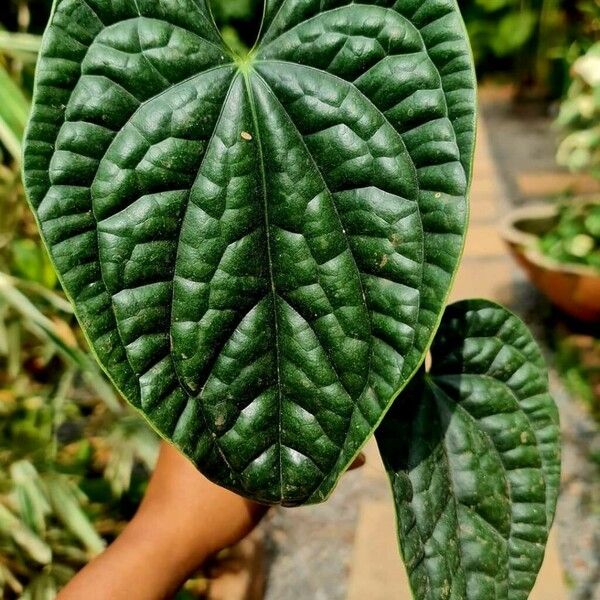
Plant Overview
Often called the "Diamond Anthurium," the Anthurium luxurians is a true masterpiece of the botanical world. Originating from the rain-drenched jungles of Colombia, it is prized by collectors for its incredibly deep, quilted texture that mimics the look of hammered metal or dark velvet. While it was once a rare "Holy Grail" plant, it has become the crown jewel of many indoor urban jungles due to its prehistoric, opulent aesthetic.
🔍 How to Identify
- 💎 Quilted Texture: The leaves are deeply "bullate," meaning they have a heavily puckered or wrinkled surface that creates a dramatic play of light and shadow.
- 🖤 Changing Colors: New leaves often emerge in a striking reddish-bronze or chocolate hue, eventually maturing into a deep, forest green that can look almost black in low light.
- 📐 Square Stems: Unlike many other Anthuriums, the petioles (leaf stems) of a true luxurians often feature a distinct four-sided or "winged" shape rather than being perfectly round.
🏡 In Your Garden
- ☁️ Humidity is Queen: Because it evolved on the humid rainforest floors of the Chocó region, this plant thrives when moisture levels are above 60%. Low humidity can cause the intricate edges of the leaves to crisp or brown.
- 🌬️ Breathable Roots: It hates "wet feet." Because it is an aroid, it requires an extremely chunky, airy potting mix (think orchid bark, perlite, and charcoal) to ensure oxygen reaches the roots and prevents rot.
⚠️ Safety & Toxicity
- 🚫 Toxic to All: Like most members of the Araceae family, this plant contains insoluble calcium oxalate crystals.
- 🐾 Pet & Child Warning: If any part of the plant is chewed or swallowed, it can cause severe mouth irritation, swelling of the throat, and digestive distress. It is best kept on high shelves away from curious cats, dogs, and toddlers.
✨ Fun Fact
The name luxurians is Latin for "rank growth" or "extravagance," reflecting its lush and opulent appearance. Interestingly, for many years, it was frequently confused with Anthurium splendens, but it was eventually recognized as its own distinct species due to its unique square-shaped petioles.

Detailed Care Instructions

Place in a window with dappled sun or a spot in the middle of a room. Or directly in a window facing west or east.

The presence of a dry surface layer of soil does not indicate that the plant requires water. Instead, stick your finger 1-2" (3-5 cm) deep in the soil to feel dampness or moisture content. If the soil seems dry, it's time to water your greens. If the soil is still moist, however, it is better not to water your plant and instead wait a day or two. Overwatering or waterlogging raises the risk of root rot. So if the soil takes longer than a week to dry, check the light conditions because it's likely that the plant isn't getting enough light. It's fine if the upper layer of soil is dry between waterings, but the deeper soil layer should always have some moisture.
These plant needs regular fertilizing during growing seasons. Fertilizing your plants in dormant state during the winter, might result in scorching or browning of the leaf tips. If mature plants display signs of nutrient insufficiency, fertilizer administration is necessary to restore the plant to its previous state.
You may use All Purpose Plant Food or Green Plant Food for your Anthurium Luxurians
Common pests of the anthurium luxurians include Mealybugs, spider mites, thrips. Make a habit of checking your anthurium luxurians frequently for pests so that any infestations can be caught and managed early.








