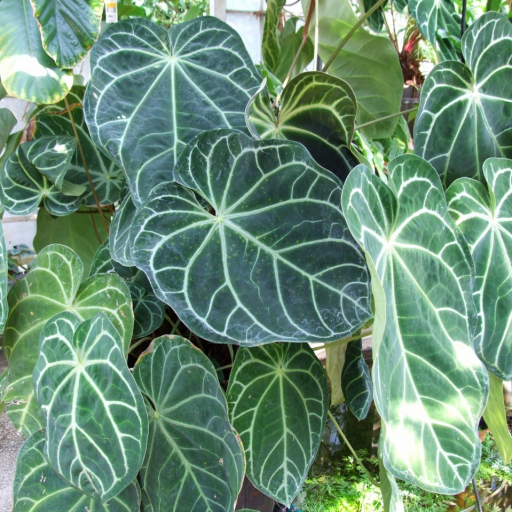
Plant Overview
Known as the "King of Velvet," Anthurium magnificum is a Colombian treasure that brings a sense of prehistoric luxury to any indoor collection. With its massive, shield-like leaves that feel like expensive fabric, it has become a "holy grail" for aroid enthusiasts. Unlike many plants that fade into the background, this Anthurium demands center stage with its architectural presence and shimmering veins.
🔍 How to Identify
- 🍃 The Foliage: Deep green, heart-shaped (cordate) leaves that have a matte, velvety texture rather than a glossy one.
- 🕸️ The Veining: Striking, silvery-white or pale green veins that branch out prominently, creating a high-contrast pattern across the leaf.
- 🟦 The Stem (Petiole): A key identifier is its "winged" or quadrangular petiole—the stems are distinctly four-sided/square rather than round.
🏡 In Your Garden
- ☁️ Humidity is Essential: This plant is a child of the cloud forests. If humidity drops below 60%, the magnificent leaves will develop brittle, brown "halos" around the edges.
- 🪴 Breathable Roots: In the wild, it often grows on rocks or in loose forest debris. It hates "wet feet," so it requires a chunky, airy potting mix (think orchid bark and perlite) to prevent root rot.
- 🧘 Stability Matters: It is a slow-growing species that hates being moved. Find a spot with bright, indirect light and leave it there to prevent the plant from dropping leaves in a "stress tantrum."
⚠️ Safety & Toxicity
- 🚫 Status: Toxic to humans and pets.
- 🐾 The Danger: Like most aroids, it contains calcium oxalate crystals. If any part of the plant is ingested, it causes intense burning of the mouth, swelling of the throat, and digestive distress.
- 🧤 Skin Sensitivity: The sap can be a skin irritant for some; it is best to wear gloves when pruning or propagating.
✨ Fun Fact
The name magnificum isn't just hyperbole; it is the official Latin botanical name, chosen because the leaves can grow up to three feet long in the wild, making them look like giant, emerald shields resting on the forest floor.

Detailed Care Instructions
To grow an Anthurium Magnificum plant, you can follow these steps:
- Choose a healthy Anthurium Magnificum plant: Look for a plant with vibrant green leaves, without any yellowing or browning, and showing no signs of pests or diseases.
- Select a suitable location: Anthurium Magnificum plants thrive in bright, indirect light. Choose a spot near a window that receives filtered light, or provide artificial light with a grow light if necessary. Avoid direct sunlight, as it can scorch the leaves.
- Proper potting: Use a well-draining potting mix that contains equal parts peat moss, perlite, and orchid bark. Anthurium Magnificum plants prefer well-draining soil to avoid waterlogging. Select a pot with drainage holes to prevent water accumulation.
- Planting: Gently remove the plant from its nursery pot and loosen the roots. Place the plant in the new pot, ensuring that the roots are adequately covered but not too deep. Backfill the pot with the potting mix and firm it gently around the roots.
- Watering: Anthurium Magnificum plants like to be consistently moist, but not soggy. Water the plant when the top inch of soil feels dry. Pour water until it drains from the bottom of the pot, but do not let the plant sit in standing water.
- Humidity: To mimic their natural habitat, Anthurium Magnificum plants appreciate higher humidity levels. You can increase humidity around the plant by placing it on a tray filled with water and pebbles, or by using a humidifier.
- Temperature and air circulation: Maintain a temperature range of 60-75°F (15-24°C). Avoid exposing the plant to drafts or extreme temperature fluctuations. Good air circulation will also benefit the plant, so keep it away from stagnant air areas.
- Fertilizing: Feed Anthurium Magnificum plants every two months during the growing season with a balanced houseplant fertilizer. Dilute the fertilizer according to the package instructions to avoid overfeeding, which can harm the plant.
- Pruning and maintenance: Prune any dead or yellowing leaves to maintain the plant's appearance and health. You can also remove any overcrowded growth to improve air circulation and prevent diseases.
- Repotting: Anthurium Magnificum plants usually require repotting every 2-3 years or when they outgrow their current pot. Choose a slightly larger pot and use fresh potting mix during repotting.
Following these care guidelines, your Anthurium Magnificum plant should grow and thrive, showcasing its magnificent foliage.

Place in a window with dappled sun or a spot in the middle of a room. Or directly in a window facing west or east.

When watering this particular plant, it is important to take into consideration the specific needs of its species. It is recommended to water thoroughly when the top inch of soil is dry to the touch. However, be sure not to overwater as this can cause root rot. A well-draining soil mixture is also beneficial to allow excess water to drain away from the roots. Furthermore, avoid getting water on the leaves as this can lead to bacterial or fungal growth. Lastly, ensure that the plant is placed in a bright, indirect sunlight location to promote healthy growth.
To fertilize this plant, use a well-balanced fertilizer with equal amounts of nitrogen, phosphorus, and potassium. Apply the fertilizer once every two weeks during the growing season, which is typically from spring to early fall. Be careful not to over-fertilize as this can damage the plant. Always follow the instructions on the fertilizer label and adjust the amount based on the plant's size and health.
Anthurium Magnificum plant prefers well-draining soil with good moisture retention. It is essential to use soil that has rich organic matter, such as compost, peat moss, or leaf mold. A balanced soil mix that has equal parts of peat moss, perlite, and bark chips or coconut coir can be used. The pH of the soil should be slightly acidic, ideally between 5.5 and 6.5. Moreover, the soil should be free of any disease or harmful insects that may damage the plant. It is recommended to repot the Anthurium Magnificum plant every 1-2 years, as it grows relatively fast and may outgrow its container.
To propagate this plant, take a healthy leaf cutting and cut it into sections with a clean, sharp tool. Ensure that each section has a portion of the stem attached to it. Dip the cut ends in rooting hormone and plant them in a pot filled with moistened, well-draining soil mix. Cover the pot with a plastic bag to maintain humidity and place it in a warm, bright spot out of direct sunlight. Mist the cuttings regularly and wait for roots to develop, usually within 6-8 weeks. Once roots have formed, remove the plastic bag and begin to gradually acclimate the plant to lower humidity and brighter light levels.
Common pests of the velvety anthurium include Mealybugs, spider mites, thrips. Make a habit of checking your velvety anthurium frequently for pests so that any infestations can be caught and managed early.








