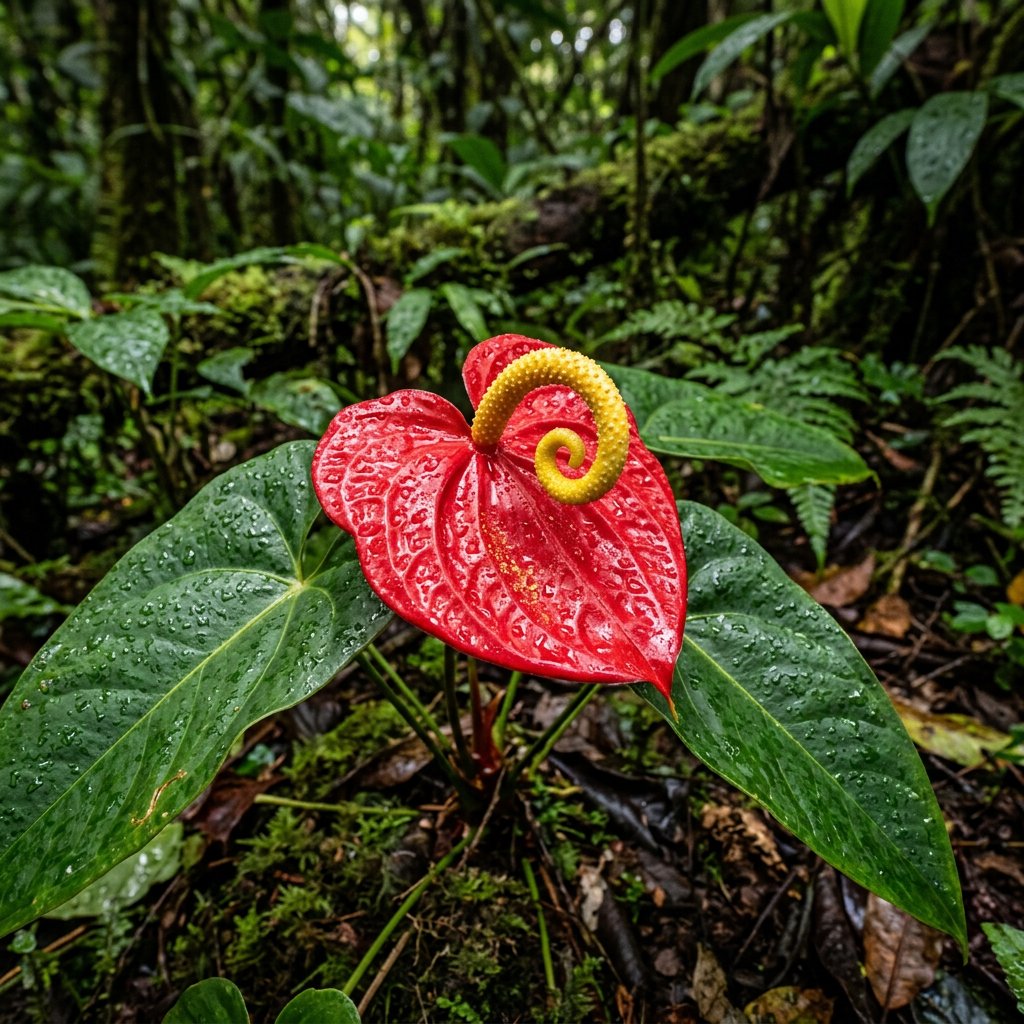
Plant Overview
Known affectionately as the Pigtail Anthurium or the Flamingo Flower, this Costa Rican native is a showstopper for any indoor jungle. While its cousins often have straight spikes, this variety is famous for its quirky, curly "tail" and vibrant, waxy spathes. It brings an instant pop of prehistoric-looking color to humid corners and is prized for flowers that can last for months.
🔍 How to Identify
- 🔴 The Spathe: A brilliant, waxy orange-red bract that looks like a polished, leathery heart.
- 🌀 The Spadix: Unlike the straight spikes of other Anthuriums, this one features a distinctively curled or coiled floral spike, resembling a pig's tail.
- 🍃 The Foliage: Long, lance-shaped (lanceolate) leaves that are darker and more matte than the common Anthurium andraeanum, providing a moody backdrop for the bright blooms.
🏡 In Your Garden
- ☁️ Cloud Forest Vibes: Coming from high-altitude tropical forests, this plant thrives on high humidity. If the air is too dry, the leaf tips will turn brown and crispy as if they are protesting the lack of mist.
- 🏺 The "Aroid" Secret: It hates "wet feet." To keep it happy, use a chunky potting mix involving orchid bark and perlite. This mimics its natural habit of growing in mossy crevices where water drains away instantly.
⚠️ Safety & Toxicity
- 🚫 Toxic if Ingested: This plant contains calcium oxalate crystals, which act like tiny needles if chewed.
- 🐾 Watch Your Pets: It is considered toxic to cats, dogs, and curious children. Ingestion can cause intense mouth irritation, swelling of the throat, and digestive upset.
✨ Fun Fact
- 🇦🇹 Exploration History: This plant was named after the Austrian explorer Baron Karl von Scherzer, who "discovered" the species in the mid-1800s while traversing the mountainous regions of Central America.

Detailed Care Instructions
To grow an Anthurium Scherzerianum plant, also known as the flamingo flower, follow these steps:
- Lighting: Place the plant in a location with bright, indirect light. Avoid direct sunlight as it can burn the leaves. The ideal temperature range is between 70-85°F (21-29°C).
- Watering: Water the plant thoroughly, allowing excess water to drain out. Anthurium plants prefer slightly moist soil, so wait until the top inch of soil is dry before watering again. Avoid overwatering or letting the plant sit in water, as this can lead to root rot.
- Humidity: Anthuriums thrive in high humidity levels. Increase humidity by misting the leaves with water or placing a tray filled with water near the plant. Alternatively, you can use a humidifier.
- Fertilization: Use a balanced liquid fertilizer specifically formulated for flowering plants. Follow the instructions on the fertilizer package and apply it every two to four weeks during the growing season (spring and summer). Avoid fertilizing during the dormant period (fall and winter).
- Soil: Anthuriums prefer well-draining soil. You can use a mix of potting soil, orchid bark, and perlite or vermiculite to ensure good drainage.
- Repotting: Anthuriums generally need to be repotted every two to three years. When repotting, choose a slightly larger pot with drainage holes and use fresh potting soil. Gently loosen the roots before placing the plant in the new pot.
- Pruning: Regularly remove any dead or yellowing leaves to promote healthy growth. You can also prune back leggy or overcrowded stems to maintain a compact shape.
- Pests and diseases: Keep an eye out for common pests like aphids, spider mites, and mealybugs. Treat infestations with a gentle insecticidal soap or neem oil. Anthuriums can also be susceptible to root rot, so ensure proper drainage and avoid overwatering.
By following these care tips, you can successfully grow an Anthurium Scherzerianum plant and enjoy its beautiful flowers.

Place in a window with dappled sun or a spot in the middle of a room. Or directly in a window facing west or east.

To water this plant, you should first make sure that the top layer of soil has dried out before giving it water. This will prevent overwatering the plant, which can lead to root rot. When watering, you should use room temperature water and pour it slowly onto the soil, making sure it is evenly distributed throughout the pot. Be careful not to get water on the leaves, as this can cause them to rot. Allow excess water to drain from the pot, as standing water can also lead to root rot. Depending on the humidity and temperature of your environment, you may need to water your plant every 7-10 days.
- Use a balanced fertilizer with an NPK ratio of 10-10-10 or 20-20-20.
- Dilute the fertilizer according to package instructions.
- Apply the fertilizer once a month during the growing season (spring and summer).
- Water the plant thoroughly before and after fertilizing to prevent root burn.
- Avoid getting fertilizer on the leaves or stem, as it can burn the plant.
- Monitor the plant for signs of nutrient deficiency or over-fertilization, such as yellowing leaves, stunted growth, or leaf burn.
Anthurium Scherzerianum plant requires well-draining soil that is acidic to slightly alkaline, with a pH range of 5.5 to 7.0. The soil should be rich in organic matter and high in nitrogen to promote healthy growth and beautiful foliage. A mixture of peat moss, leaf mold, and perlite or sand can be used to create a soil mix that is suitable for Anthurium Scherzerianum. This plant also prefers soil that is moist but not waterlogged, so it's important to ensure adequate drainage to prevent root rot. Additionally, adding some slow-release fertilizer to the soil can boost the plant's growth and helps it produce vibrant blooms.
Anthracite-colored, hybrid bromeliad houseplant with waxy spathes and spike-like spadices that grow from the center of the plant. To propagate, carefully remove a section of the stem, ensuring that it has at least one node. Dip the cut end in rooting hormone and plant it in a pot with well-draining soil that’s kept moist, not wet. Keep the pot in a warm, humid area away from direct sunlight until new growth emerges.
Common pests of the anthurium include Mealybugs, spider mites, thrips. Make a habit of checking your anthurium frequently for pests so that any infestations can be caught and managed early.








