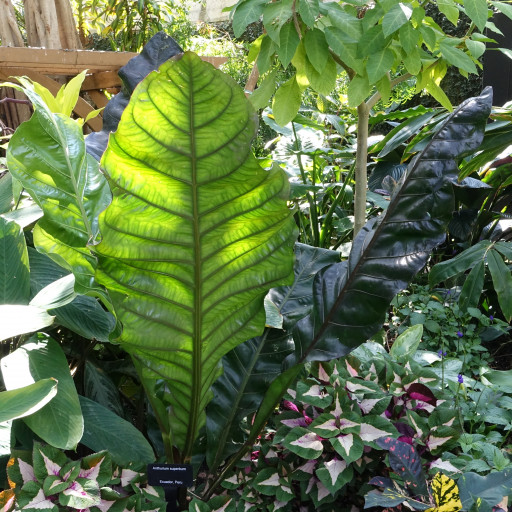
Plant Overview
Often called the Bird’s Nest Anthurium, the Anthurium superbum looks like a living relic from the prehistoric era. Native to the lush lowland rainforests of Ecuador, this plant doesn't trail or climb like its cousins; instead, it grows in a magnificent, architectural rosette that catches falling debris in the wild to nourish itself. It’s a favorite for "urban jungle" enthusiasts who want a plant that looks tough, moody, and ancient.
🔍 How to Identify
- 🌿 Leaf Structure: The leaves grow in a tight, upright circular pattern, creating a "nest" shape. Unlike many glossy aroids, these leaves are stiff and stand proudly erect.
- 🌑 Deep Coloration: The foliage is a distinctive dark, olive-green on top, while the undersides often feature a moody, burgundy-tinted or purplish hue.
- 🦎 Texture: The leaves are remarkably thick and leathery (coriaceous), with a matte finish and prominent veins that give them a "puckered" or prehistoric appearance.
🏡 In Your Garden
- ☁️ Epiphytic Nature: In its natural habitat, this plant often grows on trees rather than in the ground. Because of this, it hates "wet feet." Use a chunky aroid mix (bark, perlite, and charcoal) to ensure its roots can breathe.
- 💧 Humidity over Watering: While it is more drought-tolerant than thin-leaved Anthuriums, it craves high humidity. If the air is too dry, the edges of those beautiful dark leaves may turn brown and crispy.
- ☀️ Light Nuance: It prefers "dappled" light. Think of the forest floor—bright but filtered. Direct afternoon sun will scorch the dark leaves, leaving permanent bleached scars.
⚠️ Safety & Toxicity
- 🚫 Status: Toxic to humans and pets.
- 👄 Details: Like most members of the Araceae family, it contains calcium oxalate crystals. If chewed or swallowed, it can cause immediate swelling of the mouth and throat, drooling, and digestive distress. Keep it on a sturdy pedestal away from curious cats or toddlers.
✨ Fun Fact
The species name "superbum" isn't just a random Latin word—it translates to "superb," "proud," or "stately." It was named this because of its noble, upright growth habit that makes it look like a natural green throne.

Detailed Care Instructions
| Humidity | High |
| Lighting | Shade |
| Difficulty | Medium |
| Temperature | 18°C - 24°C |
| Hardiness Zones | Min 10B |
To grow Anthurium Superbum plants, you can follow these steps:
- Choose a suitable location: Anthurium Superbum plants prefer bright, indirect light. Place them near a north or east-facing window where they can receive filtered sunlight.
- Provide well-draining soil: Anthurium Superbum plants need a well-draining soil mix to prevent waterlogging. You can use a mixture of orchid bark, perlite, and sphagnum moss for a suitable growing medium.
- Watering: Water your Anthurium Superbum plant when the top inch of soil feels dry. Make sure not to overwater, as it can lead to root rot. Anthurium plants prefer slightly moist soil but not soggy conditions.
- Humidity: Anthurium Superbum plants thrive in high humidity environments. You can increase humidity by placing a humidifier nearby or by grouping plants together. Alternatively, you can mist the leaves regularly.
- Fertilizer: Use a balanced, water-soluble fertilizer formulated for indoor plants. Feed your Anthurium Superbum plant once a month during the growing season (spring through summer) and reduce or stop feeding during the winter months.
- Repotting: Anthurium Superbum plants require occasional repotting when they outgrow their pots. Repot in a container that is slightly larger than the current one, using a well-draining potting mix.
- Pruning: Remove any dead or yellowing leaves to maintain the plant's health and appearance. You can also trim back leggy or overgrown stems to encourage new growth.
- Temperature: Anthurium Superbum plants prefer temperatures between 60-80°F (15-27°C). Protect them from cold drafts or extreme temperature fluctuations.
- Pest control: Watch out for common houseplant pests such as spider mites, aphids, or mealybugs. If you notice any pest infestation, treat it promptly using appropriate insecticides or natural remedies like neem oil.
Remember to provide regular care, monitor the plant for any signs of stress or disease, and adjust your care routine accordingly. Enjoy watching your Anthurium Superbum plant grow and flourish!

Place in a window with dappled sun or a spot in the middle of a room. Or directly in a window facing west or east.

To water this plant, make sure to only water it when the soil is slightly dry to the touch. This plant prefers to have consistently moist soil but does not want to be waterlogged. Use room temperature water and water thoroughly until water drains out of the bottom. Avoid letting the plant sit in standing water as this can lead to root rot. Watering frequency can vary depending on the temperature and humidity of the environment, but typically this plant will need to be watered once a week.
- Begin by preparing a well-draining potting mixture for your Anthurium Superbum plant. It should consist of equal parts of peat moss, perlite, and orchid bark.
- Choose a pot that has drainage holes at the bottom to prevent waterlogging. Ensure it is large enough to accommodate the plant's root system.
- Gently remove the plant from its nursery container and loosen the roots to encourage healthy growth.
- Place the plant in the center of the pot and backfill with the prepared potting mixture. Firmly press around the base of the plant to provide stability.
- Water the plant thoroughly, allowing the excess water to drain away. Anthurium Superbum plants prefer lightly moist soil, so be careful not to overwater.
- To fertilize, use a balanced liquid fertilizer with a ratio of 20-20-20 or a similar composition. Dilute the fertilizer according to the instructions provided on the packaging.
- Apply the diluted fertilizer to the plant every four to six weeks during the growing season, which is typically spring and summer. Do not fertilize during colder months or when the plant is dormant.
- Avoid direct contact of the fertilizer with the leaves or stems, as it may cause damage. Rather, apply the fertilizer to the soil around the base of the plant.
- Regularly check the plant for any signs of nutrient deficiencies or excesses. Adjust the fertilizer application accordingly if necessary.
- Always follow the manufacturer's instructions and dosage recommendations when using fertilizer to prevent harming the plant.
Anthurium Superbum prefers well-draining soil that is rich in organic matter. The soil should have a pH between 5.5 and 6.5 for optimal growth. A soil mix that is composed of peat moss, perlite, and orchid bark is an excellent option for this plant. This type of soil provides good water retention while also allowing for adequate drainage. It is important to avoid using soils that retain too much water as this can lead to root rot. Additionally, the soil should be kept slightly moist but not overly wet to prevent damage to the plant.
Anthurium Superbum, scientifically known as Anthurium magnificum, is a popular plant among enthusiasts for its attractive foliage and unique appearance. If you are interested in propagating this plant, there are a few methods you can try:
- Division: This method involves separating the plant into smaller sections, each with its own roots. Start by carefully removing the plant from its pot and gently separating the root mass into smaller segments, ensuring that each segment has some roots and healthy foliage. Plant each division in a suitable pot with well-draining soil, and provide appropriate care to encourage their growth.
- Stem Cuttings: Select a healthy stem with a few mature leaves and use a sterilized sharp knife or shears to cut it just below a node (the point where a leaf is attached to the stem). Make sure the cutting is at least 4-6 inches long. Remove the lower leaves, leaving a few at the top intact. Dip the cut end in a rooting hormone powder to stimulate root growth, and plant it in a pot filled with a well-draining potting mix. Place the pot in a warm and humid environment, mist the cutting regularly, and keep the soil consistently moist. Over time, the cutting should develop roots and establish itself as a new plant.
- Offsets: Anthurium Superbum occasionally produces small offsets or pups around its base. These are miniature versions of the parent plant that can be separated and propagated independently. Wait until the offsets have grown to a reasonable size and have developed their own roots. Gently remove them from the parent plant, taking care not to damage their roots. Plant each offset in a separate pot filled with well-draining soil, and provide the necessary care to ensure successful growth.
Regardless of the propagation method you choose, it is important to provide the new plants with suitable growing conditions. Anthurium Superbum thrives in bright, indirect light but should be protected from direct sunlight to prevent leaf burn. Maintain a warm temperature between 65-80°F (18-27°C) and humidity levels around 60-70%. Water the plants when the top inch of soil feels dry, and avoid overwatering to prevent root rot. With proper care, the propagated Anthurium Superbum plants should grow into healthy specimens, showcasing their stunning foliage and unique beauty.
Common pests of the birdnest anthurium include Mealybugs, spider mites, thrips. Make a habit of checking your birdnest anthurium frequently for pests so that any infestations can be caught and managed early.








