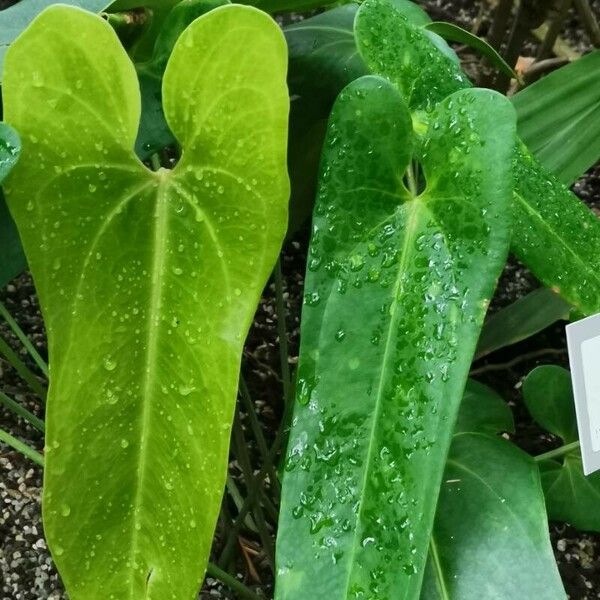
Plant Overview
Known as the "Giant Guatemalan Anthurium," Anthurium verapazense is a showstopper for collectors seeking a prehistoric, jungle aesthetic. Originating from the misty cloud forests of Central America, this plant commands attention with its massive, leathery green shields. It is a true "statement plant" that doesn't just sit in a room—it dominates it with architectural elegance.
🔍 How to Identify
- 🍃 Majestic Foliage: The leaves are deeply lobed and heart-shaped (cordate), capable of growing several feet long in the right conditions.
- 🧵 Architectural Veining: Primary veins are deeply recessed and lighter than the leaf blade, giving the foliage a textured, corrugated appearance.
- 🪵 Sturdy Petioles: The leaf stalks are thick and robust, often featuring a slight "D" shape in cross-section to support the weight of the giant leaves.
🏡 In Your Garden
- ☁️ Cloud Forest Vibes: Because this plant hails from high-humidity regions, it dislikes dry indoor air. It thrives best near a humidifier or in a dedicated greenhouse cabinet to prevent "crispy" brown edges.
- 🪴 Breathable Roots: In the wild, it often grows as an epiphyte (on trees). At home, it hates "wet feet." Use a chunky aroid mix—think orchid bark, perlite, and horticultural charcoal—rather than standard potting soil to keep the roots oxygenated.
⚠️ Safety & Toxicity
- 🐾 Toxic to Pets: This plant contains calcium oxalate crystals. If a curious cat or dog nibbles on a leaf, it will cause immediate mouth irritation, drooling, and swelling.
- 👶 Keep Out of Reach: Ingestion by humans can cause a burning sensation in the throat and digestive upset. It is best displayed on a sturdy plant stand away from toddlers.
✨ Fun Fact
🇬🇹 The Verapaz Connection: Its name verapazense specifically honors the Verapaz regions of Guatemala (Baja and Alta Verapaz), areas famous for their incredible biodiversity and "eternal spring" climate where these giants grow wild.

Detailed Care Instructions








