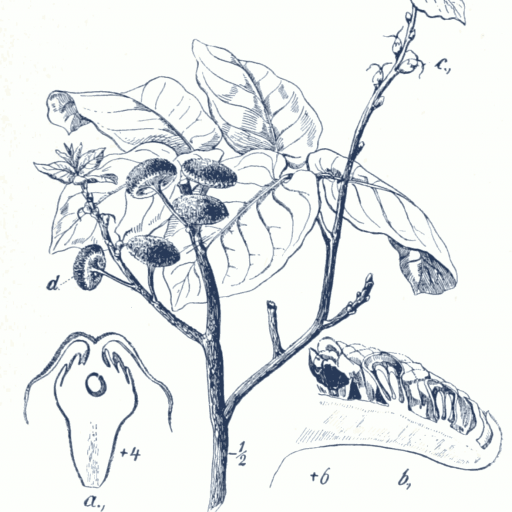
Plant Overview
Often called the "Upas Tree," this legendary giant of the Asian and African rainforests carries a dark, historical reputation. Shrouded in myths of being so poisonous that even birds flying over it would drop dead, the truth is slightly less dramatic but no less impressive. In reality, it is a magnificent forest sentinel that has provided indigenous hunters with potent arrow poison for centuries.
🔍 How to Identify
- 🌳 The Bark: The trunk is smooth and greyish, but its most distinct feature is the thick, creamy white latex that "bleeds" out immediately if the bark is cut or bruised.
- 🍃 Leaf Texture: The leaves are generally oval or oblong, featuring a slightly rough, sandpaper-like texture on the underside and a distinct pointed tip.
- 🍒 Fleshy Fruit: It produces small, velvety fruits that turn from green to a deep red or purple when ripe, somewhat resembling small, hairy figs.
🏡 In Your Garden & Landscape
- 🌍 Tropical Scale: In its natural habitat, this tree can reach towering heights of over 150 feet. Because of its massive size and toxic nature, it is rarely found in home gardens and is usually reserved for large botanical collections.
- ☀️ Sun Seeker: As a canopy tree, it demands full sun to thrive and develops a very deep taproot system, meaning it hates being moved once it has started to grow.
⚠️ Safety & Toxicity
- 🚨 Extreme Danger: This plant is highly toxic. The white sap contains cardiac glycosides (antiarin) that act directly on the heart muscle.
- 🐾 Pet & Human Risk: The sap is lethal if it enters the bloodstream through a cut or is ingested. Indigenous tribes traditionally used this sap to tip hunting arrows. It should never be planted in areas accessible to children or pets, and skin contact with the latex should be strictly avoided as it can cause severe irritation.
✨ Fun Fact
In the 18th century, European travelers spread a wild myth that the Upas tree grew in a desolate valley where its toxic fumes killed every living thing for miles around. While this was a complete exaggeration, the legend was so popular that the tree became a famous symbol of "deadly influence" in the poems of Lord Byron and Erasmus Darwin.

Detailed Care Instructions
Growing Antiaris toxicaria, also known as upas tree or poison arrow tree, can be challenging as it requires specific growing conditions. Here are some steps to help you grow this plant:
- Climate: Antiaris toxicaria is native to the tropical rainforests of Southeast Asia. It requires a warm and humid climate with temperatures ranging between 21- 28°C (70-82°F). It cannot tolerate temperatures below 15°C (59°F).
- Soil: The plant prefers well-draining, rich, and slightly acidic soil. Choose a soil mix that is loamy, well-aerated, and has a pH of around 5.5 to 6.5.
- Light: Antiaris toxicaria needs partial shade to thrive. It should be protected from direct sunlight, especially during the hottest parts of the day.
- Planting: Start by obtaining seeds or seedlings from a reputable source. Sow the seeds or plant the seedlings in a pot filled with the appropriate soil mix. Make sure the pot has good drainage holes to prevent waterlogging. Keep the soil consistently moist but not waterlogged.
- Watering: Proper watering is crucial for the growth of Antiaris toxicaria. Keep the soil evenly moist, but avoid waterlogging. Water the plant when the top inch of the soil feels dry. Mist the leaves regularly to increase humidity.
- Fertilizer: Use a balanced, slow-release fertilizer during the growing season to provide necessary nutrients. Follow the instructions on the fertilizer package for proper application.
- Pruning: Regularly prune the plant to maintain its shape and promote bushier growth. Trim back any dead, damaged, or excess growth to keep the plant healthy and attractive.
- Pests and diseases: Antiaris toxicaria can be susceptible to various pests and diseases, such as mealybugs and scale insects. Regularly inspect the plant and use appropriate organic insecticides or remedies to control infestations.
- Transplanting: If you plan to transfer the plant to a bigger pot or to the ground, do so during the early spring. Ensure the new location provides similar conditions as mentioned above.
Remember, Antiaris toxicaria is a large tree that can grow up to 30 meters (100 feet). It requires space and is not suitable for indoor cultivation. It is essential to research local regulations and consider the toxicity of the plant before attempting to grow it.

Place in a bright room that is sun drenched almost all day. Or directly in a south-facing window.

To water this particular plant, one should create a watering schedule that is consistent with its needs. It is important not to overwater or underwater the plant, as this can have negative impacts on its growth and health.
One way to determine when to water this plant is to check the topsoil for dryness. If the topsoil is dry to the touch, it is time to water the plant. However, if the topsoil is still moist, it is best to wait before watering.
When watering, it is important to use room temperature water and to allow it to saturate the soil completely, ensuring that water reaches the roots. It is also important not to allow water to pool on the surface of the soil, as this can lead to root rot.
Lastly, it is important to monitor the plant's growth and adjust the watering schedule as necessary. Too much or too little water can lead to stunted growth, yellowing leaves, or other signs of distress.
To fertilize this plant, use a slow-release, balanced fertilizer with equal amounts of nitrogen, phosphorus, and potassium. Apply the fertilizer around the base of the plant, avoiding contact with the foliage, once every three months during the growing season. Avoid fertilizing during the dormant season. Water the plant thoroughly after fertilization.
The Antiaris Toxicaria plant thrives best in well-drained and fertile soil that is rich in organic matter. The soil should have adequate moisture retention capacity to sustain the growth and development of the plant. It is essential to ensure that the soil is slightly acidic, with a pH range of 5.5 to 6.5. The ideal soil type for planting the Antiaris Toxicaria plant should be loamy or sandy loam. Heavy soils with a clay content lead to poor drainage, which can result in waterlogging of the roots, and ultimately, the death of the plant. Additionally, it is advisable to incorporate a layer of mulch on the soil surface to conserve moisture and suppress weeds. Finally, it is best to plant the Antiaris Toxicaria plant in an area that receives partial to full sun.
To propagate this plant, start by collecting viable seeds from mature fruits. Soak the seeds in water for 24-48 hours, changing the water several times to help remove any germination inhibitors. After soaking, plant the seeds in a well-draining soil mix, covering them with a thin layer of soil. Keep the soil consistently moist but not waterlogged.
Alternatively, stem cuttings can be taken from the plant. Choose healthy, mature stems and cut them into 4-5 inch sections, making sure each section has at least one node. Remove any leaves from the lower half of the stem and dip the cut end into rooting hormone. Place the stem in a well-draining potting mix and keep it consistently moist. Rooted cuttings can be potted up once they have established a strong root system.








