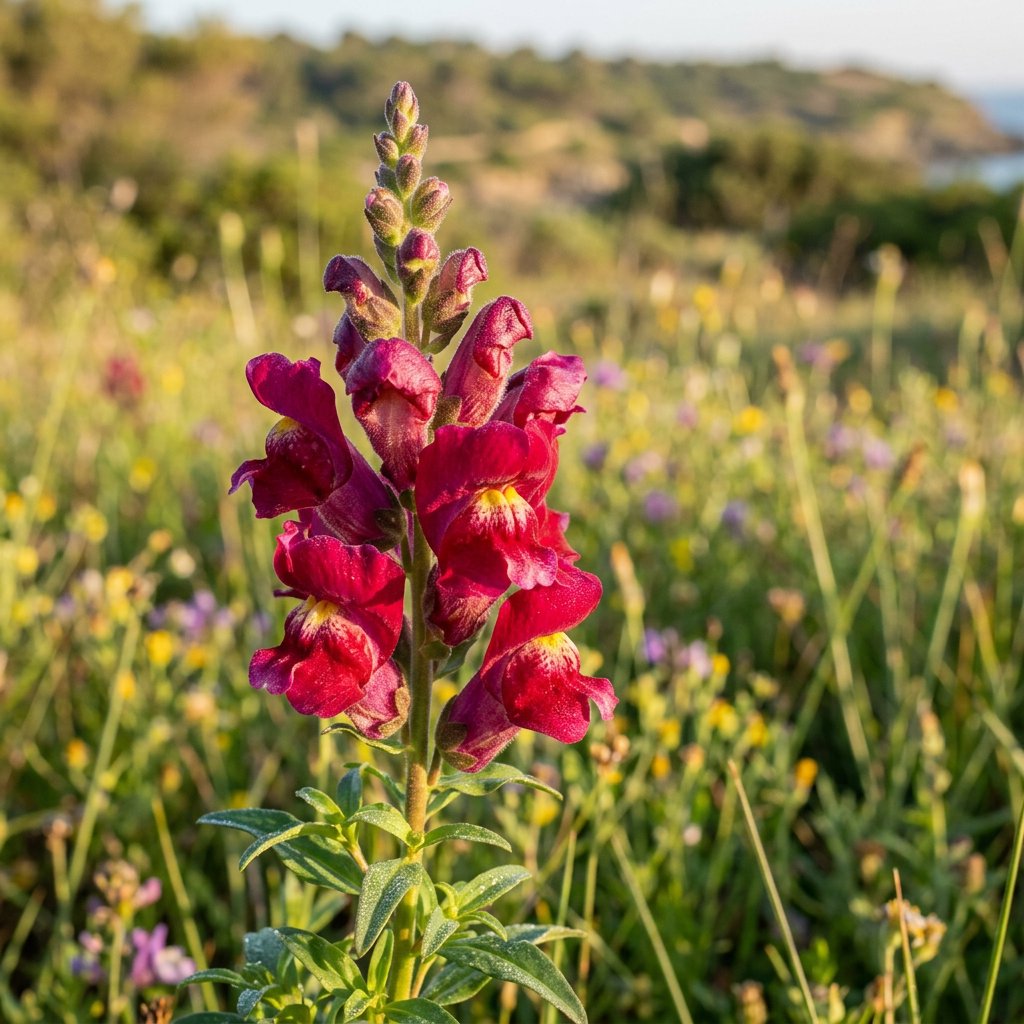
Plant Overview
Often called the "Snapdragon" or "Lion's Mouth," Antirrhinum majus is a garden classic that has enchanted children for generations with its "talking" flowers. Native to the rocky hillsides of the Mediterranean, these vibrant spires are a symbol of both deception and graciousness in the Victorian language of flowers. Folklore once suggested that concealing a snapdragon on your person could make you appear fascinating and cordial to others.
🔍 How to Identify
- 🐲 Dragon Blooms: The most iconic feature is the "personate" flower, which consists of two "lips." When you gently squeeze the sides of the flower, the mouth snaps open like a puppet or a dragon's jaws.
- 🍃 Slender Foliage: The leaves are lance-shaped (lanceolate), typically a deep, glossy green, and grow in a spiral pattern or opposite pairs along the stem.
- 🏰 Stately Spikes: These plants grow in upright racemes, meaning the flowers cluster along a central tall stalk, blooming progressively from the bottom toward the top.
🏡 In Your Garden
- ❄️ Cool Weather Lovers: Unlike many summer annuals, Snapdragons thrive in the crisp air of spring and autumn. They are surprisingly hardy and can often survive a light frost, making them excellent choices for extending the garden season.
- ✂️ The Pinching Secret: To prevent your snapdragons from becoming "leggy" or flopping over, pinch the tips of young plants when they are about 4 inches tall. This forces the plant to branch out, resulting in a bushier shape and more flower spikes.
- 🐝 Bumblebee Gyms: These flowers are designed for heavy lifters. Only strong insects, like bumblebees, have the weight and strength to force the "mouth" of the flower open to reach the nectar inside.
⚠️ Safety & Toxicity
- ✅ Safe Status: Snapdragons are non-toxic and are generally considered safe for homes with curious cats, dogs, and children.
- 🍽️ Edible Garnish: While they aren't particularly tasty (they can be quite bitter), the flowers are technically edible and are sometimes used as a colorful garnish for salads or desserts.
✨ Fun Fact
When the flower fades and the seed pods dry out, they undergo a macabre transformation. The dried pods look exactly like tiny, weathered human skulls hanging from the stems!

Detailed Care Instructions
| Color | White, Yellow, Pink, Red, Orange, Peach, Purple, And Violet |
| Soil Ph | Slightly Acidic To Neutral |
| Humidity | Normal |
| Lighting | Part Sun |
| Soil Type | Well-Draining, Rich, Moist |
| Bloom Time | Spring And Fall |
| Difficulty | Medium |
| Plant Type | Perennial |
| Mature Size | 6 To 48 Inches Depending On The Variety |
| Native Area | Europe And North America |
| Temperature | 18°C - 25°C |
| Sun Exposure | Full Sun To Partial Shade |
| Hardiness Zones | 8, 9 |
To grow Antirrhinum Majus (Snapdragon) plants, follow these steps:
- Choose the right variety: There are various types and colors of Antirrhinum Majus available. Select the variety that suits your preferences and growing conditions.
- Start seeds indoors (optional): Snapdragon seeds can be started indoors 6-8 weeks before the last expected frost. Use a seed-starting tray or small pots filled with seed-starting mix. Press the seeds lightly into the soil, but do not cover them. Keep the soil moist and place the tray in a warm, brightly lit area.
- Transplant outdoors (optional): Once the danger of frost has passed and the seedlings have developed their first true leaves, they can be transplanted outdoors. Harden off the seedlings by gradually exposing them to outdoor conditions over 7-10 days. Choose a sunny location with well-draining soil.
- Direct sow outdoors: Alternatively, you can directly sow the seeds outdoors after the danger of frost has passed. Prepare the soil by removing any weeds and loosening it with a garden fork or tiller. Scatter the seeds on the soil surface and lightly press them into the soil. Water gently.
- Watering: Keep the soil evenly moist but not waterlogged. Water the plants deeply whenever the top inch of soil feels dry.
- Fertilizing: Feed the plants with a balanced fertilizer every 4-6 weeks during the growing season. Follow the instructions on the fertilizer packaging for proper dosing.
- Support: Snapdragon plants can become top-heavy and prone to falling over. It's a good idea to provide support, such as stakes or a wire trellis, to keep them upright.
- Deadheading: Remove spent flowers regularly to promote continuous blooming and prevent seed development. This will also encourage the growth of new flower spikes.
- Protect from pests and diseases: Snapdragon plants can be susceptible to common garden pests like aphids and spider mites. Regularly inspect the plants and take appropriate measures if any pests are noticed. Also, ensure good air circulation around the plants to prevent diseases like powdery mildew.
- Harvesting seeds (optional): If you want to save seeds for future planting, allow a few flower spikes to fully mature and dry on the plant. Harvest the dried seed pods and store them in a cool, dry place until ready for planting.
By following these guidelines, you should be able to successfully grow Antirrhinum Majus plants and enjoy their beautiful blooms.

Place in a bright room that is sun drenched almost all day. Or directly in a south-facing window.

To properly water this plant, start by checking the soil moisture level. Stick your finger into the soil about 2 inches deep. If the soil feels dry, it's time to water your plant. Be careful not to overwater, as this plant prefers well-draining soil. Use a watering can or hose with a gentle stream, and water the soil around the base of the plant. Avoid getting water on the leaves as this can cause damage. Water the plant regularly during the growing season, but cut back during the dormant season. If you live in a hot or dry climate, pay attention to the plant's water needs and adjust accordingly.
To fertilize the plant, apply a balanced fertilizer with equal amounts of nitrogen, phosphorous, and potassium every two weeks during the growing season. Water the plant well before and after fertilization to help the nutrients penetrate the soil. Avoid over-fertilization as it can lead to burnt leaves and reduced flowering.
When planting Antirrhinum Majus, it is recommended to use well-draining soil with good moisture retention. The soil should have a slightly acidic to neutral pH range of 6.0 to 7.0. The ideal soil texture is loamy, meaning it has a balanced mixture of sand, silt, and clay. This will allow for proper aeration and water movement to the roots. It is important to avoid using heavy clay soils or soils that are too sandy, as they can lead to poor drainage or over-drying of the soil. Adding organic matter such as compost or leaf mold can improve soil quality and structure, helping to promote healthy growth and flowering of the plant.
To propagate this plant, you can take stem cuttings from healthy and mature plants. Choose a stem that doesn't have flowers or buds, and make a cut that's about 4-6 inches long. Remove any leaves from the bottom 2 inches of the cutting.
Next, dip the cut end of the stem into rooting hormone powder. This is a substance that helps the cutting to develop roots more easily. Then, plant the stem into moist potting soil. Cover the pot with a plastic bag to create a humid environment for the cutting.
Keep the soil moist but not wet. After 2-3 weeks, the cutting should start to develop roots. When the roots have grown to about 1-2 inches long, you can transplant the cutting into a larger pot or directly into the garden. Make sure to keep it well-watered until it becomes established.
Common pests of the garden snapdragon include Spider mites, aphids, whiteflies. Make a habit of checking your garden snapdragon frequently for pests so that any infestations can be caught and managed early.








