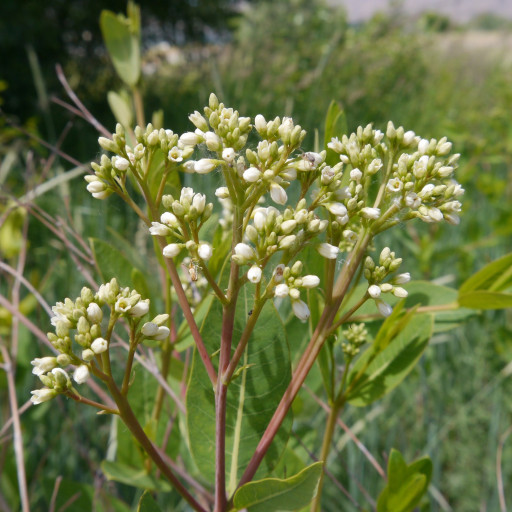
Plant Overview
Often called Indian Hemp or Hemp Dogbane, this resilient North American native carries a bit of a dual identity. While its name "cannabinum" suggests a relationship to cannabis, it is actually a member of the milkweed family. Historically prized for its incredibly strong fibers, its other name, "Dogbane," serves as a stern warning: this plant is far from friendly if ingested.
🔍 How to Identify
- 茎 The Stem: Look for smooth, reddish-purple stems that grow upright and branch out extensively as the plant matures.
- 🍃 The Leaves: The leaves are oval or lance-shaped, arranged in opposite pairs along the stem. If you break a leaf or stem, it will bleed a thick, milky white sap (latex).
- 🌸 The Flowers: In mid-summer, it produces clusters of tiny, bell-shaped flowers that range from creamy white to pale pink, which eventually turn into long, thin seed pods.
🏡 In Your Garden
- 🦋 Pollinator Powerhouse: While some gardeners view it as a persistent weed, it is a vital nectar source for butterflies, including Monarchs. It is also the primary host plant for the stunning, metallic-colored Dogbane Beetle.
- 🌱 Tough Roots: This plant is famous for its deep, horizontal root system (rhizomes). Once established, it is very difficult to remove, making it excellent for erosion control but a potential "space hog" in small manicured flower beds.
- 💧 Adaptability: It thrives in damp ditches and meadows but can survive harsh droughts thanks to its deep taproot, making it one of nature’s true survivors.
⚠️ Safety & Toxicity
- 🚫 High Toxicity: Every part of this plant is poisonous. It contains cardiac glycosides (specifically cymarin) which can cause heart distress if ingested.
- 🐾 Pets & Livestock: It is particularly dangerous to dogs, cats, and horses. Its bitter taste usually prevents animals from eating much, but even dried stalks in hay can be hazardous to livestock.
- 🧤 Skin Irritation: The milky sap can cause "contact dermatitis" or skin rashes in sensitive individuals. It is always best to wear gloves when weeding or handling this plant.
✨ Fun Fact
Indigenous peoples of North America prized this plant for its "super-fiber." The bark produces a thread that is arguably stronger and more rot-resistant than true hemp or cotton. It was historically used to create high-quality fishing nets, bowstrings, and even fine clothing.

Detailed Care Instructions
| Lighting | Full Sun |
| Toxicity | Poisonous |
| Hardiness Zones | 9A - 10B |
Here are some steps to help you grow Apocynum cannabinum (Indian hemp):
- Obtain seeds: Look for reputable seed suppliers or botanical gardens that specialize in native or medicinal plants. Make sure the seeds you obtain are fresh and viable.
- Choose the planting location: Apocynum cannabinum is a hardy perennial that prefers well-draining soil, preferably sandy or loamy. It thrives best in full sun but can also tolerate partial shade.
- Prepare the soil: Remove any weeds or grass from the planting area. Loosen the soil with a garden fork or tiller to improve drainage and root growth. Incorporate organic matter or compost into the soil to enhance nutrient content.
- Sow the seeds: Plant the seeds directly in the prepared soil in spring or early summer when the soil has warmed up. Lightly cover the seeds with a thin layer of soil and gently pat it down. Keep the soil consistently moist until germination occurs, which usually takes around 2-3 weeks.
- Watering and maintenance: Water the plants regularly but avoid overwatering. Ensure the soil remains slightly moist, not waterlogged. Once established, Apocynum cannabinum is somewhat drought-tolerant.
- Thinning and spacing: As the seedlings emerge, thin them to provide adequate space for each plant. Space the plants around 1-2 feet apart to allow for their mature size, which can reach up to 6 feet in height and 3 feet in width.
- Mulching and weed control: Applying a layer of organic mulch, such as straw or wood chips, around the plants helps conserve moisture, suppress weeds, and provide insulation for the roots during extreme temperatures.
- Pruning and support: Apocynum cannabinum may benefit from a support structure, such as stakes or cages, as the stems can become top-heavy when in bloom. You can also prune the plant in early spring to promote bushier growth and remove any dead or damaged branches.
- Fertilizing: While Apocynum cannabinum generally does not require frequent fertilization, you can apply a balanced slow-release fertilizer once in spring to provide some additional nutrients.
- Pests and diseases: This plant is generally resistant to most pests and diseases. However, keep an eye out for any signs of aphids, spider mites, or powdery mildew. Use organic insecticides or beneficial insects, like ladybugs, to control pests if necessary.
Remember to check your local regulations before growing Apocynum cannabinum, as it may be considered an invasive species in some regions.

Place in a bright room that is sun drenched almost all day. Or directly in a south-facing window.

To properly water this plant, you should first assess the moisture level of the soil surrounding it. This can be done by pushing your finger about an inch into the soil and feeling for moisture. If the soil feels dry, it is time to water the plant.
When watering, avoid getting the foliage wet, as this can increase the risk of disease and pest infestations. Instead, aim to water the base of the plant, allowing the water to soak into the soil.
It is important not to over-water this plant, as it prefers well-draining soil. Allow the top layer of soil to become slightly dry before watering again.
During the summer months when the plant is actively growing, it may require more frequent watering than during the winter dormant period.
Overall, be careful not to let the plant become waterlogged or completely dry out, as either extreme can harm the plant.
To fertilize this plant, use a balanced fertilizer with equal amounts of nitrogen, phosphorus, and potassium. Apply the fertilizer in the spring after new growth appears and again in the middle of summer. Be careful not to over-fertilize, as too much can burn the roots and cause damage. Water the plant thoroughly after applying fertilizer to help it absorb the nutrients.
The best soil to use with this particular plant is well-draining soil that is rich in organic matter and has a slightly acidic pH level. The soil should have good water retention properties, but not retain water for too long, as this can lead to root rot. It's important to avoid using soil that is heavy in clay, as this can also prevent proper drainage. Additionally, adding perlite or sand to the soil can help improve drainage.
Propagation of this plant can be done through the process of stem cuttings. The stem cuttings should be taken from the mature plant during the growing season. The cuttings should be around 4 to 5 inches in length and should have around 4 to 5 leaves.
Before planting, the cutting should be dipped in rooting hormone powder to stimulate root growth. The cuttings should then be planted in moist soil and kept in a warm and humid environment. In around 2 to 3 weeks, the roots should start to show and the plant will begin to grow.
It is important to keep the new plant in a place with plenty of light but not direct sunlight so as not to damage the young plant. It is also important to keep the soil moist but not waterlogged as this can affect the growth of the plant. With proper care, the propagated plant will grow and mature just like the parent plant.
Common pests of the indian hemp include Spider mites, aphids. Make a habit of checking your indian hemp frequently for pests so that any infestations can be caught and managed early.








