Plant Overview
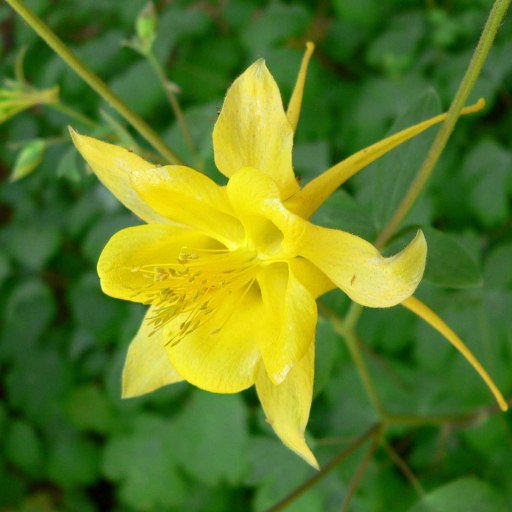
Often called the Golden Columbine, this glowing perennial is like a burst of sunshine trapped in a delicate bell. Originally hailing from the rocky canyons and cool stream banks of the American Southwest and Mexico, it is cherished for its exceptionally long "spurs" that look like golden shooting stars trailing behind each bloom. It is a graceful survivor that brings an airy, architectural elegance to any shaded garden corner.
🔍 How to Identify
- 🌼 Golden Blooms: Unlike many nodding columbines, these flowers face outward or upward, showcasing a brilliant, canary-yellow color that doesn't fade in the sun.
- 🚀 Extra-Long Spurs: The back of the flower features remarkably long, slender tubes (spurs) that can reach up to 3 inches in length, giving the bloom a "spiky" star-like silhouette.
- 🌿 Fern-like Foliage: The leaves are deeply lobed and delicate, possessing a soft blue-green or "glaucous" tint that looks beautiful even when the plant isn't in bloom.
🏡 In Your Garden
- 🦅 The Pollinator Buffet: Because the nectar is hidden at the very tips of those long spurs, this plant is a specialized "fast food" stop for long-tongued hawk moths and hummingbirds.
- 💧 Cool Roots, Light Toops: In the wild, it grows near seeps and springs; in your garden, it thrives in rich, moist soil. It loves having "cool feet," so a layer of mulch helps mimic its natural canyon habitat.
- ⚓ Taproot Sensitivity: This plant develops a sturdy taproot to help it survive dry spells. Because of this, it is notoriously difficult to transplant once established—it’s best to plant it where you want it to stay forever.
⚠️ Safety & Toxicity
- 🚫 Toxic if Ingested: Like all members of the Ranunculaceae (Buttercup) family, the Golden Columbine contains ranunculin, which turns into a bitter toxin when the plant is crushed or eaten.
- 🐾 Pets & Kids: Keep an eye on curious nibblers. Ingestion can cause stomach upset, mouth irritation, or more rarely, heart palpitations. It is generally avoided by deer and rabbits because of its bitter taste.
✨ Fun Fact
The Golden Columbine is one of the tallest and most heat-tolerant of all Columbine species. While most of its cousins wither when the summer temperature rises, Aquilegia chrysantha can keep its composure and continue blooming long after other varieties have gone dormant!

Detailed Care Instructions
To grow Aquilegia Chrysantha, also known as Golden Columbine or Yellow Columbine, follow these steps:
- Choose the right location: Golden Columbine plants thrive in well-drained soil and prefer partial shade to full sun. Select a spot in your garden that receives morning sunlight and some afternoon shade.
- Prepare the soil: Golden Columbine plants prefer slightly acidic soil with a pH range of 6.0 to 7.0. Add organic matter, such as compost or well-rotted manure, to the soil to improve its fertility and drainage.
- Sow seeds or plant seedlings: You can start Aquilegia Chrysantha from seeds or purchase seedlings from a nursery. If starting from seeds, sow them directly in the garden in early spring, as they require a period of cold stratification. If using seedlings, transplant them after the last frost.
- Planting depth and spacing: Plant seeds or seedlings about 1/4 inch deep and space them 12 to 18 inches apart to allow for proper growth and airflow.
- Watering: Keep the soil consistently moist but not waterlogged. Water the plants regularly, especially during dry periods. Avoid overhead watering and try to water the plant at the base to prevent foliar diseases.
- Mulching and fertilizing: Apply a layer of organic mulch around the base of the plants to help retain moisture, control weeds, and protect the roots during extreme temperatures. Fertilize the plants once or twice during the growing season, using a balanced organic fertilizer according to package instructions.
- Pruning: Deadhead the spent flowers regularly to encourage continuous blooming and prevent self-seeding. Cut back the foliage to the ground in late fall to promote healthy growth next season.
- Pests and diseases: Aquilegia Chrysantha is generally resistant to most pests and diseases. However, keep an eye out for aphids, slugs, and snails. If needed, use organic pest control methods, such as neem oil or insecticidal soap, to manage infestations.
By following these guidelines, you can successfully grow Aquilegia Chrysantha plants and enjoy their beautiful yellow blooms in your garden.

Place in a bright room that is sun drenched almost all day. Or directly in a south-facing window.

To water this plant, first assess the soil moisture level by inserting a finger about one inch into the soil. If the soil feels dry, it's time to water. Gently pour water onto the soil around the base of the plant, being careful not to splash water onto the leaves or flowers. Continue watering until the soil feels moist, but not waterlogged. Avoid over-watering, as this can lead to root rot. Allow the soil to partially dry out before watering again. It's important to note that this plant prefers well-draining soil, so be sure to choose a pot with drainage holes or plant in a location with good drainage.
To fertilize this plant, it is recommended to use a balanced, slow-release fertilizer that is low in nitrogen. Apply the fertilizer in early spring as new growth begins and again in late summer. Be sure to water thoroughly after fertilizing. Avoid getting fertilizer on the leaves or stem of the plant, as this can cause burn damage. Monitor the plant for signs of nutrient deficiency, such as yellowing leaves, and adjust fertilizer applications as needed.
Aquilegia Chrysantha plants prefer well-draining soil that is rich in organic matter. The soil should be slightly acidic with a pH between 6.0 and 7.0. It is important to avoid heavy, clay soils as they can lead to poor drainage and root rot. Instead, use a soil mixture that contains a combination of sand, perlite, peat moss, and compost. The plant also requires adequate moisture, but it is important not to overwater as this can cause the roots to rot.
To propagate this plant, select mature healthy specimens, preferably in the spring or autumn when they're most active. Take stem cuttings of about 3-5 inches in length from the base of the plant. Cut just below the node and remove the lower leaves, leaving only one or two leaves at the top. You can also divide the plant by separating offsets or sections of the rhizome. Plant the cuttings or divided sections in compost-rich well-drained soil in containers or directly in the ground, ensuring that the soil stays moist but not waterlogged. Place the containers in a warm, bright location with indirect light. After a few weeks, the plant should start producing new growth. Once the plants are well established, they can be transplanted to their permanent location in the garden.
Common pests of the golden columbine include Spider mites, aphids, thrips, larvae. Make a habit of checking your golden columbine frequently for pests so that any infestations can be caught and managed early.








