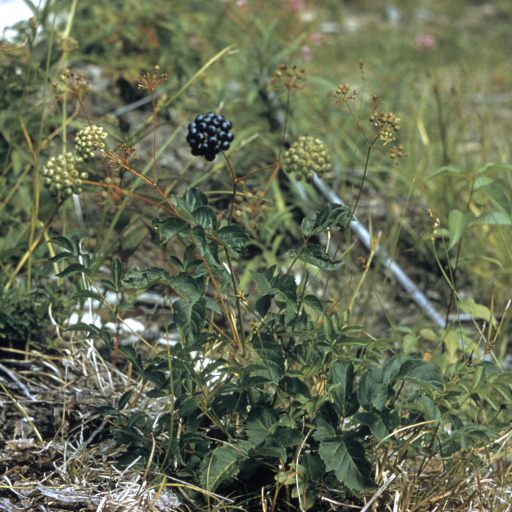
Plant Overview
Commonly known as Bristly Sarsaparilla or Dwarf Elder, this rugged native of North America is often found thriving where other plants struggle. It earned its nickname from the dense, hair-like prickles that coat its lower stems, giving it a distinct "fuzzy but fierce" appearance. While it shares a name with the famous root beer ingredient, it is a unique member of the ginseng family that loves rocky, post-fire landscapes.
🔍 How to Identify
- 🦔 The Bristly Stem: The most defining feature is the lower stem, which is covered in fine, stiff, brownish bristles. Unlike rose thorns, these feel more like a coarse brush.
- 🌿 Compound Leaves: The leaves are large and divided into several oval, jagged-edged leaflets. They have a bright green hue that often turns a stunning reddish-bronze in the autumn.
- ⚪ Umbrella Blooms: In early summer, it produces spherical clusters (umbels) of tiny, creamy-white flowers that look like miniature exploding fireworks. These eventually turn into dark, ink-colored berries.
🏡 In Your Garden
- ⛰️ The Pioneer Spirit: This plant is a "pioneer species," meaning it is one of the first to grow back after a forest fire or land clearing. It thrives in poor, sandy, or rocky soil where moisture drains away quickly.
- ☀️ Sun Seeker: While it can tolerate partial shade, it really shines in full sun. It’s a great choice for "wild" corners of a garden or rockeries where you want a plant that looks prehistoric and untamed.
⚠️ Safety & Toxicity
- 🐾 Caution for Pets: Like many members of the Aralia family, the Bristly Sarsaparilla contains saponins. If ingested by curious cats or dogs, it can cause drooling, vomiting, or stomach upset.
- 🧴 Skin Sensitivity: The bristles aren't just for show; they can cause mild skin irritation for people with sensitive skin. The berries, while attractive to birds, are not considered edible for humans and may cause digestive distress.
✨ Fun Fact
Despite its name, this isn't the plant used to flavor traditional Sarsaparilla soda (that’s usually a vine called Smilax). However, early settlers and indigenous groups did use the roots of Aralia hispida to brew medicinal teas believed to help with kidney ailments and skin conditions!

Detailed Care Instructions
To grow Aralia Hispida, also known as Bristly Sarsaparilla, you can follow these steps:
- Choose a suitable location: Aralia Hispida prefers partial shade to full shade, making it ideal for shaded gardens, understory plantings, or areas with filtered sunlight. Ensure the soil is well-draining and rich in organic matter.
- Propagation: Aralia Hispida can be grown from either seeds or root cuttings. If using seeds, sow them in a seed tray filled with a well-draining potting mix, keeping the soil slightly moist. If using root cuttings, collect small sections of the root system from an established plant in early spring and plant them in pots filled with moist potting soil.
- Planting: Once the seedlings have developed a few sets of true leaves or the root cuttings have established new growth, they can be transplanted to the desired location. Dig a hole slightly larger than the root system and place the plant in it, making sure the soil level around the stem is at the same level as it was in the previous container or planting spot. Backfill the hole with soil, gently firming it around the plant.
- Watering: Keep the soil evenly moist, but not waterlogged. Water the plant regularly, especially during dry periods. Use mulch around the base of the plant to help retain moisture and suppress weeds.
- Fertilizing: Apply a balanced, slow-release fertilizer in spring or use a liquid fertilizer every 4-6 weeks during the growing season. Follow the instructions on the fertilizer package for proper dosage.
- Pruning: Aralia Hispida doesn't typically require much pruning. However, you can remove any dead, damaged, or diseased branches in late winter or early spring. This will help maintain a healthy and attractive plant shape.
- Pests and Diseases: Aralia Hispida is relatively resistant to most pests and diseases. However, like any plant, it can occasionally be affected by issues such as aphids, spider mites, or scale insects. Regularly monitor the plant for any signs of pests or diseases and take appropriate action if needed, such as using insecticidal soap or neem oil.
Remember to regularly monitor the plant's health, provide suitable growing conditions, and adjust watering and fertilizing according to its needs. With proper care, Aralia Hispida can thrive and grow into a beautiful plant.

Place in a bright room that is sun drenched almost all day. Or directly in a south-facing window.

Aralia Hispida is a plant that requires a moderate amount of water, but it is important not to overwater it. To water this plant properly, you should first check the soil's moisture level by sticking your finger about an inch or two into the soil. If the soil feels dry at this depth, it is time to water the plant.
When watering Aralia Hispida, you should use room temperature water. Cold water can shock the roots, while hot water can damage the plant's leaves. You should water the plant until the soil feels moist but not saturated. It is essential to avoid letting the plant sit in standing water, as this can lead to root rot.
Aralia Hispida plants thrive in a humid environment, so it can be helpful to mist the plant's leaves with water occasionally. This helps to prevent the leaves from drying out and keeps the plant healthy.
During the winter months, the plant may require less water as it goes into a period of dormancy. You should reduce the watering frequency but still ensure that the soil does not dry out completely.
Overall, watering Aralia Hispida involves checking the moisture level of the soil regularly, using room temperature water, avoiding overwatering and draining excess water immediately, misting the plant's leaves occasionally, and adjusting watering frequency based on the season.
To fertilize this plant, use a balanced fertilizer with equal amounts of nitrogen, phosphorus and potassium. Apply once a month during the growing season from spring to summer. Be careful not to over-fertilize, as this can lead to root burn or excessive growth. Water the plant before and after applying fertilizer to help distribute the nutrients evenly.
The ideal soil type for the Aralia Hispida plant should be well-draining and fertile. The soil should have good organic matter content and should be slightly acidic with a pH ranging from 5.5 to 6.5. The plant prefers a moist soil environment that is consistently moist but not waterlogged. Due to its preference for moist soil, it is recommended to use soil mixes that have water-retaining properties or to amend the soil with organic matter such as compost or peat moss. Sand or perlite can be added to the soil to improve drainage. It is important to avoid using heavy clay soils that can become compacted and prevent the plant's roots from growing properly. The Aralia Hispida plant can also benefit from occasional fertilizer applications to support its growth and development.
To propagate this plant, it is recommended to take stem cuttings in the spring or summer. Cut a section of stem that is at least 4-6 inches long and has several leaves attached. Remove the lower leaves and dip the cut end in rooting hormone. Plant the cutting in a pot filled with moist soil and keep it in a warm, bright location out of direct sunlight. Water the cutting regularly and mist the leaves to keep them from drying out. After a few weeks, new growth should appear, indicating that the cutting has rooted. Gradually acclimate the plant to brighter light and drier conditions, and transplant it to a larger pot or outdoors once it has grown sufficiently.








