Plant Overview
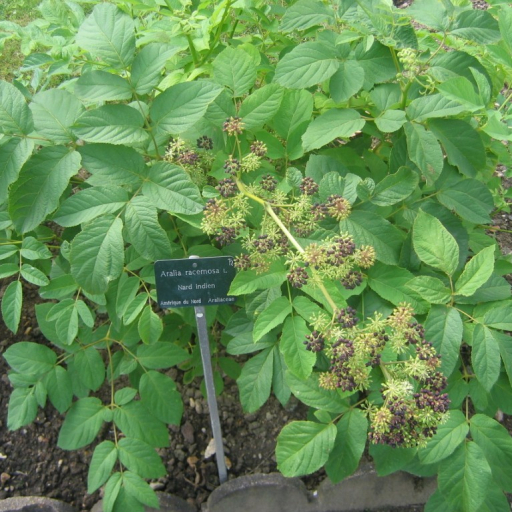
Known as the "American Spikenard" or "Life-of-Man," this woodland giant creates a lush, prehistoric feel in any shade garden. Though it looks like a woody shrub, it is actually a massive herbaceous perennial that dies back to the ground each winter, only to erupt with vigor in the spring. Historically, its spicy, aromatic roots were a staple in early American root beer recipes and tribal medicine.
🔍 How to Identify
- 🌿 Massive Compound Leaves: It features heart-shaped leaflets arranged in sprawling, complex patterns that can reach several feet across, giving the plant a tropical appearance.
- 🦴 Zig-Zag Stems: The thick, reddish-purple or burnished-brown stems often grow in a distinct "zig-zag" pattern, branching out widely.
- ❄️ Star-Burst Flowers: It produces large, airy clusters of tiny, greenish-white flowers that bloom in mid-summer.
- 🟣 Berry Clusters: By autumn, the flowers transform into dense, drooping bunches of small, dark purple or maroon berries that resemble miniature grapes.
🏡 In Your Garden
- 🌳 The Shade Specialist: This plant thrives in the dappled light of woodland gardens. It prefers cool, moist, and organic-rich soil—mimicking the damp forest floors of its native North American habitat.
- 🛑 Stay Put Policy: It develops a very deep, fleshy root system. Because of this "taproot" nature, it hates being transplanted once it has settled in, so choose its forever-home carefully.
- 🐦 Wildlife Haven: While the flowers are subtle to the human eye, they are a magnet for honeybees and hoverflies. In late fall, the berries provide a critical high-energy snack for migrating birds.
⚠️ Safety & Toxicity
- 🐾 Pet & Child Caution: The berries are generally considered non-toxic in small amounts but can cause digestive upset, nausea, or vomiting if consumed raw and in large quantities.
- 🧴 Sap Sensitivity: Some sensitive individuals may experience mild skin irritation (contact dermatitis) when pruning the plant or handling the fleshy roots.
- 🧁 Preparation Matters: While the roots were historically used in syrups, they should never be consumed without proper identification and professional preparation.
✨ Fun Fact
- 🥤 The Original Soda: Before synthetic flavorings were invented, the aromatic roots of the American Spikenard were a primary ingredient in traditional "Root Beer" and "Small Beer," prized for their earthy, spicy scent that resembles a mix of licorice and balsam.

Detailed Care Instructions
To grow Aralia Racemosa plant, also known as American Spikenard, you can follow these steps:
- Choose a suitable location: Aralia Racemosa prefers partial shade to full shade, and it does well in moist, well-draining soil. Select a spot in your garden that provides these conditions.
- Prepare the soil: Aralia Racemosa thrives in rich, fertile soil. Add compost or organic matter to the planting area to improve soil quality and ensure good drainage.
- Propagation: You can propagate Aralia Racemosa through seeds or division. If using seeds, plant them in early spring, following the seed packet instructions. Alternatively, you can divide an established plant in early spring or fall.
- Planting: Dig a hole in the prepared soil that is large enough to accommodate the plant's root system. Place the plant in the hole and backfill with soil, gently firming it around the roots.
- Watering: Aralia Racemosa requires consistent moisture. Water the plant thoroughly after planting, and then continue to water it regularly, keeping the soil consistently damp but not waterlogged. Mulching the soil around the plant can help retain moisture.
- Care: Provide regular care for the plant by monitoring soil moisture and watering accordingly. Additionally, consider applying a balanced organic fertilizer once or twice during the growing season to promote healthy growth.
- Pruning: Prune Aralia Racemosa in early spring to remove dead or damaged branches and promote bushier growth. You can also prune for size and shape, but be cautious not to remove too much, as the plant may take time to recover.
- Protection: Protect Aralia Racemosa from harsh winter conditions by covering it with mulch or providing a layer of straw around the base of the plant. This will help insulate the roots and prevent cold damage.
By following these steps, you can successfully grow Aralia Racemosa plant in your garden.

Place in a bright room that is sun drenched almost all day. Or directly in a south-facing window.

To water this plant, it is recommended to first check the soil to ensure it is dry to the touch before watering. When watering, use room temperature water and pour it slowly onto the soil until it starts to drain out of the bottom of the pot. Avoid getting water on the leaves or stem of the plant. Watering frequency will depend on the environment in which the plant is located, but generally, it is recommended to water every 1-2 weeks. However, it is important to avoid overwatering as this can cause root rot and other problems.
The plant requires regular fertilization during its growing season. Use a balanced fertilizer with an equal proportion of Nitrogen, Phosphorus, and Potassium. Apply the fertilizer once a month from early spring to late summer. Avoid over-fertilizing as it can lead to burning of the roots and adversely affect the growth of the plant. Water the plant well after fertilization to prevent the build-up of salts in the soil.
Aralia racemosa, a perennial herbaceous plant, thrives best in specific soil conditions that cater to its growth and health. Here are the detailed soil requirements to ensure optimal development of this plant:
- Soil Type: Aralia racemosa prefers loamy soil, which is a balanced mixture of sand, silt, and clay. This type of soil offers excellent drainage, aeration, and nutrient-holding capacity.
- Soil pH: The ideal soil pH for Aralia racemosa ranges between 5.5 and 7.0. This range is slightly acidic to neutral, supporting the plant's nutrient uptake and overall growth.
- Drainage: Good drainage is crucial. Waterlogged conditions can lead to root rot and other fungal diseases. It is vital to ensure that the soil allows excess water to drain away quickly.
- Organic Matter: Incorporating organic matter such as compost or well-rotted manure into the soil enhances fertility and structure. Organic amendments improve moisture retention while promoting beneficial microbial activity in the soil.
- Moisture: While Aralia racemosa prefers moist conditions, it does not tolerate standing water. Regular watering is important, especially during dry periods, but ensure the soil does not remain soggy.
- Texture: A slightly coarse texture aids in maintaining proper aeration and root health. Avoid heavy clay soils unless they are well-amended with organic matter to improve texture and drainage.
- Mulching: Applying a layer of mulch around the base of the plant helps conserve soil moisture, regulate soil temperature, and suppress weeds. Use organic mulches such as shredded bark, leaf mold, or straw.
By providing Aralia racemosa with loamy, well-drained soil rich in organic matter and maintaining adequate moisture levels, you can create an environment conducive to its healthy and vigorous growth.
To propagate this plant, you can begin with taking stem cuttings from the parent plant. Choose a healthy stem and cut it with a sharp, sterile blade. Make sure the cutting is at least 4 inches long and has a few leaves attached to it.
Remove the leaves from the lower half of the stem and dip the cut end in rooting hormone powder. Place the stem cutting into a container filled with a well-draining potting mix. Cover the container with a plastic bag to create a humid environment.
Place the container in a bright but indirect light and maintain a warm temperature between 65-75 degrees Fahrenheit. Keep the potting mix moist but not soaking wet.
It may take several weeks for the cutting to root and develop new growth. Once it has developed roots and new growth, you can transplant it into a larger container with regular potting soil.
Remember to keep the new plant in a warm, bright but indirect light, and ensure it is appropriately watered to promote healthy growth.








