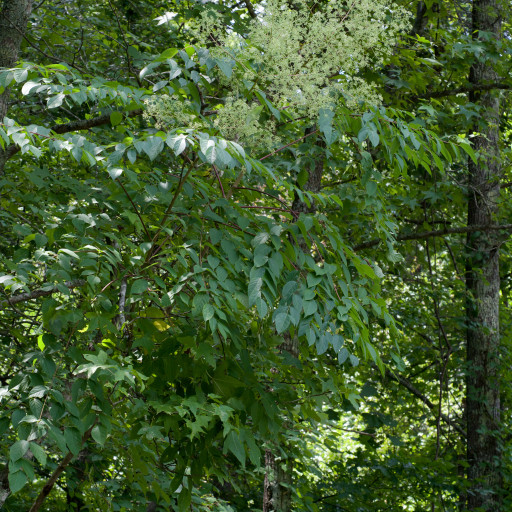
Plant Overview
Known famously as the Devil’s Walking Stick or Hercules’ Club, Aralia spinosa is a dramatic, prehistoric-looking shrub native to the eastern United States. It earned its intimidating nicknames from the stout, sharp spines that wrap around its gray stems, looking exactly like a weapon or a staff designed for a giant. While it may look aggressive, it is a magnificent architectural plant that provides a tropical flair to temperate landscapes.
🔍 How to Identify
- 🌵 The Armor: The most distinct feature is the trunk and branches, which are densely covered in sharp, straight prickles. Even the leaf stalks often sport these defensive spines.
- 🌿 Colossal Foliage: It boasts some of the largest leaves of any temperate plant. These bipinnate (twice-divided) leaves can reach up to 4 feet long, creating a lush, umbrella-like canopy at the top of the stems.
- 🍇 Late Summer Blooms: In mid-to-late summer, it produces massive, lacy clusters of tiny white flowers that look like clouds hovering over the foliage, which later turn into heavy bunches of juicy, purple-black berries.
🏡 In Your Garden
- 🌳 Space to Roam: This plant loves to "travel" by sending out underground root suckers. If you plant it in a small garden, you’ll need to be diligent about removing new shoots, or it will quickly turn into a dense, thorny thicket.
- 🦋 Wildlife Magnet: Despite its prickly exterior, it is a powerhouse for biodiversity. The summer flowers are a favorite for honeybees and swallowtail butterflies, while the autumn berries are a vital high-energy food source for migrating songbirds.
⚠️ Safety & Toxicity
- 🚫 Physical Hazard: The spines are very sharp and can easily puncture skin or gardening gloves. Place it away from walkways or areas where children and pets play to avoid accidental "run-ins."
- 🤢 Mild Toxicity: While birds love the berries, they are considered mildly toxic to humans and pets if eaten raw, often causing digestive upset. Additionally, the sap can cause contact dermatitis (skin rashes) in sensitive individuals when pruning.
✨ Fun Fact
Early American settlers and Indigenous peoples used the bark and roots of this plant to treat toothaches and sore muscles. Because it causes a tingling, numbing sensation when chewed, it earned yet another nickname: the "Toothache Tree."

Detailed Care Instructions
| Lighting | Full Sun |
| Hardiness Zones | 4B - 9B |
To grow Aralia Spinosa, also known as the Devil's Walkingstick, you can follow these steps:
- Climate: Determine if your region has a suitable climate for growing Aralia Spinosa. It is native to the eastern United States and prefers a temperate climate with moderate rainfall.
- Sunlight: Choose a location that receives full or partial sunlight. Aralia Spinosa can tolerate shade but thrives in full sun conditions.
- Soil: This plant prefers well-draining, fertile soil. Prepare the soil by adding organic matter such as compost or aged manure to improve its nutrient content and drainage.
- Planting: Aralia Spinosa can be propagated from seeds or cuttings. If using seeds, scarify them by lightly scratching the surface or soaking them in warm water for 24 hours before planting. Sow the seeds 1/4 inch deep in the prepared soil, spacing them about 12-18 inches apart. Water the seeds gently.
- Watering: Keep the soil consistently moist but not waterlogged. Water the plant regularly, especially during dry spells. Avoid overwatering to prevent root rot.
- Mulching: Apply a layer of mulch around the base of the plant to retain moisture, suppress weeds, and insulate the roots. Use organic materials such as wood chips or straw.
- Pruning: Aralia Spinosa can grow tall, reaching heights of 15-30 feet. To maintain the desired shape and size, prune the plant in early spring before new growth begins.
- Fertilization: Feed the plant with a balanced organic fertilizer once or twice a year, following the manufacturer's instructions.
- Pests and Diseases: Monitor the plant regularly for pests like aphids or spider mites and treat them with appropriate insecticides or organic methods. Aralia Spinosa is generally disease-resistant but may occasionally encounter issues such as powdery mildew or leaf spot diseases, which can be treated with fungicides if necessary.
- Support: As the plant grows, it may require support to prevent the stems from bending or breaking due to strong winds or heavy foliage. Tie the stems to a stake or use a trellis to provide stability.
Remember to research and follow any specific care instructions for the Aralia Spinosa cultivar you are growing, as some variations may have slightly different requirements.

Place in a window with dappled sun or a spot in the middle of a room. Or directly in a window facing west or east.

The Aralia Spinosa plant requires regular watering to keep the soil moist but not waterlogged. It is important to avoid letting the soil dry out completely between waterings as this can stress the plant and cause leaf drop. When watering, use room temperature water and apply it directly to the soil around the base of the plant, taking care not to splash water onto the leaves which can lead to fungal issues. Allow any excess water to drain away and empty any trays or saucers to prevent the plant from sitting in standing water. During periods of active growth or warm weather, the Aralia Spinosa may require more frequent watering, while in cooler months it may need less. Pay attention to the plant's specific needs and adjust watering accordingly.
To fertilize this specific plant, use a balanced, slow-release fertilizer in the spring before new growth appears. You can also supplement with liquid fertilizer throughout the growing season. Avoid using high-nitrogen fertilizers, as they can encourage excessive foliage growth at the expense of flower and fruit production. Follow the package instructions for application rates and frequency.
A good soil mix for the Aralia Spinosa plant should be well-draining and have a loamy texture. It should be light and airy, but also soil that will retain moisture. A mix of peat moss, perlite, and sand in equal parts is a good soil blend for the plant. This type of soil mix will provide adequate drainage, maintain proper moisture levels, and provide enough nutrients for the Aralia Spinosa plant to thrive. Additionally, it is important to make sure that the soil is slightly acidic, with a pH level between 5.5 and 6.5. This will provide the correct growing conditions for the plant.
To propagate this plant, take a stem cutting with several nodes and remove the lower leaves. Dip the cut end in rooting hormone and plant in a well-draining soil mixture. Keep the soil damp and place the cutting in a bright, but not direct, sunlight. It should take several weeks for roots to develop.








