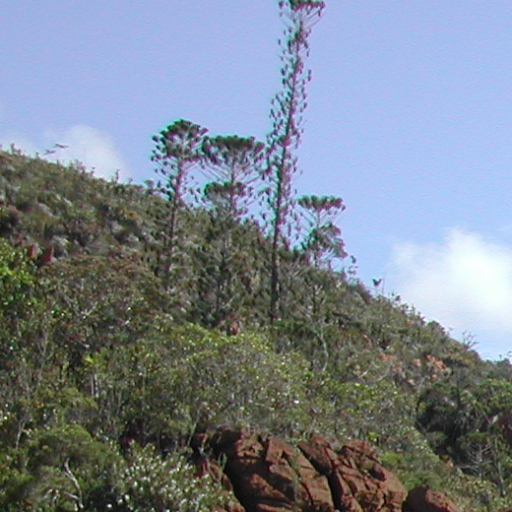
Plant Overview
Known as Bernier's Araucaria, this striking conifer hails exclusively from the mist-shrouded slopes of New Caledonia. It looks like a botanical relic from a prehistoric landscape, standing tall with a perfectly symmetrical, columnar silhouette. Often confused with its more famous cousin, the Norfolk Island Pine, Araucaria bernieri is a rare gem that brings an air of ancient mystery to any collection.
🔍 How to Identify
- 🌲 Growth Habit: Unlike sprawling pines, this tree grows in a narrow, pillar-like shape, often reaching impressive heights while maintaining a very slim profile.
- 🍃 Leaf Texture: The foliage consists of stiff, scale-like needles that overlap tightly around the branches, giving the limbs a thick, rope-like or "braided" appearance.
- 🌑 Bark Character: The trunk is covered in dark, almost blackish-grey bark that peels off in thin, papery horizontal strips, revealing a rougher texture underneath.
🏡 In Your Garden
- 🌋 Soil Nuance: In the wild, this tree thrives in ultramafic soils (rich in minerals like magnesium and iron). In a garden or pot, it is sensitive to "wet feet" and requires a very gritty, well-draining mix to prevent root rot.
- ☁️ Microclimate Needs: It is a child of the tropics; it craves high humidity and consistent temperatures. It is not frost-hardy and will struggle significantly if exposed to freezing winter winds or extremely dry indoor heating.
⚠️ Safety & Toxicity
- ✅ Safe Assessment: Araucaria bernieri is generally considered non-toxic to humans and common household pets like cats and dogs.
- 🌵 Physical Caution: While not chemically toxic, the leaves are very rigid and sharp. Handling the tree without gloves can result in "needle pricks" or minor skin abrasions, so keep it away from narrow walkways where people might brush against it.
✨ Fun Fact
The Araucaria genus is often referred to as a "living fossil." These trees were at their peak during the Jurassic and Cretaceous periods; if you were a long-necked dinosaur 150 million years ago, a tree very similar to this one would have been your primary snack!

Detailed Care Instructions
| Humidity | Normal |
| Difficulty | Medium |
| Hibernation | Cold Period |
| Hardiness Zones | Max 10A |
To grow Araucaria bernieri (also known as Mountain Pine), here are some cultivation steps you can follow:
- Climate requirements: Araucaria bernieri thrives in warm, tropical climates. It prefers temperatures between 60°F and 80°F (15°C and 27°C). It is not cold hardy and can only tolerate mild frosts. It also prefers high humidity levels.
- Light requirements: Provide bright, indirect sunlight. Avoid direct afternoon sun as it can scorch the foliage.
- Soil requirements: Plant Araucaria bernieri in well-draining soil enriched with organic matter. A mix of peat moss, sand, and regular garden soil can work well.
- Watering: Keep the soil consistently moist but not waterlogged. Allow the top inch of soil to dry out before watering again. Avoid overwatering, as it can lead to root rot.
- Fertilization: Fertilize the plant every 2-4 weeks during the growing season (spring and summer) with a balanced, water-soluble fertilizer. Follow the instructions on the fertilizer packaging for dosage and frequency.
- Pruning: As it grows, you may need to trim back any dead or damaged branches. Regular pruning can help maintain the plant's shape and encourage bushier growth.
- Humidity: Araucaria bernieri thrives in high humidity environments. You can increase humidity by misting the foliage regularly or placing a humidifier nearby.
- Potting: If growing indoors, ensure the pot has proper drainage holes and use a well-draining potting mix. Repot the plant when it outgrows its current container, typically every 2-3 years.
- Pest control: Watch out for common houseplant pests like mealybugs, scales, and spider mites. Regularly inspect the plant for any signs of infestation, and if detected, treat it with an appropriate insecticide or by gently wiping affected areas with a damp cloth.
- Propagation: Araucaria bernieri can be propagated from seeds or stem cuttings. Seeds can take several years to develop into mature plants, while stem cuttings may root faster but can be more challenging.
Remember, Araucaria bernieri is a slow-growing plant, so be patient and consistent in providing proper care.
The recommended way to water this plant is to check the soil moisture level before watering. Insert a finger into the soil up to an inch or so and only water if the soil feels dry. When watering, use room temperature water and pour it slowly over the soil until water begins to drain out of the bottom of the pot. Avoid getting water on the leaves or foliage. Allow the excess water to drain away, and do not let the plant sit in water for extended periods of time. It is also important not to let the soil become too dry or too wet, as both can harm the plant.
- Use a balanced fertilizer with equal amounts of nitrogen, phosphorus, and potassium.
- Apply fertilizer once a month during the growing season (spring and summer).
- Dilute the fertilizer according to the manufacturer's instructions.
- Apply the fertilizer evenly around the base of the plant, avoiding contact with the leaves.
- Water the plant thoroughly after fertilizing.
The best soil for the plant with the scientific name Araucaria Bernieri is one that is well-drained and loamy. It should have a slightly acidic to neutral pH level and be rich in organic matter such as compost or leaf mold. The soil should be kept moist but not waterlogged, as the plant is susceptible to root rot. It is important to avoid using heavy clay soils, as this can also lead to poor drainage. Additionally, the plant prefers a nutrient-rich soil, so it is recommended to periodically fertilize with a balanced fertilizer.
To propagate this plant, you will need to take stem cuttings from healthy mature plants. It is important to choose a stem that is strong and straight without any damage or signs of disease. Cut the stem at an angle using sterilized pruning shears.
Remove any leaves or needles from the bottom two-thirds of the stem. Dip the bottom of the cutting into rooting hormone powder to encourage new root growth. Place the cutting into a well-draining potting mix and water it. Cover the pot with a plastic bag to create a humid environment, and place it in indirect bright light.
It is important to keep the potting mix moist, but not too wet. After a few weeks, you should see new growth on the cutting, which is a sign that it has started to root. Once the cutting has developed a strong root system, you can transplant it into a larger pot with fresh potting mix.
It is best to propagate this plant during the spring or summer months when the plant is actively growing. With proper care, your new Araucaria Bernieri plant will grow into a healthy and beautiful addition to your collection.








