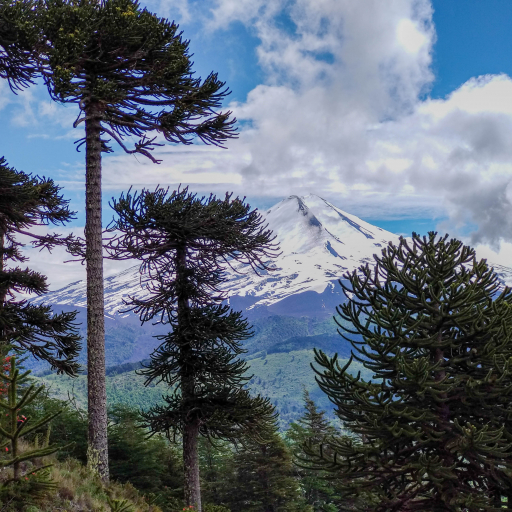
Plant Overview
Often referred to as "Living Fossils," trees in the Araucaria genus have been gracing our planet since the age of the dinosaurs. From the prickly, geometric branches of the Monkey Puzzle Tree to the soft, tiered elegance of the Norfolk Island Pine, these conifers are beloved for their prehistoric silhouette and striking symmetry. Legend has it the Monkey Puzzle earned its name because its sharp, spiraling leaves would "puzzle" even a monkey trying to climb it.
🔍 How to Identify
- 📐 Symmetrical Growth: Most species grow in distinct horizontal tiers or whorls, giving the tree a precise, mathematical appearance that looks almost artificial.
- 🗡️ Unique Foliage: Depending on the species, leaves can range from soft, lime-green needles to tough, broad, triangular scales that are sharp to the touch.
- 🌲 Heavy Cones: They produce massive, globose woody cones. In some species, these cones can weigh several pounds and contain large, edible seeds similar to pine nuts.
🏡 In Your Garden & Home
- ⏳ A Slow Evolution: Araucarias are notoriously slow growers. Whether you are keeping a Norfolk Island Pine indoors or a Monkey Puzzle in the yard, don't expect rapid changes; they prefer to take their time establishing a deep, sturdy root system.
- 🚫 The "No-Touch" Root Zone: These plants possess a sensitive taproot and dislike having their "feet" disturbed. If growing one in a pot, choose a heavy container to prevent tipping, as they become top-heavy, and avoid frequent repotting which can shock the plant.
- 🌬️ Climate Preferences: While the Monkey Puzzle is surprisingly hardy and can handle frost, the Norfolk Island Pine is a tropical native that will shiver and drop needles if the temperature dips too low or the air becomes too dry.
⚠️ Safety & Toxicity
- 🌵 Physical Hazard: The primary "danger" of many Araucaria species is their foliage. The leaves are often rigid and razor-sharp, capable of piercing skin or causing scratches to curious children and pets.
- 🤢 Mild Ingestion Risk: The sap and needles are considered mildly toxic to cats and dogs. Ingesting the needles can lead to oral irritation, lethargy, or stomach upset.
- 🧤 Handling Tip: It is highly recommended to wear thick gardening gloves when pruning or moving the pricklier species to avoid "needle pricks."
✨ Fun Fact
Araucaria trees are so ancient that they existed 200 million years ago. Paleontologists believe their sharp, armor-like leaves originally evolved as a defense mechanism to stop long-necked herbivorous dinosaurs from snacking on their branches!

Detailed Care Instructions

Place in a bright room that is sun drenched almost all day. Or directly in a south-facing window.

To water this plant, you should wait for the soil to dry out slightly before watering. Use room temperature water and be sure to water thoroughly, allowing excess water to drain away. Avoid allowing the plant to sit in water for extended periods of time as this can lead to root rot. During the winter months, you should reduce watering as the plant's growth slows down. Be sure to monitor the plant closely and adjust your watering schedule based on its needs.
The ideal soil for Araucaria plants is a well-draining soil that is rich in organic matter. The pH level of the soil should be slightly acidic to neutral, ranging from 5.5 to 7.5. It is important to ensure that the soil is not too compacted, as this can hinder root growth and lead to water-logging. Additionally, the soil should be kept moist but not too wet, as Araucaria plants do not tolerate waterlogged conditions. A mixture of equal parts peat moss, perlite, and sand is ideal for growing Araucaria plants, as it provides good drainage and helps to maintain the proper soil pH.







