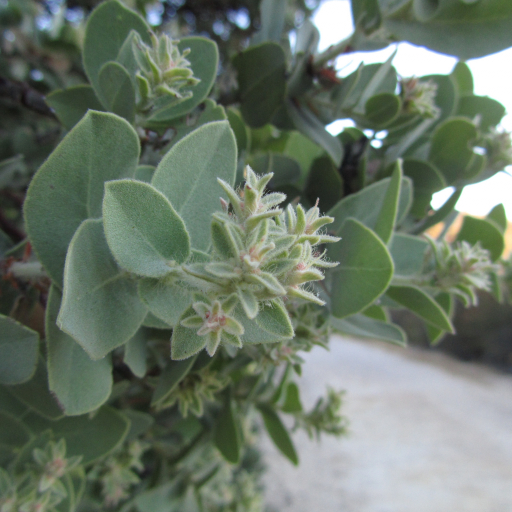
Plant Overview
Known as the Mt. Diablo Manzanita, this rare evergreen beauty is a true "local celebrity" in the botanical world. It is found almost exclusively on the slopes of Mount Diablo in California, clinging to sandstone ridges. Its name, auriculata, comes from the Latin word for "ear," referring to the unique shape of its leaf bases.
🔍 How to Identify
- 👂 The "Ears": The most distinct feature is the base of the leaf, which has lobed "auricles" that overlap the stem, looking like tiny silver earlobes.
- 🌫️ Silver Foliage: The leaves are a striking glaucous (silvery-gray) color and are covered in fine, velvety hairs that give the plant a soft, ghostly glow.
- 🪵 Mahogany Bark: Like many manzanitas, it features smooth, chocolate-to-mahogany red bark that peels away in thin, papery flakes as the shrub matures.
- 🔔 Winter Blooms: In late winter, it produces dense clusters of white to pale-pink, urn-shaped flowers that look like tiny delicate bells.
🏡 In Your Garden
- 🏜️ Drainage is Vital: This species is highly specialized to sandstone and shale. In a garden, it will not tolerate "wet feet" or heavy clay soil; it needs a slope or very gritty, fast-draining earth to survive.
- ☀️ Sun Seeker: It thrives in full sun and is incredibly drought-tolerant once established. It actually prefers to be left alone during the hot summer months—too much water during its dormant period can lead to fungal issues.
⚠️ Safety & Toxicity
- ✅ Non-Toxic: The Mt. Diablo Manzanita is generally considered safe and non-toxic for humans, dogs, cats, and horses.
- 🫐 The "Little Apples": While the berries are not poisonous, they are often dry, seedy, and mealy. They are a vital food source for local birds and mammals, though humans usually find them unpalatable.
✨ Fun Fact
The name "Manzanita" is Spanish for "little apple." If you look closely at the fruit after the flowers fade, they look exactly like miniature, dusty-red apples hanging among the silvery leaves!

Detailed Care Instructions
To grow Arctostaphylos auriculata, also known as the Earleaf Manzanita, you can follow these steps:
- Choose a suitable planting location: Arctostaphylos auriculata prefers full sun to partial shade and well-draining soil. Check your USDA hardiness zone to ensure it is suitable for your area.
- Prepare the soil: Before planting, prepare the soil by removing any weeds and improving drainage if necessary. This can be done by incorporating organic matter like compost or well-rotted manure.
- Planting: Dig a hole slightly larger than the plant's root ball. Place the plant in the hole and backfill with soil, gently firming it around the roots. Ensure the plant is planted at the same level it was in the container or nursery.
- Watering: After planting, water the plant deeply to settle the soil and ensure good root establishment. Arctostaphylos auriculata prefers moderate watering.
- Mulching: Apply a layer of organic mulch around the plant to help retain moisture, suppress weeds, and insulate the roots. Keep the mulch a few inches away from the base of the plant to avoid stem rot.
- Pruning: Prune Arctostaphylos auriculata lightly to maintain its desired shape and remove any dead or diseased branches. Pruning is best done in late winter or early spring before new growth emerges.
- Maintenance: Regularly monitor the plant for any issues like pests or diseases. Provide occasional deep watering during dry periods, but avoid overwatering as it can lead to root rot.
- Propagation: Arctostaphylos auriculata can be propagated through seeds or hardwood cuttings. Seeds can be sown in a well-draining potting mix, and cuttings can be taken in late summer or early autumn from semi-hardwood stems.
Remember that each plant may have specific requirements, so it's always a good idea to research further or consult with local gardening experts for guidance specific to your location and conditions.

Place in a bright room that is sun drenched almost all day. Or directly in a south-facing window.

Arctostaphylos auriculata is a species of plant that requires specific watering techniques to thrive. Here are some details on how to water this plant effectively:
1. Understanding the soil: Arctostaphylos auriculata prefers well-draining soil. Before watering, check the moisture level by inserting your finger about two inches into the soil. If it feels dry, it's time to water.
2. Watering frequency: This plant generally needs regular watering during its active growing season, which is spring and summer. However, the frequency may vary depending on factors like local climate and soil moisture. It's important to strike a balance, ensuring the soil doesn't become overly saturated or dry out completely.
3. Watering methods: When watering Arctostaphylos auriculata, apply water slowly and evenly to allow it to penetrate the soil deeply. A slow and gentle stream of water directly at the base of the plant is ideal. Avoid wetting the foliage excessively as it can lead to fungal diseases.
4. Measuring water volume: Provide enough water to moisten the soil thoroughly, ensuring it reaches the root zone. It's important to note that the specific amount of water required will depend on factors like plant size, container size, and overall environmental conditions.
5. Watering during dormancy: During the winter months, when Arctostaphylos auriculata enters its dormant period, reduce watering frequency. The plant requires less moisture at this time, so adjust watering accordingly, keeping the soil slightly moist but not overly wet.
6. Mulching: Applying a layer of organic mulch around the base of the plant helps to retain soil moisture and regulate temperature fluctuations. This can reduce the need for frequent watering and create a more favorable growing environment for Arctostaphylos auriculata.
Remember, it is important to closely monitor the plant's needs and adapt your watering routine accordingly. Factors like temperature, humidity, and rainfall should be considered to maintain optimal moisture levels for the Arctostaphylos auriculata plant.
To fertilize the Arctostaphylos auriculata plant, follow these instructions:
- Choose a balanced fertilizer with equal amounts of nitrogen (N), phosphorus (P), and potassium (K). Look for a granular or slow-release formula suitable for acid-loving plants.
- Apply the fertilizer in early spring, just before new growth begins.
- Scatter the fertilizer evenly around the base of the plant, keeping it at least 6 inches away from the stem.
- Gently work the fertilizer into the top few inches of soil using a small hand trowel or rake.
- Water the area deeply after applying the fertilizer to help it dissolve and reach the plant's roots.
- Repeat this fertilization process once a year, preferably in early spring, to provide essential nutrients for healthy growth.
- Monitor the plant's response to the fertilizer and adjust the dosage or frequency if needed, considering factors such as its overall health, soil conditions, and local climate.
- Avoid over-fertilizing, as excessive nutrients can harm the plant and surrounding environment. Follow the manufacturer's instructions for proper dosage or consult a local gardening expert for specific guidance.
Arctostaphylos auriculata is a type of plant that requires specific soil conditions to thrive. It grows best in well-draining soils that are acidic to slightly alkaline in nature, with a pH range of 5.0 to 7.5. The soil should be rich in organic matter and have good moisture retention capabilities.
It is important to use a soil mix that provides adequate drainage to prevent waterlogging, as excessive moisture can lead to root rot and other diseases. A combination of sandy loam and organic compost or peat moss is often recommended for this plant. This type of soil will allow water to flow through easily, while still retaining enough moisture to support healthy growth.
Arctostaphylos auriculata is native to certain regions and prefers soils with a high content of decomposed granite or gravel. Incorporating these elements into the soil mix can help mimic the natural growing conditions of the plant. Additionally, adding a layer of mulch on top of the soil can help regulate soil temperature, retain moisture, and control weed growth.
It is advisable to avoid using heavy clay soils or those with poor drainage, as they can lead to waterlogged conditions that are detrimental to the plant's health. Similarly, soils that are too sandy or lack organic matter may not retain sufficient moisture, making it difficult for the plant to establish and grow.
Regular monitoring of the soil moisture level is essential, as Arctostaphylos auriculata prefers consistently moist but not soggy soil. Adequate watering practices, such as providing deep waterings rather than frequent shallow watering, can help maintain optimal soil moisture levels.
In summary, providing well-draining, slightly acidic to slightly alkaline soil that is rich in organic matter and has good moisture retention capabilities is crucial for the successful cultivation of Arctostaphylos auriculata.
To propagate Arctostaphylos Auriculata, you can follow the steps outlined below:
- Start by collecting ripe seeds from mature, healthy Arctostaphylos Auriculata plants. Look for small berries that have turned a deep red or purple color. Harvest the berries carefully to avoid damaging the seeds.
- Once you have collected the berries, wash them gently to remove any debris or pulp. You can use water and a fine-mesh sieve or simply rub the berries between your fingers under running water. Avoid using soap or chemicals.
- After cleaning the berries, spread them out on a clean towel or paper towel to dry. Place them in a well-ventilated area away from direct sunlight. Allow them to air dry for several days until they are completely dry.
- Once the seeds are dry, it's time to prepare the planting medium. Arctostaphylos Auriculata prefers well-draining soil, so you can use a mixture of sandy soil and peat moss or perlite. Fill small pots or seed trays with this soil mixture.
- Sow the dried seeds on the soil surface, spacing them evenly. Lightly press them into the soil, but avoid burying them deeply. The seeds require light to germinate.
- Mist the soil surface with water to moisten it, but avoid making it soaking wet. You can use a spray bottle to evenly distribute water.
- Place a clear plastic bag or a plastic dome over the pots or trays to create a mini greenhouse and maintain humidity. This will help speed up germination. Alternatively, you can cover the containers with a clear plastic wrap and secure it with a rubber band.
- Keep the containers in a warm and bright location, away from direct sunlight. Maintain a temperature of around 70-75°F (21-24°C) for optimal germination.
- Check the pots regularly and remove the plastic cover once the seeds have sprouted. This usually takes several weeks to a few months, depending on the conditions and seed viability.
- Transplant the seedlings into individual pots once they have developed a few sets of true leaves and are large enough to handle. Use a well-draining potting mix and ensure the pots have drainage holes.
- Continue to provide proper care by placing the plants in a sunny location and watering them regularly to keep the soil moist. Monitor the plants for any pests or diseases and address them promptly.
By following these steps, you can successfully propagate Arctostaphylos Auriculata from seeds and grow healthy new plants.








