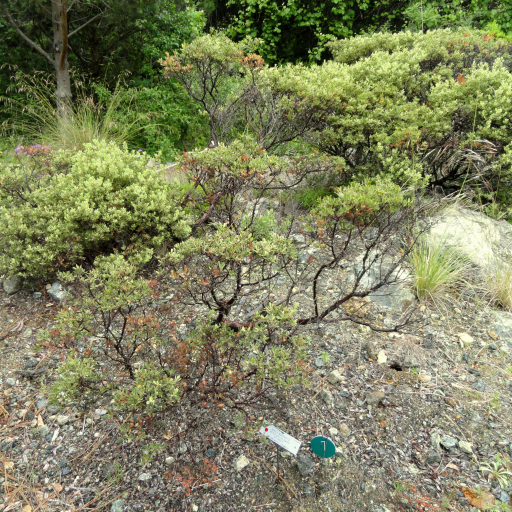
Plant Overview
Often called Baker's Manzanita, this rare beauty is a crown jewel of the California chaparral. Naturally occurring in only a few pockets of Sonoma County, it is prized by landscape enthusiasts for its stunning, deep-mahogany bark that feels cool to the touch. Its name, "Manzanita," translates from Spanish as "little apple," a nod to the charming fruit it bears after its winter bloom.
🔍 How to Identify
- 🪵 The Bark: The most striking feature is its smooth, chocolate-to-maroon bark that occasionally peels back in ribbons to reveal fresh, wine-colored wood beneath.
- 🍃 Velvety Foliage: Unlike some of its glossy-leaved cousins, Baker’s Manzanita has grayish-green, oval leaves that are covered in fine, soft hairs, giving them a matte, velvety appearance.
- 🔔 Lantern Flowers: In late winter, it produces drooping clusters of white to shell-pink flowers shaped like tiny, upside-down porcelain urns.
🏡 In Your Garden
- 🏜️ Drainage is Non-Negotiable: This plant is a specialist of serpentine and volcanic soils. It will struggle in heavy, "rich" garden soil and is highly susceptible to root rot if its feet stay wet or if it's watered during the heat of summer.
- 🖐️ The Taproot Rule: Like many Manzanitas, it resents being moved. Choose its "forever home" carefully, as the sensitive root system rarely survives a second transplant once established.
⚠️ Safety & Toxicity
- 🛡️ Safe Status: Baker's Manzanita is considered non-toxic to humans, dogs, and cats. It is a very "neighborly" plant for homes with curious pets.
- 🐾 Wildlife Buffet: While the berries are safe, they are quite dry and acidic for humans. However, they are a vital food source for local birds, bears, and small mammals who rely on them during the leaner months.
✨ Fun Fact
🍎 A Living Canteen: Native Americans historically used the tart, dried berries of the Manzanita to create a refreshing, cider-like drink. They would crush the fruit and soak them in water to extract a tangy, vitamin-C-rich beverage.

Detailed Care Instructions
To grow Arctostaphylos bakeri, also known as baker's manzanita, follow these steps:
- Obtaining seeds or plants: You can purchase Arctostaphylos bakeri seeds or young plants from nurseries or online sources. Alternatively, you can collect seeds from mature berries during the fall or winter season.
- Choose an appropriate location: Baker's manzanita thrives in full sun to partial shade. Select a location in your garden or landscape that receives at least 4-6 hours of direct sunlight per day. Ensure that the soil is well-draining and preferably sandy or loamy.
- Prepare the soil: Before planting, prepare the soil by removing any weeds or grass. You can add some organic matter, such as compost or well-rotted manure, to improve soil fertility and drainage. Avoid using heavy clay soils as they may retain excess moisture, which can be detrimental to the plant.
- Planting: If you have obtained seeds, sow them in the prepared soil during late fall or early winter. Gently press the seeds into the soil without burying them too deep. If planting young plants, dig a hole slightly larger than the root ball and place the plant in the hole. Backfill the hole with soil, ensuring that the plant is at the same level as it was in the container. Space plants about 6-10 feet apart to allow for their spreading habit.
- Watering: Initially, water the newly planted seeds or plants thoroughly to establish their roots. Afterward, water the plant regularly but avoid over-watering. Baker's manzanita is drought-tolerant once established, so water only when the soil becomes dry.
- Mulching: Apply a layer of mulch around the base of the plant to suppress weeds, retain moisture, and regulate soil temperature. Use organic mulch such as wood chips or bark, but keep it a few inches away from the stem to prevent rot.
- Pruning: Regularly prune Arctostaphylos bakeri to maintain its shape and prevent it from becoming too leggy. Pruning can be done in late winter or early spring when the plant is dormant. Remove any dead, damaged, or crossing branches. Avoid pruning too heavily as it may affect flowering.
- Maintenance: Monitor the plant for any pests or diseases and take appropriate action if necessary. Apply a balanced fertilizer during the growing season, following the manufacturer's instructions. Avoid excessive fertilization as it can lead to weak growth.
Remember that Arctostaphylos bakeri is native to California and thrives in Mediterranean climates. Providing suitable growing conditions and minimal intervention will help the plant thrive naturally.
Arctostaphylos Bakeri is a type of plant that requires proper watering to thrive. Here are some guidelines on watering this plant:
- Understand the watering needs: Arctostaphylos Bakeri prefers a moderate watering routine. It is important to keep the soil consistently moist but not soaked. The plant does not tolerate drought well, so it is important to provide adequate moisture.
- Consider the soil type: This plant prefers well-draining soil. It is important to choose a soil mix that allows water to drain easily, preventing waterlogging. A mix containing sandy or loamy soil is usually ideal.
- Observe the plant's water requirements: The frequency of watering depends on several factors, including temperature, humidity, and season. During hot summer months, when the plant is actively growing, it may require more frequent watering. However, during cooler months, you may reduce the frequency.
- Check soil moisture: Before watering, check the moisture level of the soil around the plant. Stick your finger about an inch into the soil. If it feels dry, it is time to water. If the soil is still moist, delay watering for a day or two.
- Watering technique: When watering Arctostaphylos Bakeri, it is important to provide a slow, deep watering. This allows the water to penetrate the soil and reach the plant's roots. Avoid shallow watering, as it encourages shallow root growth.
- Focus on the root zone: Direct the water primarily towards the root zone of the plant. Avoid splashing water on the foliage as this can lead to fungal diseases. Water at the base of the plant, aiming for the area around the root ball.
- Mulching: Applying a layer of organic mulch around the base of the plant can help retain moisture in the soil, reducing the frequency of watering. Mulch also helps regulate soil temperature and prevents weed growth.
- Monitor the plant's response: Keep an eye on the plant's foliage and overall health. Overwatering can lead to root rot and other problems, while underwatering can cause wilting and yellowing leaves. Adjust the watering routine accordingly based on the plant's needs.
Remember, these guidelines are general and may need to be adjusted based on your specific climate, soil conditions, and the stage of growth of the Arctostaphylos Bakeri plant. Regular observation and adjusting watering practices accordingly will help ensure the plant remains healthy and thrives.
To fertilize the Arctostaphylos Bakeri plant, you can follow these instructions:
- Choose a complete, balanced fertilizer with equal ratios of nitrogen (N), phosphorus (P), and potassium (K). A general-purpose 10-10-10 or 20-20-20 fertilizer will work well.
- Apply the fertilizer in early spring, before new growth emerges, or in late fall after the blooming season ends.
- Dilute the fertilizer according to package instructions. Usually, a ratio of 1 tablespoon of fertilizer per 1 gallon of water is recommended.
- Slowly pour the diluted fertilizer mixture around the base of the plant, avoiding direct contact with the leaves to prevent burning.
- For better absorption, water the Arctostaphylos Bakeri plant immediately after applying the fertilizer.
- Repeat the fertilizing process once or twice a year to maintain healthy growth and flowering. Avoid excessive fertilization, as it may harm the plant.
- Observe the plant's response to the fertilizer and adjust the frequency or strength of application if needed.
When selecting soil for the Arctostaphylos Bakeri plant, it is important to consider its natural habitat and growth requirements. This plant thrives in well-draining soil that mimics its native environment. A suitable soil mix should be nutrient-rich and have good moisture retention while allowing excess water to drain away effectively.
A recommended soil composition for the Arctostaphylos Bakeri plant consists of a combination of loam soil, sand, and organic matter. Loam soil provides good drainage and aeration, while sand helps to enhance drainage further. Organic matter, such as compost or peat moss, improves the soil's fertility, moisture-holding capacity, and promotes better root development.
To prepare the soil, a ratio of approximately 2 parts loam soil, 1 part sand, and 1 part organic matter can be mixed thoroughly. This blend helps create a well-balanced and loose soil structure that promotes optimum root growth and prevents waterlogging.
It is worth mentioning that the Arctostaphylos Bakeri plant is adapted to slightly acidic to neutral soil conditions. Therefore, it can be beneficial to perform a soil test before planting to ensure the pH level is between 5.5 and 7.0. If the pH is outside this range, amendments such as sulfur or limestone can be incorporated to adjust the acidity or alkalinity accordingly.
Overall, providing the Arctostaphylos Bakeri plant with well-draining, nutrient-rich soil that closely matches its natural growth conditions will contribute to its overall health and vigor, allowing it to thrive and showcase its beautiful features.
Arctostaphylos bakeri is a plant species that can be propagated through various methods. Here are some details on how to propagate this plant:
- Seeds: Collect mature berries from the Arctostaphylos bakeri plant. Remove the flesh of the berries and wash the seeds thoroughly to remove any remaining pulp. Soak the seeds in water for 24 hours to enhance germination. Prepare a well-draining potting mix and sow the seeds at a shallow depth. Keep the soil consistently moist and maintain a warm temperature of around 70-75°F (21-24°C). Germination can take several weeks to months.
- Cuttings: Take semi-hardwood cuttings from a healthy Arctostaphylos bakeri plant during the active growing season, typically in summer or early autumn. Select cuttings that are 4-6 inches long and have a few sets of leaves. Remove the lower leaves and dip the cut end in a rooting hormone powder to promote root development. Plant the cuttings in a well-draining potting mix or a propagation tray filled with a mixture of perlite and vermiculite. Maintain a warm, humid environment and mist the cuttings regularly. Roots should develop in a few weeks to a couple of months.
- Layering: Select a healthy, low-lying branch of the Arctostaphylos bakeri plant that is close to the ground. Gently bend the branch down and make a small wound or notch on the underside of the branch where it touches the soil. Ensure the wound is vertical and not horizontal. Dust the wound with a rooting hormone powder to encourage root formation. Place a small rock or stake over the wounded area and cover it with soil. Keep the soil consistently moist and wait for roots to develop, which can take several months. Once roots have formed, the layer can be separated from the parent plant and potted.
- Division: In early spring or late winter, when the plant is dormant, you can divide mature Arctostaphylos bakeri plants. Carefully dig up the entire plant and gently separate the clumps into individual sections. Ensure each section has its own set of roots and stems. Replant the divisions in suitable soil, ensuring they are at the same depth as before. Water thoroughly and provide appropriate care as the divided plants establish themselves.
It is important to note that the propagation success rate may vary depending on various factors, such as environmental conditions and the health of the parent plant.








