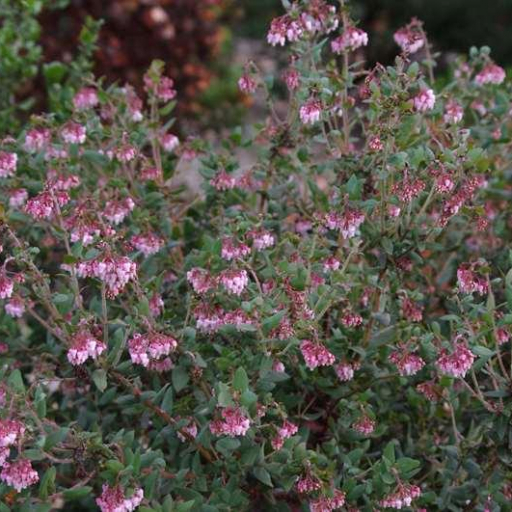
Plant Overview
Often called the Pajaro Manzanita, this striking evergreen shrub is a rare gem found almost exclusively in the coastal hills around Monterey Bay, California. With its dramatically peeling mahogany bark and uniquely "clasping" leaves, it serves as both a structural masterpiece and a resilient survivor of the rugged chaparral. It is a favorite among native plant enthusiasts who want to bring a piece of wild California history into their garden.
🔍 How to Identify
- 🍂 Sculptural Bark: Features the classic Manzanita "shredding" bark that reveals a smooth, deep mahogany or purplish-red surface beneath as the plant matures.
- 💚 Heart-Shaped Foliage: The stiff, leathery leaves are distinctly cordate (heart-shaped) at the base and appear to clasp tightly around the stems, overlapping like shingles.
- 🌸 Winter Blooms: In late winter, it produces drooping clusters of delicate, urn-shaped flowers that range from pure white to soft, blushing pink.
🏡 In Your Garden
- 🏜️ Drainage is Key: Adapted to the sandy "Zayante" soils of its homeland, this plant is highly sensitive to "wet feet." It requires excellent drainage and should be planted on a slope or in porous soil to prevent root rot.
- 🐝 Wildlife Sanctuary: Because it blooms when most other plants are still dormant, it is a vital early-season nectar source for hummingbirds and native bumblebees.
- ☀️ Sun Lover: To maintain its dense, vibrant foliage and deep bark color, it needs plenty of direct sunlight. Once established, it is incredibly drought-tolerant and requires almost no supplemental summer water.
⚠️ Safety & Toxicity
- ✅ Non-Toxic: The Pajaro Manzanita is generally considered safe and non-toxic for humans, dogs, and cats.
- 🐾 Pet Friendly: It is a sturdy shrub that can handle the occasional curious pet, though its stiff, leathery leaves are usually enough to discourage chewing.
- 🍴 Berry Note: While the berries are non-toxic and were historically used by indigenous people to make a tart cider, they are mostly dry and seedy—best left as a snack for local birds.
✨ Fun Fact
The seeds of the Pajaro Manzanita are "fire-followers." They can lay dormant in the soil for decades, only germinating after the intense heat of a wildfire clears the brush and chemically triggers the seeds to finally wake up and grow!

Detailed Care Instructions








