Plant Overview
Known affectionately as the "Woollyleaf Manzanita," this shrub is a rugged icon of the California coast. Its name, tomentosa, refers to the soft, velvet-like hairs that cover its young branches, acting as a natural shield against salty sea breezes and intense sun. With its signature twisted, mahogany-red branches and evergreen resilience, it serves as a living sculpture in native landscapes and coastal chaparrals.
🔍 How to Identify
- ☁️ Fuzzy Foliage: Unlike many of its shiny-leaved cousins, this Manzanita has leaves covered in fine, white, woolly hairs (tomentum), giving the foliage a distinct silvery or greyish-green cast.
- 🍷 Peeling Bark: It features the classic Manzanita aesthetic—deeply colored, smooth, reddish-brown bark that often peels back in thin, papery flakes during the summer.
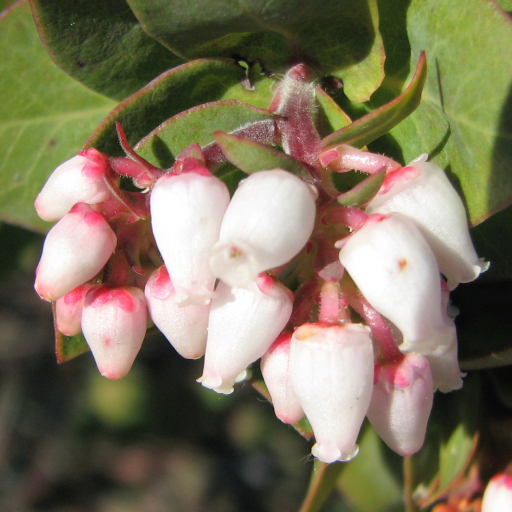
- 🔔 Lantern Blooms: In late winter, it produces delicate clusters of hanging, urn-shaped flowers that range from snowy white to soft blush pink, resembling tiny porcelain lanterns.
🏡 In Your Garden
- 🔥 Fire Survivor: This species is a "burl-former," meaning it possesses a thick, woody swelling at its base. If a wildfire or heavy pruning occurs, the plant can resprout from this burl, making it exceptionally resilient compared to species that only grow from seed.
- 🏜️ Drainage is Key: It is highly sensitive to "wet feet." In a garden setting, it must be planted in sloped areas or sandy, well-draining soil. It hates being over-watered once established, as stagnant water near the roots can lead to sudden crown rot.
- 🌬️ Coastal Specialist: Because of its woolly coating, it is one of the best Manzanitas for seaside gardens, as it can withstand the drying effects of salt spray and high winds better than smoother-leaved varieties.
⚠️ Safety & Toxicity
- ✅ Safe Status: The Woollyleaf Manzanita is non-toxic to humans, dogs, and cats.
- 🫐 Wildlife Value: While the berries are safe and were historically used by indigenous groups to make a cider-like drink, they are quite dry and seedy. They are, however, a favorite snack for local birds and bears.
✨ Fun Fact
The word "Manzanita" is Spanish for "little apple." This name was given by early explorers who noticed that the plant’s small, round fruits look exactly like miniature apples before they ripen into their hard, brownish-red seeds.

Detailed Care Instructions
To successfully grow Arctostaphylos tomentosa, also known as woollyleaf manzanita, follow these steps:
- Location: Choose a sunny location in your garden that receives full sun for most of the day. The plant thrives in well-drained soil and can tolerate various soil types, including sandy, loamy, or rocky soils.
- Watering: During the first year, provide regular watering to establish the plant's root system. Afterward, reduce the frequency but ensure deep watering during prolonged dry spells. Overwatering should be avoided as it can lead to root rot.
- Mulching: Apply a layer of organic mulch, such as wood chips or bark, around the base of the plant. Mulching helps retain soil moisture, suppresses weeds, and insulates the roots during extreme temperatures.
- Pruning: Prune the plant regularly during the dormant season to maintain its shape and remove any dead or diseased branches. Avoid excessive pruning, as it can affect flowering and fruiting.
- Fertilization: Manzanitas tend to thrive in nutrient-poor soils, so minimal fertilization is usually required. If needed, use a balanced organic fertilizer sparingly in early spring.
- Propagation: Arctostaphylos tomentosa can be propagated from seeds or cuttings. Collect seeds from ripe fruit and sow them in a well-draining potting mix. Cuttings can be taken from semi-hardwood stems in summer and rooted in a mix of peat and perlite.
- Protection: Some regions may face issues like deer browsing or specific pests. Take appropriate measures to protect your plants, such as using fencing or applying repellents as needed.
- Native habitat: Arctostaphylos tomentosa is native to California and requires similar growing conditions. If you live outside of its native range, ensure it receives appropriate sun exposure and water, mimicking its natural habitat as closely as possible.
Remember that growing plants successfully also depends on your specific climate and local conditions. Keep an eye on your Arctostaphylos tomentosa for any signs of stress or disease, and make adjustments to meet its specific needs as necessary.

Place in a bright room that is sun drenched almost all day. Or directly in a south-facing window.

To water this specific type of plant, it is important to conduct research on its specific needs in terms of watering. Generally, it may require frequent watering during the growing season, which typically occurs during the spring and summer months. It is important to make sure the soil is moist but not waterlogged. This can be achieved by waiting until the top inch of soil is dry to the touch before watering again. Overwatering can lead to root rot and other diseases, so it is important to monitor the plant's water needs carefully. During the dormant season, which typically occurs in the fall and winter months, the plant may require less frequent watering. It is also important to water the plant at the base rather than from above to avoid getting the foliage wet, which can lead to disease and damage.
For best results, fertilize this plant with a balanced, slow-release fertilizer in early spring before new growth appears. Use a granular or powdered fertilizer that is specifically formulated for acidic-loving plants. Avoid over-fertilizing, as this can cause damage to the plant. Water the plant thoroughly after fertilizing.
When planting Arctostaphylos Tomentosa, it is recommended to use a well-draining soil that is slightly acidic. The soil should be rich in organic matter and have good water retention properties. It is also important to ensure that the soil is loose and not compacted, as this can prevent the roots from growing. Adding perlite or sand to the soil mixture can help with drainage and prevent the soil from becoming waterlogged. Additionally, the plant prefers a slightly acidic soil pH of around 6.0-6.5, so it may be beneficial to test the soil and amend it accordingly. Overall, the key is to create a soil environment that is well-draining, nutrient-rich, and slightly acidic to ensure the best growth and health of the Arctostaphylos Tomentosa plant.
The propagation process of this plant involves taking stem cuttings from a mature and healthy parent plant during the dormant season, which is typically in late fall or early winter.
After selecting stem cuttings that are approximately 4-6 inches long, remove any leaves from the bottom 2 inches of the stem to expose the cambium layer.
Dip the bottom of the stem in rooting hormone and place it into a well-draining pot filled with a mix of peat moss and sand. Cover the cutting with a clear plastic bag to create a humid environment and place it in a bright but indirect light spot.
Once roots have formed, which can take up to 2-3 months, transplant the newly rooted plant into a larger pot or into the ground in a well-draining, acidic soil.
Regular watering and monitoring of soil moisture levels are key to supporting the plant's growth and ensuring its establishment.








